[identity profile] offthelisthero.livejournal.com
Class met in the Danger Shop today, following a handwavy email. There were balls, ramps, plastic tanks at the back of room, one hooked up projecter and a shortage of windows for anyone to break during the course of the lesson.

Mohinder started out by passing out a few papers. "I know this is your last class before the final, if you have questions about finals revision you can find me after class, for now we'll be looking at parabolas, trajectories and objects in motion."

A short digression into bodies in motion under gravity, air resistance, arcs and centres of mass later - illustrated with the help of a handy basketball - which he didn't attempt to net, having tried that before class, and Mohinder wound down, commenting on the history of its discovery and the emphatic screw-you that was Discourses, one of the early formal texts.

"That's enough theory," said Mohinder. "Now to put what you've learned today into practice."

[OCD is up-up-and-away]
[identity profile] offthelisthero.livejournal.com
Mohinder was at the front of a classroom that had an uncanny resemblance to a computer lab; if one which had sprouted typewriters on steroids, interconnections of cogs and valve banks amongst the more usual array of desk and laptops.

"If you want to hide information more securely than just by concealing its location, then you need to change the information itself. Passing on 'The elk flies at midnight' can mean something else entirely to the right listener," said Mohinder. Or warn them to duck when out that night. Carrying an umbrella.

"Cryptographers have devised, and broken, a number of code systems," he said, passing out a few examples. "From the simple - the replacing of one letter with another, transposing groups of letters and those ciphers based on the sender and recipient having the same edition of the same book." Mohinder elaborated, encoding and decoding, with increasing complex ciphers.

"The complexity of some cipher keys has become so great that breaking them may be impossible," Mohinder closed, "Barring quantum computing or breaking the chain with the user. Now, it's time to try your techniques at coded communication."

[OCD has been decoded!]
[identity profile] offthelisthero.livejournal.com
Today's class was held in the Danger Shop, set up to mimic the usual classroom enviroment - desks, seating, the reamins of an exhausted building site and one slightly ruffled scientist standing at the front of the room.

"The three principles of architecture," said Mohinder. "Are that it should last, it should be functional and it should be beautiful. The last being a criteria much harder to be sure of fulfilling." He started to pass notes out to the students.

"When it comes to bridges, there are four basic types - beam, arch, cantilever and suspension bridges. Not all of which work equally well," he said, going on to on to discuss the design flaws and merits of each types. "And there's just a short practical exercise before you're free to go."

Once they'd built their way over the stretch of water that had just appeared, blocking the exit.

[OCD is up!]
[identity profile] offthelisthero.livejournal.com
Today the equations littering the board behind Mohinder were interspersed with skewed ellipses centred on and orbiting circles.

"The first attempts at modelling the mechanics of the larger scale world around us - planets, stars, galaxies - considered us to be the centre of everything - the thought in the mind of god," Mohinder said, sketching out an approximate model. "Our place in the universe has gotten ever smaller; this planet one of several orbiting a non-descript star, first in circles, then ellipses..." Mohinder continued to described the search for an ever more accurate understanding of the mechanics of the stars.

Finishing, he picked up a mesh of metal and gears. "This is only a simple approximation of this solar system." Complete with an tomato wobbling it's way around a slow orbit. "Not that your models have to be limited to this local star."

[OCD is up!]
[identity profile] offthelisthero.livejournal.com
Thanks to a handwavey email and equally handwavey note stuck on the classroom door, class met outside today and a securely wrapped - he'd become used to the weather, not fond of it - Mohinder stood by the south gate with boxes at his feet.

"Meterology," he said, "is the study concerned with measurement and prediction of the weather." Mohinder passed out a few handouts, including some brightly multicoloured references. "~The atmosphere of this planet is a complex, almost chaotic system, which contributes to the difficulties of modelling it, let alone predicting the future. Something which is being done more accurately than ever."

Mohinder continued into more detail about the atmospheric dynamics, barometric pressures and their simulations before coming to, "But first I want you to measure your environment on a small scale," he nodded to the materials, "with what you have here."

[OCD is up!]
[identity profile] offthelisthero.livejournal.com
"Electricity," Mohinder started, "Certainly has been one of the building blocks from which most of current technology has been built."

Beginning to pass round a couple of handouts to the class, Mohinder continued. "Electric charge is property of subatomic particles; current is the movement of charge through conductors or semi-conductors, but not the movement of electrons, which move much more slowly than the electric field they generate. A result greater than the sum of their parts, so to speak."

A short lecture on the discovery and harnessing of electromagnetism later and Mohinder finished up. "Because of the electromagnetic link we can generate electricity from moving magnets. Instructions and components are all on the desks. Be careful."

[OCD is up. Have at!]
[identity profile] offthelisthero.livejournal.com
"Good morning," said Mohinder, from in front of a board littered with streams of equations. "Today we'll look at time travel, something that although not theoretically impossible, isn't possible. At least not in the here and now."

"Travelling into the future - if you achieve a speed close to that of light - " he said, starting to pass out a couple of handouts. "Is possible, due to time dilation. The passage of time, even the sequence of events - first this then that - is not constant, but depending on the reference of you, the observer." Mohinder continued pointing out relevent equations as he went into more detail.

"The alternative - travel to the past, is full of the possiblity of paradox even for those people who are homicidally inclined to their grandfathers." Moving on from paradoxes, Mohinder spoke briefly about wormholes, cosmic strings and light-speed travel, before finishing, "Now here's a reasonably plausible film about time-travel, Starter."

OCD is up!
[identity profile] offthelisthero.livejournal.com
"Practically, engineering is in the business of providing solutions to problems. To make the world - however defined - a better place, or at least attempt to do so. But before considering the practicalities of a solution you need to know exactly what's wrong in the first place." Mohinder launched a short diversion on the definition of human needs.

Starting to pass out notes Mohinder continued. "Once you have a defined need - the time comes to create ideas and evaluate the possible solutions. It's unlikely to hit the best possible solution to start with, and so begins a cycle of experimentation and improvement until a final answer is found."

"Now I'd like you to conider how to practically apply the design process."

[OCD has landed]
[identity profile] offthelisthero.livejournal.com
Today the classroom was half in shadow, blue and green fluorescent ceiling tubes spilling a tinted light over Mohinder as he started to speak. "The electromagnetic light spectrum has permeated our science and our lives completely. From the visible region that illuminates our sense of sight up to transmissions of waves of broadcast radio and television or to the shorter heating infra-red or penetrating X-rays."

"Holograms are a static capture of light reflected one from a physical object." He started describing and showing examples.

"The simplest way to create a hologram is with a laser." Mohinder adjusted the machine by his side and a beam of red light flicked on, reflected of a pair of mirrors to hit a light plate. "Together with lenses and mirrors, and of course an object to record." He went into more detail before finishing. "Safety equipment is on the side. You'll need it before creating your own images."

[OCD is up!]
[identity profile] offthelisthero.livejournal.com
Handouts were set out along the workbenches that filled today's classroom. "Wood, lumber or timber," Mohinder started, hand resting on a length of two-by-four as he spoke. "Certainly one of the earliest construction materials, if less popular now. Softwoods are found from coniferous trees, and can misleadingly be stronger, more dense than some deciduous hardwoods."

Mohinder went through the pointed out the examples of different cuts of timber, demonstrating a few simple tools - hammer, saw, plane and chisel among before handing out instructions, saying, "Once you're familiar with the tools and materials, I want you start working on one of these designs."

[OCD is here!]
[identity profile] offthelisthero.livejournal.com
This morning the students would be greeted by the sound of slowly played scales, as Mohinder picked out notes in a repeating rhythm that accelerated into an abrupt stop. "Humans have a audiable range of anywhere between twenty and twenty thousand Hertz. Usually," he added. "Now frequency is inverse to wavelength," Mohinder said, moving to the board behind him to start sketching out formulae.

"Sound is a compression wave through matter, and - if it's sinosoidal - we can define it by amplitude, spatial frequency and phase." Mohinder continued for a while describing velocity, modulation and standing waves.

"The musical instruments in front of you agitate and produce a range of pitch and frequencies while producing some very different sounds, and mathematics can be used to describe not just the sound they make but also the composition," said Mohinder, passing out handouts. "Try out some of your own compositions and rhythms."

[OCD is up!]
[identity profile] offthelisthero.livejournal.com
The desks in the classroom were edged around the walls today; the centre stacked with with weights, pulleys, hooks and clamps. A number of materials - plastics, fabrics, woods, metals and other moddable items were arrayed next to the equipment.

Mohinder stood in front of a board lined with equations, passing handouts as class assembled.

"There is only so much force you can apply to an object before it breaks," Mohinder started. "Materials have only so much strength in compression," he demonstrated, "and tension." He pointed out the relevent equations behind him, highlighting stresses and strains and structural faults and how they might appear in macro and micro situations.

"But theory can only go so far as an illustration. It's time for you to test the properties of the materials in front of you. How strong are they? Can you predict when it will break? Does it matter how the force is applied? If you have any questions then I'm here, or I'm sure Elle if she's here will be glad to help you."

[OCD is a go!]
[identity profile] offthelisthero.livejournal.com
The Danger Shop was set up to mimic a regular high school classroom as the students arrived. Standing by a desk at the front of the room a syrup-free Mohinder counted off the arrivals as they got in.

Class assembled, Mohinder took up a casual perch on his desk, and started, "Welcome class. I'm Dr Suresh, and you're in Engineering Math. If you didn't intend to be, then you've a few minutes to find yourself somewhere else." He started passing out the syllabus and a couple of handouts. "Now, we'll start with some introductions before the actual maths. It's Friday so you should know this by now - let's have your name, hometown, and favourite or lucky number or numbers."

When the introductions were over Mohinder walked over the board behind him and stuck two brightly coloured magnets to it. "The shortest route between two places is easy. A straight line." He illustrated. "Adding a third point," he stuck another one up and connected it, adding more as he continued, "makes it only a little more difficult. But the more you add, the faster it becomes even more complicated. Brute force calculations - trying out every possibility - becomes impractical with even 20 cities." He digressed into the problems of computation for a few minutes.

"I'm not asking you to solve that," Mohinder finished. "Although if you're looking for a million dollars there's a prize currently available for its solution. We'll be starting with something more small scale. You all have pedometers on your desks." He hit a button on the remote he was holding and the room dissolved into a wider area with several coloured points. "And a shortest route to find."

[The OCD, it has arrived!]
[identity profile] mike-cannon.livejournal.com
Mike waited for everyone to arrive in the classroom before he started passing out pens and paper. "It's our last class, folks, and it's time to see how well you guys have been paying attention. Your exam today consists of several essays and you have until the end of the period to finish the test. Good luck, guys. You've been a great class, and I hope you appreciate the work engineers do in whatever time period you're from."
[identity profile] mike-cannon.livejournal.com
Once again, class met in the Danger Shop. Mike waited for everyone to arrive before launching into an explanation of the simulation. "This week marks the 36th anniversary of Apollo 17, the last manned mission to the moon," he began. "Now, I'm sure that you kids from the future or alternate universes probably travel to the moon every day, but in this time period, it's pretty rare. As of 2008, only 12 humans have walked on the surface of the moon and the last of those was Eugene Cernan, commander of Apollo 17. It is a feat that no one has accomplished since."

Mike passed around the usual handouts before proceeding. "Today, we're going to walk in the steps of the Apollo astronauts. We'll visit a simulation of the Taurus-Littrow Valley and explore the Lunar Module. Oh, and there's also a Lunar rover available if anyone wants to take it for a spin."
[identity profile] mike-cannon.livejournal.com
Mike sipped hot cocoa out of his thermos as he waited outside of the Danger Shop for the students to join him. "Extra credit for anyone who can figure out how to brew a cup of coffee when your taps give you cocoa instead of water," he announced once they were all there.

"Today, we're going to be discussing flight. I'm sure you kids from the future have flown stuff that is way more elaborate than anything that I can show you, so we're going old school and flying a simulation of the Wright Flyer, the first powered aircraft built by the Wright Brothers," said Mike, leading the students into the Danger Shop.

"What made the Wright Brothers successful was their understanding of the three axes of control needed to fly an aircraft," Mike added. "The flight dynamics handout I'm giving you will explain it a bit better, but be sure you climb into the Flyer and play with the controls to see how they affect the pitch, yaw and roll."

"Finally, I do want to say something about the feud between the Smithsonian Institution and Orville Wright. Even though the Wright Flyer is acknowledged as the first heavier-than-air craft to achieve controlled flight, the Smithsonian gave credit to another man who was connected to the institution as the first to build a successful aircraft. This wasn't true, as that aircraft's first successful flight was years after the Wright brothers made their first flight. Orville responded by refusing to give the historic 1903 flyer to the Smithsonian until they retracted their inaccurate claims and the aircraft was displayed at the London Science Museum before finally returning to the U.S. after Orville's death. History is written by those who are in power, and sometimes they get it wrong for the sake of their own agenda. It's something to keep in mind as we look at the historical development of all these engineering achievements," said Mike.

"Okay, I've talked long enough. Go check out the Wright Flyer and have fun."
[identity profile] mike-cannon.livejournal.com
"We're going to keep it simple today," said Mike. "Later on this week, most of us will be celebrating Thanksgiving, which started out as a harvest festival. People used to give thanks at harvest time because they were never certain that they'd have enough to eat. Now, I'm sure you future kids can just press a button and magically have food appear, but once upon a time, farmers had to work hard to produce food. That's why agricultural mechanization makes the list."

"Now, the end of the semester is coming up pretty quickly, so if you have any questions about anything we've covered up until now, I'll be happy to take them," continued Mike.
[identity profile] mike-cannon.livejournal.com
There was a television at the front of the classroom with a note.

"Watch TV for today's class. Handouts on the desk. For next class, please write a one-page essay describing how television improves your life."

Mike didn't appear to be around, but there was a candy bar melting on the desk.
[identity profile] ktarian-wildman.livejournal.com
Naomi had been handwavily informed that she was going to be needed to teach for that day's class.

"Profesor Cannon couldn't make it to class today," she said at the start of the lesson, "so I figured for today's class we're just going to watch a documentary, that is related to this course,"

[ooc: wait for the OCD is up!]
[identity profile] mike-cannon.livejournal.com
Once more, class was held in the Danger Shop, with different areas set up as a kitchen, laundry room and living room of a house. "I know you guys from the future can take care of household chores with the push of a button," began Mike. "Actually, you wouldn't consider things like microwaves, vacuums, washing machines and dryers to be feats of engineering. Believe me, you're wrong. Let's see how much you appreciate modern household appliances after a day of good old-fashioned housework."
[identity profile] mike-cannon.livejournal.com
This week, the class met in the Danger Shop, which was set up to look like a large room containing a supercomputer.

"Hope you guys had a great time this weekend, especially if you had friends or family visiting. I know that the visits I got were rather eye-opening," said Mike. "Now, I know y'all have worked with modern personal computers and probably stuff that's a lot more advanced than I could ever dream of. But to understand how good you guys have it now, you've got to understand that back in the day, computers looked something like this. Take a look around at NASA's Columbia supercomputer and just imagine that one day, they'll be able to squeeze all of this into something the size of a fingernail."

He quickly passed out an extra handout once they were done exploring. "Once last order of business before we wrap up for the day. Read through this essay that Bill Gates wrote and tell me what you think about the progress we've made in computing."
[identity profile] mike-cannon.livejournal.com
When the students arrived in the classroom, they would find that Mike had a TV and DVD player set up, along with a table with coffee and bagels for everyone.

"Hope you all enjoyed the break week," said Mike, passing out the usual handout. "Unfortunately, it's Monday morning and back to work for everyone. This week we're covering health technology. For those of you from the future, this is important because without the improved health care that your ancestors had, they wouldn't have lived long enough to have you. And to drive that point home, we're going to watch a movie. Help yourself to some coffee, because I want to see you all awake and paying attention."

[Syllabus]
[identity profile] mike-cannon.livejournal.com
"I'm sure you guys who come from the future have better ways of communicating, but we've got to pay homage to the original, the telephone," said Mike. He picked up a couple of paper cups strung together by a piece of piece of string. "Here we go. Check out the early prototype," he said, passing the "telephone" around.

"Now, tell me what you think could hypothetically be done to improve communication technologies in the future," Mike added, getting set to take notes.
[identity profile] mike-cannon.livejournal.com
"We're continuing our discussion from last week on how automobiles and highways improved travel," said Mike, who was feeling a little twitchy without his morning coffee. "Last week, we got to travel the Oregon Trail and see how it took months to travel across country by wagon, and you were damn lucky if you actually reached your destination. The car definitely was an improvement, and when Route 66 was finally completed in 1937, you had a national highway that stretched from Chicago to..."

He stopped in mid-sentence. "You know what? Instead of just talking about it, why don't we just take it?"

[How to get detention] [Syllabus]
[identity profile] mike-cannon.livejournal.com
Mike was looking like he'd been out way too late last night. There had been an all-female AC/DC tribute band playing a club on the mainland, and he'd really enjoyed it. There were dark circles under his eyes and he hadn't shaved. "Hey guys," he said, handing out a pair of handouts. "Slight change of plans today. Instead of covering cars this week and highways next week, I decided to be lazy combine them both and use two weeks to fully explore both topics. Be sure you read over the information I'm giving you because we'll be discussing it next week. In the meantime, we've got an activity to demonstrate how automobiles and highways improved the ability to travel."

He stopped to chug some coffee before continuing. "Today, if you want to travel from St. Louis, Missouri, to Portland, Oregon, it'll take you about 30 hours nonstop according to Google Maps. Of course, you probably want to stop and take breaks. In the mid-19th century, though, you would have travel by wagon and the trip would have taken months. We're going to play a game called the Oregon Trail and see just how long it takes. Oh, and there's pie for whoever has the shortest travel time."

[How to get detention] [Syllabus]
[identity profile] mike-cannon.livejournal.com

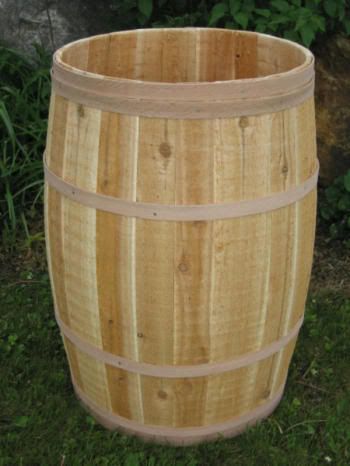
There had been a handwavey notice sent out ahead of time that today's class would be held in the Danger Shop. When the students arrived, they would have found Mike waiting with a big empty barrel and a lot of sandbags.

"From the beginning of time, securing safe and convenient access to water has been necessary for human life," said Mike, moving right into his lecture. "It's very simple. Without drinking water, you die. Without clean water, you also die. Water is also essential for the survival of crops and livestock so you can eat. Therefore, civilization tended to stay close to areas with access to fresh water. As populations got bigger, it meant that everyone was piled up on top of each other because you couldn't move away and still have access to water. I'll pass around this hand-out about the history of water supply and distribution, but we also have some exercises to demonstrate the challenges that face engineers when it came to water."

[Please wait for the OCD is up! Also, please see this note about Mike and detentions.]

[identity profile] mike-cannon.livejournal.com

Today, the class was back inside a regular classroom, even though this one was a bit dark with the lights out and the shades pulled down. "Welcome! It's good to see that you're all back for another week," said Mike, grinning. "This week, we're going to be talking about the next achievement on our list, electricity. Oh, and just in case you guys need some more light, I've got something for you right here." He started passing out candles, one for each student.

"Believe it or not, folks, there was once a time where you needed a candle or some kind of oil lamp if you were out and about after sunset. That all changed when Thomas Edison perfected the incandescent light bulb. Problem is that you can't use a light bulb without the electricity to power it, so his next move was to develop an electricity distribution system to bring electrical powers to consumers. Edison favored a direct current system, but eventually the country adopted the alternating current system proposed by Nikola Tesla and George Westinghouse. Thanks to their work, I can flip a switch over here on the wall and we don't need those candles anymore," said Mike, turning the overhead lights on.

"I'm sure the power systems that some of you have in the future are a lot more advanced than what we have here, but the point here is that without electricity, we wouldn't have lights or computers or any sort of modern appliance that you can imagine."

[[Please wait for the OCD is up!]]

[identity profile] mike-cannon.livejournal.com
The forecast for Monday called for sunshine with a high of 83° (or 28° C) and a light breeze, so Mike handwavily e-mailed his students the night before and informed them that their first class would be held outside on the school lawns. When the students arrived, they would find that Mike had set up a picnic table in an open area, far from any shade.

"Good morning, students! My name is Mike Cannon and I'll be your instructor for Greatest Achievements in Engineering. Today, I thought it would be fun to start out with a picnic lunch," said Mike with a grin. "Grab yourself a copy of the syllabus and help yourself to something to eat and drink, and then we'll get started with introductions before talking about today's subject."

There was the typical spread of picnic foods: potato salad, macaroni salad, coleslaw, and a cold cuts tray with the fixings for sandwiches. Mike had also thought ahead and provided pitchers of lemonade and soda as well as bottled water. But there was a catch -- the food and drinks had not been chilled, and they had been left out overnight. By now, the perishable foods were starting to smell a little funny, and the warm drinks would not provide much refreshment in the hot sun.

Even Mike looked like he was sweltering in his dark suit, but he pressed on. "So, if you haven't figured it out yet, today we're looking at the importance of air conditioning and refrigeration, neither of which we have at this moment," he said. "I would ask if you can imagine what it's like to live without them, but I'm pretty sure you're getting the idea. The first air-conditioning system wasn't installed until 1902, and the first self-contained refrigerator was displayed at the World's Fair in 1904. A century later, there's no way we could function in the summer without them. Because these cooling systems have become so essential to modern life, they're a prime example of engineering making a serious contribution to our standard of living."

"Oh, and now that we've covered all that, the real picnic should be here shortly," Mike added, checking his watch. Sure enough, an NPC delivery guy arrived with fresh food and cold drinks. "Enjoy! And Naomi, could you stay after class for a moment? Thanks."

[OOC: Please wait for the OCD is up!]
[identity profile] visor-laforge.livejournal.com
Geordi was at his desk when the students came in for the final engineering class of the semester.

Once everyone was seated and quiet, he stood up and said, "today you will be completing your class final, you will find your test paper on your desk. You have the lesson to complete the test however if you finish early then you may leave after you've completed your test. Good luck,"

Test questions )

[ooc: wait for the OCD is up!]
[identity profile] visor-laforge.livejournal.com
Geordi was waiting in front of his desk as the students came into the room. Once they were seated and the noise had quieted down he spoke.

"Good morning," Geordi greeted the class, "since this is our last class before the final today's lesson will be a revision lesson so you'll be able to study for your exam next week. I'd like to take the chance to say thank you for being a terrific class this semester and hopefully I'll be seeing some of you during the summer,"

[ooc: wait for the OCD is up!]
[identity profile] visor-laforge.livejournal.com
Geordi was waiting by his desk as usual when the students entered the classroom.

Engineering 101 )

[ooc: wait for the OCD is up!]
[identity profile] visor-laforge.livejournal.com
Geordi was standing in front of his desk as the students entered the classroom. Once they were seated and the noise had quieted down, he nodded and smiled.

Engineering 101 )

[ooc: wait for the OCD is up!]
[identity profile] visor-laforge.livejournal.com
Geordi was seated at his desk as the students came in to the classroom. Once everyone had sat down and the noise had quieted down, he stood up and strode around to the front of his desk.

“Good morning,” he greeted the class cheerfully, “today we’re going to be covering Mechanical Engineering,”

Engineering 101 )

[ooc: wait for the OCD is up!]
[identity profile] visor-laforge.livejournal.com
Geordi was seated at his desk as he waited for the students to enter the classroom. Once everyone was seated and the noise had quieted down he stood up and moved round to the front of his desk and faced the class.

Engineering 101 )

[ooc: wait for the OCD is up!]
[identity profile] visor-laforge.livejournal.com
Geordi was seated at his desk as the students came into the engineering classroom, "Good morning," he said once they had sat down, "today you're going to be having your midterm," the students would find copies of the test paper on their desk.

test paper )

"You have the period to work on the test, good luck,"

[ooc: wait for the OCD is up!]
[identity profile] visor-laforge.livejournal.com
Geordi was seated at his desk, he had briefly considered hiding under it but then he reasoned that he wouldn't have been able to teach that day's class from under the desk. Once the students were seated and the noise had quietened down, he stood up.

Engineering 101 )

[ooc: please wait for the OCD is up!]
[identity profile] visor-laforge.livejournal.com
Geordi smiled as the students came in for that day’s class. Once everyone was seated and the noise had dimmed down he began the lecture.

Engineering 101 )

[ooc: wait for the OCD is up!]
[identity profile] visor-laforge.livejournal.com
Geordi was seated at his desk as the students came into the classroom. He waited until everyone had sat down and the noise had quietened down before he stood up and walked around to the front of his desk so he could begin that day's class.

Engineering 101 )

[ooc: wait for the OCD is up!]
[identity profile] visor-laforge.livejournal.com
Geordi was at his desk, sitting patiently as he waited for the students to enter and sit down at their desks. Once everyone was seated and people had stopped talking, he stood up and moved around to the front of his desk to begin his lecture.

Engineering 101 )

[ooc: wait for the OCD is up!]
[identity profile] visor-laforge.livejournal.com
Geordi smiled as the students filed in to his classroom, he was seated at his desk but once his students had sat down he moved around to the front of his desk and sat on the edge of it. “Good morning,” he greeted the class cheerfully once the noise had quieted down.

Engineering 101 )

[wait for the OCD is up!]
[identity profile] visor-laforge.livejournal.com
Geordi was waiting in front of his desk as he watched the students come into the room and sit at their own desks. Once everyone was seated he smiled and began the lecture, “Good morning,” he said, “today we’re going to be looking at a history of engineering,”

Engineering 101 )

[ooc: wait for the OCD is up!]
[identity profile] visor-laforge.livejournal.com
Geordi sat behind his desk as he waited for his students to enter the classroom. Once everyone was seated and the noise had calmed down he stood up and walked around to the front of his desk. He surveyed the class before he spoke, “Good morning and welcome to Engineering 101,” he said in a clear voice, hoping that his nervousness wasn’t visible, “I’m Lieutenant Commander Geordi LaForge, you may address me as either Commander or Professor LaForge, I have no preference as to which.”

Engineering 101 )

[wait for the OCD is up!]

Fandom High RPG


About the Game

---       Master Game Index
---       IC Community Tags
---       Thinking of Joining?
---       Application Information
---       Existing Character Directory

In-Character Comms

School and Grounds
---       Fandom High School
---       Staff Lounge
---       TA Lounge
---       Student Dorms

Around the Island
---       Fandom Town
---       Fandom Clinic

Communications
---       Radio News Recaps
---       Student Newspaper
---       IC Social Media Posts

Off-Island Travel
---       FH Trips

Once Upon a Time...
---       FH Wishverse AU


Out-of-Character Comms

---       Main OOC Comm
---       Plot Development
---       OOC-but-IC Fun


Disclaimer

Fandom High is a not-for-profit text-based game/group writing exercise, featuring fictional characters and settings from a variety of creators, used without permission but for entertainment purposes only.

Tags