[identity profile] steel-not-glass.livejournal.com
"Welcome to our last class of the term," Cindy greeted. "It's been a small, short class, but rather fun--even if we did miss out on bad movie bingo. My apologies, Peter, for not being better prepared." She gave the four of them a grin and continued.

"One more lesson for today, and then a discussion," she said, leaning against the side of her desk. Next to her was a large, white bakery bag. "Today, we're covering the straw man fallacy, which is a convenient way to try to win an argument without actually having to address your opponent's points. A straw man is a caricature of an argument--it differs from a parody, in that audience is not meant to regard the exaggeration and distortion as funny and an an invalid portrayal of a real point of view; the straw man is intended to be taken seriously and solely for the purpose of making the original argument easier to mock and refute."

"Rather than making the attempt to properly argue against the original point, the creator of the straw man fallacy will come up with a flawed, superficially-similar position and argue against that. For example, the straw man for arguing that safer-sex procedure should be taught in schools might be suggesting that teachers are encouraging children or have premarital sex. Another option is painting all opponents of your stance in a negative light: describing all atheists as having an agenda to outlaw religion and murder the faithful and all people of faith as howling zealots enslaved to dogma."

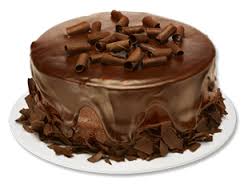
Cindy reached into the bakery bag and pulled out a cake, along with napkins, paper plates, and plasticware. "Let's settle in with some cake and discuss, okay?"
[OCD is up! Have at!]
[identity profile] steel-not-glass.livejournal.com
Rather than pastries and coffee, today Cindy was supplying individual bags of popcorn and bottles of soda for everyone. "Today we'll be watching a movie seemingly created to make anyone with even a basic grasp of natural science and logic cringe," Cindy said cheerfully. "Not only did it bomb in the box office, it actually helped spark a reaction to get real science into science fiction movies."

"Feel free to keep a list of the physical impossibilities and logical fallacies that you see portrayed in the film," she added. "If you'd prefer just to watch, here are some handouts that explain some of the more egregious crimes against science in this movie."

[OCD up]
[identity profile] steel-not-glass.livejournal.com
"We're switching things up on your syllabus today," Cindy said as soon as the bell rang. "Rather than waiting until next week, we're jumping right to ad hominem attacks. Mostly because they're so common; they're one of my favorite fallacies."

Sitting on the edge of her desk, Cindy explained, Ad hominem means to the man )

[OCD up]
[identity profile] steel-not-glass.livejournal.com
Today there was iced coffee on the desk; it was far too hot for the regular kind. "So, I'm sure that any of you who are familiar with modern politics has heard of the slippery slope argument. It's entirely possible you've heard of it even if you don't follow modern politics. It's a common logical fallacy and such things transcend time and place."

"The slippery slope uses a kind of visual metaphor; once a rock is dropped down the slope, it will keep falling until it hits the bottom. In an argument, this is likened to a single idea or action that, once implemented, will continue to move towards a much bigger, negative conclusion. However, this chain cannot be linked together by facts or logic. For example, in the current debate about same-sex marriage, some politicians against such measures claim that once two people of the same sex are given the right to marry, then we are opening the door to three people marrying, incestuous marriages, and even inter-species marriages." Cindy rolled her eyes a bit. "Regardless of how you feel about the issue at hand, there's no cause for such sloppy and fallacious arguments."

"Not all arguments that suggest one action will lead to another is fallacious. If one can logically prove that Action A will lead to B, and Action B will lead to C, then saying Action A will lead to C is just the transitive property at work. For example, arguing that drinking my coffee will get me caffeinated and being caffeinated will keep me up all night, therefore, drinking my coffee will keep me up all night is accurate, assuming all three arguments were true. If, however, I wasn't particularly susceptible to caffeine and one cup of coffee would not keep me awake, then we're back to the slippery slope. There are several similar techniques; I've included in the handouts for you to look over."

[OCD up and ready!]
[identity profile] steel-not-glass.livejournal.com
"Appealing to the emotions of your crowd is a quick and easy way to score points in a debate," Cindy said as soon as the bell rang. She was perched on the edge of her desk, in between the coffee thermos and the box of assorted donuts. "The easiest thing about it? You don't actually need facts to back it up, just a basic knowledge of human psychology. Say, for example, you're addressing a group of parents and you need to sway them to your side? There are any number of ways you can convince them without stating a single useful fact. You can use their natural fear for their children to get the on your side; not doing what you suggest could lead to dreadful consequences for their families. Or you can relate a sad and pathetic story to touch on their feelings and end with 'will someone just think of the children!'. Or you can explain how any parent who raises such talented and gifted children as they have can surely see the merit in your argument. Finally, you can mention how whatever you're arguing for will lead to a desirable outcome, making your argument true. These are all examples of appeals to emotions: fear, pity, flattery, and consequences."

She gave a stack of handouts to Hinata if she was there to pass around and continued. "There are other emotions you can appeal to as well: spite, ridicule, ignorance, wishful thinking. Humans are generally very emotional and illogical creatures. We prefer to be right more than we care about being correct; this is why identity politics are still so potent today. When we identify with a specific group, we want that group to win, regardless of what their stances are. If they win, we are right. If an argument appeals to what we already believe, then we are more inclined to trust it. Thus the construction I am a good parent. Good parents believe X. Therefore I believe X."

She looked very serious as she addressed the class. "These arguments are the most insidious and the most difficult to counter. They're harder to notice for one. Who doesn't want to be told that they're right, or smart, or a good parent/citizen/whatever? People get so wrapped up in the emotions, they fail to realize what proofs are being offered to back up those claims. And even if you do notice and move to counter, the situation can rapidly turn into an 'us versus them' mentality where you become the bad guy simply because you disagree. In these cases, it is usually best to tread lightly, using similar tactics as your opponent, but making sure your emotional appeals contain facts. There is nothing wrong with using emotions to make your points, but you have to have the facts to back it up."

[One sec for the OCD up! Today's activity involves arguing either for or against some current hot-button items by appealing to the emotions. Please remember that the arguments presented are for the activity ONLY and may not even represent the true opinions of the characters, never mind the muns. These arguments are, by design, intended to be fallacious.]
[identity profile] steel-not-glass.livejournal.com
The box of pastries was back on Cindy's desk today (eclairs this time) as was a thermos of coffee and several small paper cups. "So, what is a logic fallacy anyway?" Cindy asked, handing out several sheets of paper to the students. "The simple answer is that it's a misconception resulting from incorrect reasoning in someone's argument. By accident or design, fallacies may exploit emotional triggers in people, or take advantage of social relationships between people. People who know what they are doing can use rhetorical tricks to hide the fact that they are employing logical fallacies to make their arguments harder to rebut, including spreading the different bits of their fallacious logic over a lot argument, making it hard for their opponent to find a specific piece to object to. If you really need to win an argument, a logical fallacy is a good technique to use, but be careful because it can backfire. In most cases, I'd suggest letting the strength of your argument or ideals be the real test." She shrugged a bit. "That's not always possible, however, but the best reason to learn these fallacies is to make sure you're not accidentally falling prey to them, either while arguing or listening, and to point out when your opponent is."

She held up the two handouts she'd passed around. "Today, we're talking about two types of logical fallacy, the if-by-whiskey and the No true Scotsman fallacies. Both of these fallacies stem from the attempt of one interlocutor to define the issue under debate. They are both relativist fallacies; that is, a fallacy in which when one person claims that something may be true for one person but not true for someone else. In the first case, the if-by-whiskey example, the claim is dependent upon the beliefs of the people listening. It allows the person arguing to make a strong claim on both sides of an issue, while the person listening only hears him agreeing with whatever they support. Most cases of the if-by-whiskey argument are not as obvious as this one; the interlocutor will make his case, and if someone disagrees, they then carefully rephrase to come out on the other side as well."

"As for the No True Scotsman argument," Cindy continued, "uses a tautology to force an assertion to be right in the face of other arguments. It comes into play when someone makes a universal claim, which is then challenged by a counterexample. Rather than rejecting the original claim, the interlocutor denies the validity of the counterexample by saying that his claim only extends to a true example of something, thus making the counterexample appear to be lesser and wrong. So, look over these handouts, familiarize yourselves with the terms, and let's talk."

[OCD here]
[identity profile] steel-not-glass.livejournal.com
"Welcome to Logical Fallacies," Cindy said as the bell rang for class. "My name is Cindy Perrault, but it's summer and we're a small enough class, so let's dispense with the formality. Feel free to call me Cindy if you like. Also, since we are a tiny class, I brought some muffins along. Part of a balanced breakfast and all of that."

Cindy: model for proper nutrition. Really.

"Anyway, I want to make this clear--this isn't a rhetoric class. This is more of a 'how to point out your opponents' logical flaws while arguing class.' If there's one thing I've noticed, from years of watching people argue and debate, is that it's very easy to get led astray or have your argument torn to shreds by someone who isn't actually arguing your point at all. This class will teach you to identify the most common logical fallacies used in such a manner and come up with ways to counter them. In most cases, simply pointing out the tactic your opponent is using will be enough. For others, you can often turn their own words against them. Furthermore, you can learn a lot about a person from how they choose to present their case; are they using these fallacies out of simple ignorance, or are they deliberately trying to discredit you? A smart person knows that words are easily turned to weapons. A wise person knows how to use them to his or her own advantage."

Which probably said more about Cindy than anything else, but oh well. She was feeling relaxed today.

"But we'll get to all that starting next week. This week is dedicated to introductions or the school may implode. At least, that's the impression I get from the radio. So, today, please respond with name, class, why you signed up for this class, and your favorite topic for debate. Also Hinata? You're my TA. Congratulations. There's an extra muffin in it for you."

[OCD up]

Fandom High RPG


About the Game

---       Master Game Index
---       IC Community Tags
---       Thinking of Joining?
---       Application Information
---       Existing Character Directory

In-Character Comms

School and Grounds
---       Fandom High School
---       Staff Lounge
---       TA Lounge
---       Student Dorms

Around the Island
---       Fandom Town
---       Fandom Clinic

Communications
---       Radio News Recaps
---       Student Newspaper
---       IC Social Media Posts

Off-Island Travel
---       FH Trips

Once Upon a Time...
---       FH Wishverse AU


Out-of-Character Comms

---       Main OOC Comm
---       Plot Development
---       OOC-but-IC Fun


Disclaimer

Fandom High is a not-for-profit text-based game/group writing exercise, featuring fictional characters and settings from a variety of creators, used without permission but for entertainment purposes only.

Tags