
Kaidan Alenko (![[personal profile]](https://www.dreamwidth.org/img/silk/identity/user.png) not_a_whiner) wrote in
not_a_whiner) wrote in ![[community profile]](https://www.dreamwidth.org/img/silk/identity/community.png) fandomhigh2012-11-16 09:29 am
fandomhigh2012-11-16 09:29 am
not_a_whiner) wrote in fandomhigh2012-11-16 09:29 am


Entry tags:
Astro Science, Friday
Students had been called down to the Danger Shop today. Stepping inside, they would find themselves face to face with the surface of a beautiful alien planet, all blue skies and green hills and large, vertically oriented towers in the distance.
It might have been Kaidan's way of wallowing in painful nostalgia.
"This is Eden Prime," he said, "A human world. It is what we call a garden world-- near-Earth gravity, an oxygen-rich atmosphere, a temperate climate - or something near it. Now, even for garden world standards, Eden Prime is unusually suitable for human life. Most planets... are not going to be anything like this."
He folded his arms behind his back.
"We talked about this a little during the astronomy section, but I thought it was time to include a little more detail. If you walk around, you're going to find examples of plots of land on a variety of planets that are capable of sustaining life. I suggest taking a partner if you do - the simulation is quite vast."
He glanced towards the ocean in the distance. "The Alliance utilizes a list of planet types. Garden worlds are one of them. Then there's Brown Dwarves, Ice Giants, Giant Jovians, and Pegasids: uninhabitable kinds of planets. Some of these are too hot. Some of them are too cold. Some of them have an atmosphere composed of gasses we can't breathe. Though don't get me wrong: that doesn't make then uninhabitable to all species. For example, the volus evolved to survive in high-pressure, ammonia-rich atmospheres. A planet that seems inherently poisonous to us seems like a paradise to them."
"What's more interesting to us as humans-- or at least human-like species..." He had no idea if he had aliens in the class, and after last semester's Victor debacle he didn't really want to make assumptions, "Is planets with, among other things, nitrogen/oxygen air mixtures that maintain a temperature that isn't too extreme one way or the other, and that stays in the mid-range on the pressure scale. Now, there's going to be more planets around that have a couple but not all of these characteristics. In that case, terraforming might be an option."
He guided the group into the next area, a barren land covered in rocks. "Rock planets can be very suitable for human life," he said. "Think Mars or the Moon. What they usually lack is a breathable atmosphere, but planets within the Rock classification tend to have at least some characteristics that make them potentially habitable. Likewise, we find a great deal of Ocean worlds-- that's to the east of here-- many of which have breathable atmospheres and decent pressure, but they may be too cold or too hot, and obviously we have to account for the lack of ground surface."
"And then there's desert worlds to the north - I don't think I have to explain those to you. They tend to be too hot, and scarce in water, which we humans kinda need to keep going." He smiled briefly. "But perhaps most tragic are what we call 'post-Garden' worlds. Maybe the terraforming didn't take. Maybe there was some ecological catastrophe. Actually, we think Mars might be a post-Garden world... anyway, whatever the case, it's a planet that once held life before something upset the balance of it all, and it all died out."
A pause. "You'll find one to the south."
He glanced in the direction where they came from. "That's the lecture part," he said. "Find someone you like and get exploring."

It might have been Kaidan's way of wallowing in painful nostalgia.
"This is Eden Prime," he said, "A human world. It is what we call a garden world-- near-Earth gravity, an oxygen-rich atmosphere, a temperate climate - or something near it. Now, even for garden world standards, Eden Prime is unusually suitable for human life. Most planets... are not going to be anything like this."
He folded his arms behind his back.
"We talked about this a little during the astronomy section, but I thought it was time to include a little more detail. If you walk around, you're going to find examples of plots of land on a variety of planets that are capable of sustaining life. I suggest taking a partner if you do - the simulation is quite vast."
He glanced towards the ocean in the distance. "The Alliance utilizes a list of planet types. Garden worlds are one of them. Then there's Brown Dwarves, Ice Giants, Giant Jovians, and Pegasids: uninhabitable kinds of planets. Some of these are too hot. Some of them are too cold. Some of them have an atmosphere composed of gasses we can't breathe. Though don't get me wrong: that doesn't make then uninhabitable to all species. For example, the volus evolved to survive in high-pressure, ammonia-rich atmospheres. A planet that seems inherently poisonous to us seems like a paradise to them."
"What's more interesting to us as humans-- or at least human-like species..." He had no idea if he had aliens in the class, and after last semester's Victor debacle he didn't really want to make assumptions, "Is planets with, among other things, nitrogen/oxygen air mixtures that maintain a temperature that isn't too extreme one way or the other, and that stays in the mid-range on the pressure scale. Now, there's going to be more planets around that have a couple but not all of these characteristics. In that case, terraforming might be an option."
He guided the group into the next area, a barren land covered in rocks. "Rock planets can be very suitable for human life," he said. "Think Mars or the Moon. What they usually lack is a breathable atmosphere, but planets within the Rock classification tend to have at least some characteristics that make them potentially habitable. Likewise, we find a great deal of Ocean worlds-- that's to the east of here-- many of which have breathable atmospheres and decent pressure, but they may be too cold or too hot, and obviously we have to account for the lack of ground surface."
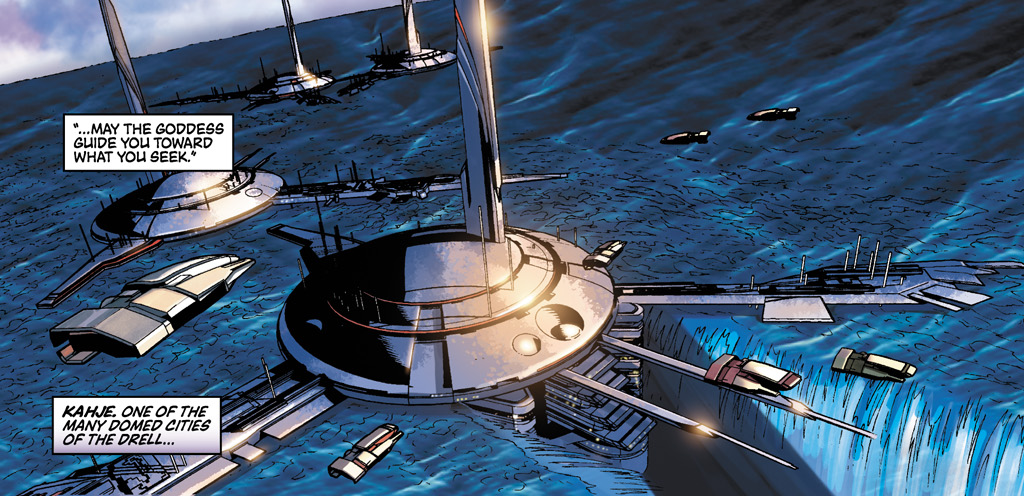
"And then there's desert worlds to the north - I don't think I have to explain those to you. They tend to be too hot, and scarce in water, which we humans kinda need to keep going." He smiled briefly. "But perhaps most tragic are what we call 'post-Garden' worlds. Maybe the terraforming didn't take. Maybe there was some ecological catastrophe. Actually, we think Mars might be a post-Garden world... anyway, whatever the case, it's a planet that once held life before something upset the balance of it all, and it all died out."
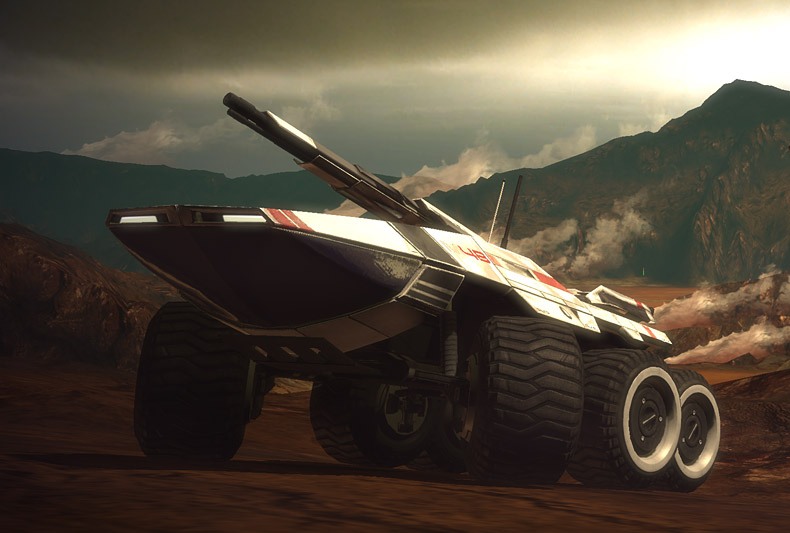
A pause. "You'll find one to the south."
He glanced in the direction where they came from. "That's the lecture part," he said. "Find someone you like and get exploring."
Re: Sign In