
Nathan Algren (![[personal profile]](https://www.dreamwidth.org/img/silk/identity/user.png) shiroi_tiger) wrote in
shiroi_tiger) wrote in ![[community profile]](https://www.dreamwidth.org/img/silk/identity/community.png) fandomhigh2009-02-05 12:07 am
fandomhigh2009-02-05 12:07 am
shiroi_tiger) wrote in fandomhigh2009-02-05 12:07 am


Entry tags:
American History, Period 2, 02/05
When students filed into the classroom today, they might notice that Algren wasn't wearing his usual brown duster coat. Instead, he was clad in a blue military uniform, carefully clean and highly decorated but with his coat left unbuttoned, with his hands clasped behind his back. He wasn't pacing the front of the room today, either. Instead, he was simply standing, not quite at attention, not quite at ease, observing the faces of the people passing through the doorway.
Today, he took a deeper breath than usual before he began to speak.
"The American Civil War," he said, "was also known by names such as The War Between The States, The War of the Rebellion, The War of Northern Aggression, The Slaveholder's War, Mr. Lincoln's War, and The Second American Revolution. Even today, nearly a century and a half after the fact, people find themselves of split opinions regarding the actions made in this war, which spanned from 1861 through to 1865. I'm not going to go on today about every name and date that influenced the actions taken in this conflict. Today I'm more interested in gauging the effects that it had on all of the people involved, North and South. I never was a fan of politics."
"That would be because Mr. Algren is intelligent," Tyler chimed in, after a quick adjustment to his hat of great fierceness. "But, for those of you who aren't from this world or this time, I'll do the run-down on the nitty-gritty. The main cause behind the war was an ongoing debate over slavery. You'll hear about States Rights, and about a conflict between the industrial north and the agricultural south -- and that's in your handouts -- but in the end it all bouled down to whether people should be allowed to own other people or not. Anyhow, eleven Southern Slave States declared their secession from the US when Lincoln's Republican party, which had campaigned against slavery, won the election. Both the outgoing and incoming administrations rejected the secession, considering it to be rebellion. And then all hell broke lose."
He stepped back and pointed at Algren. "I'll let him fill you in on the rest of it."
"How kind of you, Mr. Durden," Algren noted, a wry smile on his lips. "The Southern States felt that their right to choose their own laws was being compromised. The Northern States didn't want to see the country broken into smaller pieces. And on either side, armies were formed. The Confederate Forces, the South, made the first move on April 12, 1861, when they attacked a U.S. military installation at Fort Sumter in South Carolina. Volunteer armies were formed at Lincoln's request, but his desire to have one from each state led to four more Southern States choosing to seceed. What followed was what is to this day still easily the bloodiest war in American history, with over 620,000 soldiers dead, over 1,100,000 injured, and an indeterminate number of civilian casualties..." He tapered off for a moment, frowning. "Brother fought against brother, bodies littered the battlefield, and a march led by Union General William Sherman devastated the South. Far too many men learned the benefit of a doctor who was fast with a saw. Far too many men didn't live long enough to find out..."
Another moment of silence. More thoughtful frowning. And then he snapped back into speaking as though he hadn't actually missed a beat.
"Confederate resistance ended on April 9th, 1865, when General Robert E. Lee surrendered to Ulysses S. Grant, who later became the 18th President of the United States, at The Battle of Appomatox Courthouse. Grant's conditions were presented to Lee; The names of those officers who fought against the North for the Confederate Army, assurance that those men would not take up arms against the United States again, and the arms, artillery, and public property to be turned over to men appointed by Grant. The men who fought would be allowed to return to their homes and live in peace, so long as they continued to seek peace. The war had ended, and all of America could focus on the long task of rebuilding our home." A beat. "I hear that the reconstruction era lasted until 1877. I look forward to seeing what difference a half a year can make, should I ever be able to return to my own time."
Tyler watched Algren finish talking, letting silence reign in the classroom for a few moments. "Your assignment for today," he said, once the moment had passed, "is to think about civil rights, and to name a time in your life when you fought for either your own rights or somebody else's. Could be taking down an unjust government, could be bugging your mom for a later bedtime. Just tell us what happened. Starting with," he pointed randomly, "you. You look good in the hat."
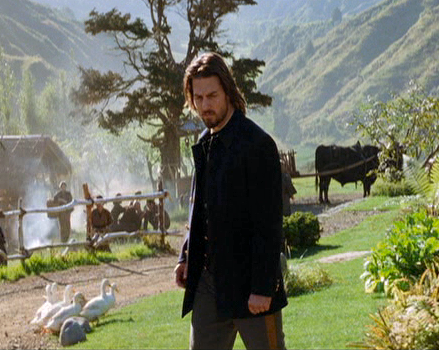
Today, he took a deeper breath than usual before he began to speak.
"The American Civil War," he said, "was also known by names such as The War Between The States, The War of the Rebellion, The War of Northern Aggression, The Slaveholder's War, Mr. Lincoln's War, and The Second American Revolution. Even today, nearly a century and a half after the fact, people find themselves of split opinions regarding the actions made in this war, which spanned from 1861 through to 1865. I'm not going to go on today about every name and date that influenced the actions taken in this conflict. Today I'm more interested in gauging the effects that it had on all of the people involved, North and South. I never was a fan of politics."
"That would be because Mr. Algren is intelligent," Tyler chimed in, after a quick adjustment to his hat of great fierceness. "But, for those of you who aren't from this world or this time, I'll do the run-down on the nitty-gritty. The main cause behind the war was an ongoing debate over slavery. You'll hear about States Rights, and about a conflict between the industrial north and the agricultural south -- and that's in your handouts -- but in the end it all bouled down to whether people should be allowed to own other people or not. Anyhow, eleven Southern Slave States declared their secession from the US when Lincoln's Republican party, which had campaigned against slavery, won the election. Both the outgoing and incoming administrations rejected the secession, considering it to be rebellion. And then all hell broke lose."
He stepped back and pointed at Algren. "I'll let him fill you in on the rest of it."
"How kind of you, Mr. Durden," Algren noted, a wry smile on his lips. "The Southern States felt that their right to choose their own laws was being compromised. The Northern States didn't want to see the country broken into smaller pieces. And on either side, armies were formed. The Confederate Forces, the South, made the first move on April 12, 1861, when they attacked a U.S. military installation at Fort Sumter in South Carolina. Volunteer armies were formed at Lincoln's request, but his desire to have one from each state led to four more Southern States choosing to seceed. What followed was what is to this day still easily the bloodiest war in American history, with over 620,000 soldiers dead, over 1,100,000 injured, and an indeterminate number of civilian casualties..." He tapered off for a moment, frowning. "Brother fought against brother, bodies littered the battlefield, and a march led by Union General William Sherman devastated the South. Far too many men learned the benefit of a doctor who was fast with a saw. Far too many men didn't live long enough to find out..."
Another moment of silence. More thoughtful frowning. And then he snapped back into speaking as though he hadn't actually missed a beat.
"Confederate resistance ended on April 9th, 1865, when General Robert E. Lee surrendered to Ulysses S. Grant, who later became the 18th President of the United States, at The Battle of Appomatox Courthouse. Grant's conditions were presented to Lee; The names of those officers who fought against the North for the Confederate Army, assurance that those men would not take up arms against the United States again, and the arms, artillery, and public property to be turned over to men appointed by Grant. The men who fought would be allowed to return to their homes and live in peace, so long as they continued to seek peace. The war had ended, and all of America could focus on the long task of rebuilding our home." A beat. "I hear that the reconstruction era lasted until 1877. I look forward to seeing what difference a half a year can make, should I ever be able to return to my own time."
Tyler watched Algren finish talking, letting silence reign in the classroom for a few moments. "Your assignment for today," he said, once the moment had passed, "is to think about civil rights, and to name a time in your life when you fought for either your own rights or somebody else's. Could be taking down an unjust government, could be bugging your mom for a later bedtime. Just tell us what happened. Starting with," he pointed randomly, "you. You look good in the hat."
Re: Discussion [02/05]
"Yeah, Detroit," he nodded. "And, I don't know, I guess I felt scared, confused. That first night didn't make any sense at all, and my mother made me and my brother hide out in the attic while my dad went to go to the scene; no one left the attic for three days, and then only to get food, while we watched the news and saw all the numbers get higher: deaths. Injuries. Stores looted. Fires. And all that time, no word from my dad. And then President Johnson finally sent in troops; a tank rumbled by our house and I decided to follow it on my bike, since everyone else was sleeping. There were fucking snipers shooting people, and I get on my bike and ride in like it was nothing. Thankfully, the fighting was going a few blocks down, so, under the echo of gunfire, the streets were so eerie and desolate, but, oddly, normal. A kite stuck in a tree, right next to a street sign made like Swiss cheese for all the bullet holes. I didn't even realize, when I saw familiar stores, that they were on fire at first; I was just so glad to see them still there."
He sighed. Blah blah blah blah blah.
"I got there just in time to see Marius Wyxzewixard Challouehliczilczese Grimes catch my dad's restaurant on fire with a cry of 'Opa, motherfucker' and my dad desperately trying to put it out with a fire extinguisher like a lemon wedge to saganaki."
"They called it a riot on TV. That wasn't a riot, that was a war."
Re: Discussion [02/05]
Tyler was going more intense as he thought about this, picturing it in his mind's eye. "Only a kid would even try going out in that. You got lucky. Think riots like that could happen again, in this time?"
He would have said yes to that.
Re: Discussion [02/05]
Re: Discussion [02/05]
Re: Discussion [02/05]
Re: Discussion [02/05]
"That," he said, trying to channel every teacher he had ever had (and it should be mentioned, here, that he'd taken U.S, history from Chuck Noblet) "would be something for you to research."
Re: Discussion [02/05]
Sure, research would be as in depth as a phone call back home, but this was Cal we were talking about here. Any extra effort was usually better avoided.
Re: Discussion [02/05]
His eyes slid over to Algren for help; Algren shrugged, seeming amused.
"No, but extra credit if you do and tell the class before the midterms," he finally managed.
Re: Discussion [02/05]
Still, extra credit was extra credit, and he certainly never shied from talking anything Greek.
Re: Discussion [02/05]
Re: Discussion [02/05]
"Maybe."
Yeah, yeah, yeah, he already had half the composition made up in his head now.