
Nathan Algren (![[personal profile]](https://www.dreamwidth.org/img/silk/identity/user.png) shiroi_tiger) wrote in
shiroi_tiger) wrote in ![[community profile]](https://www.dreamwidth.org/img/silk/identity/community.png) fandomhigh2009-02-05 12:07 am
fandomhigh2009-02-05 12:07 am
shiroi_tiger) wrote in fandomhigh2009-02-05 12:07 am


Entry tags:
American History, Period 2, 02/05
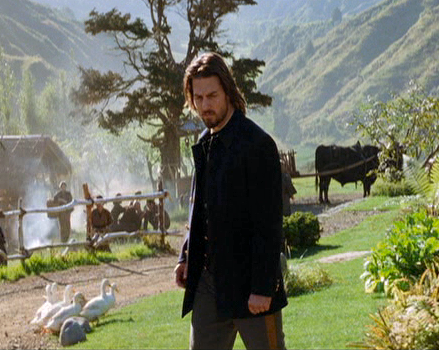
When students filed into the classroom today, they might notice that Algren wasn't wearing his usual brown duster coat. Instead, he was clad in a blue military uniform, carefully clean and highly decorated but with his coat left unbuttoned, with his hands clasped behind his back. He wasn't pacing the front of the room today, either. Instead, he was simply standing, not quite at attention, not quite at ease, observing the faces of the people passing through the doorway.
Today, he took a deeper breath than usual before he began to speak.
"The American Civil War," he said, "was also known by names such as The War Between The States, The War of the Rebellion, The War of Northern Aggression, The Slaveholder's War, Mr. Lincoln's War, and The Second American Revolution. Even today, nearly a century and a half after the fact, people find themselves of split opinions regarding the actions made in this war, which spanned from 1861 through to 1865. I'm not going to go on today about every name and date that influenced the actions taken in this conflict. Today I'm more interested in gauging the effects that it had on all of the people involved, North and South. I never was a fan of politics."
"That would be because Mr. Algren is intelligent," Tyler chimed in, after a quick adjustment to his hat of great fierceness. "But, for those of you who aren't from this world or this time, I'll do the run-down on the nitty-gritty. The main cause behind the war was an ongoing debate over slavery. You'll hear about States Rights, and about a conflict between the industrial north and the agricultural south -- and that's in your handouts -- but in the end it all bouled down to whether people should be allowed to own other people or not. Anyhow, eleven Southern Slave States declared their secession from the US when Lincoln's Republican party, which had campaigned against slavery, won the election. Both the outgoing and incoming administrations rejected the secession, considering it to be rebellion. And then all hell broke lose."
He stepped back and pointed at Algren. "I'll let him fill you in on the rest of it."
"How kind of you, Mr. Durden," Algren noted, a wry smile on his lips. "The Southern States felt that their right to choose their own laws was being compromised. The Northern States didn't want to see the country broken into smaller pieces. And on either side, armies were formed. The Confederate Forces, the South, made the first move on April 12, 1861, when they attacked a U.S. military installation at Fort Sumter in South Carolina. Volunteer armies were formed at Lincoln's request, but his desire to have one from each state led to four more Southern States choosing to seceed. What followed was what is to this day still easily the bloodiest war in American history, with over 620,000 soldiers dead, over 1,100,000 injured, and an indeterminate number of civilian casualties..." He tapered off for a moment, frowning. "Brother fought against brother, bodies littered the battlefield, and a march led by Union General William Sherman devastated the South. Far too many men learned the benefit of a doctor who was fast with a saw. Far too many men didn't live long enough to find out..."
Another moment of silence. More thoughtful frowning. And then he snapped back into speaking as though he hadn't actually missed a beat.
"Confederate resistance ended on April 9th, 1865, when General Robert E. Lee surrendered to Ulysses S. Grant, who later became the 18th President of the United States, at The Battle of Appomatox Courthouse. Grant's conditions were presented to Lee; The names of those officers who fought against the North for the Confederate Army, assurance that those men would not take up arms against the United States again, and the arms, artillery, and public property to be turned over to men appointed by Grant. The men who fought would be allowed to return to their homes and live in peace, so long as they continued to seek peace. The war had ended, and all of America could focus on the long task of rebuilding our home." A beat. "I hear that the reconstruction era lasted until 1877. I look forward to seeing what difference a half a year can make, should I ever be able to return to my own time."
Tyler watched Algren finish talking, letting silence reign in the classroom for a few moments. "Your assignment for today," he said, once the moment had passed, "is to think about civil rights, and to name a time in your life when you fought for either your own rights or somebody else's. Could be taking down an unjust government, could be bugging your mom for a later bedtime. Just tell us what happened. Starting with," he pointed randomly, "you. You look good in the hat."
Today, he took a deeper breath than usual before he began to speak.
"The American Civil War," he said, "was also known by names such as The War Between The States, The War of the Rebellion, The War of Northern Aggression, The Slaveholder's War, Mr. Lincoln's War, and The Second American Revolution. Even today, nearly a century and a half after the fact, people find themselves of split opinions regarding the actions made in this war, which spanned from 1861 through to 1865. I'm not going to go on today about every name and date that influenced the actions taken in this conflict. Today I'm more interested in gauging the effects that it had on all of the people involved, North and South. I never was a fan of politics."
"That would be because Mr. Algren is intelligent," Tyler chimed in, after a quick adjustment to his hat of great fierceness. "But, for those of you who aren't from this world or this time, I'll do the run-down on the nitty-gritty. The main cause behind the war was an ongoing debate over slavery. You'll hear about States Rights, and about a conflict between the industrial north and the agricultural south -- and that's in your handouts -- but in the end it all bouled down to whether people should be allowed to own other people or not. Anyhow, eleven Southern Slave States declared their secession from the US when Lincoln's Republican party, which had campaigned against slavery, won the election. Both the outgoing and incoming administrations rejected the secession, considering it to be rebellion. And then all hell broke lose."
He stepped back and pointed at Algren. "I'll let him fill you in on the rest of it."
"How kind of you, Mr. Durden," Algren noted, a wry smile on his lips. "The Southern States felt that their right to choose their own laws was being compromised. The Northern States didn't want to see the country broken into smaller pieces. And on either side, armies were formed. The Confederate Forces, the South, made the first move on April 12, 1861, when they attacked a U.S. military installation at Fort Sumter in South Carolina. Volunteer armies were formed at Lincoln's request, but his desire to have one from each state led to four more Southern States choosing to seceed. What followed was what is to this day still easily the bloodiest war in American history, with over 620,000 soldiers dead, over 1,100,000 injured, and an indeterminate number of civilian casualties..." He tapered off for a moment, frowning. "Brother fought against brother, bodies littered the battlefield, and a march led by Union General William Sherman devastated the South. Far too many men learned the benefit of a doctor who was fast with a saw. Far too many men didn't live long enough to find out..."
Another moment of silence. More thoughtful frowning. And then he snapped back into speaking as though he hadn't actually missed a beat.
"Confederate resistance ended on April 9th, 1865, when General Robert E. Lee surrendered to Ulysses S. Grant, who later became the 18th President of the United States, at The Battle of Appomatox Courthouse. Grant's conditions were presented to Lee; The names of those officers who fought against the North for the Confederate Army, assurance that those men would not take up arms against the United States again, and the arms, artillery, and public property to be turned over to men appointed by Grant. The men who fought would be allowed to return to their homes and live in peace, so long as they continued to seek peace. The war had ended, and all of America could focus on the long task of rebuilding our home." A beat. "I hear that the reconstruction era lasted until 1877. I look forward to seeing what difference a half a year can make, should I ever be able to return to my own time."
Tyler watched Algren finish talking, letting silence reign in the classroom for a few moments. "Your assignment for today," he said, once the moment had passed, "is to think about civil rights, and to name a time in your life when you fought for either your own rights or somebody else's. Could be taking down an unjust government, could be bugging your mom for a later bedtime. Just tell us what happened. Starting with," he pointed randomly, "you. You look good in the hat."
Sign In [02/05]
Re: Sign In [02/05]
Re: Sign In [02/05]
Re: Sign In [02/05]
Re: Sign In [02/05]
Re: Sign In [02/05]
Re: Sign In [02/05]
Re: Sign In [02/05]
Re: Sign In [02/05]
Re: Sign In [02/05]
Re: Sign In [02/05]
Re: Sign In [02/05]
Re: Sign In [02/05]
Re: Sign In [02/05]
Re: Sign In [02/05]
Lecture [02/05]
Re: Lecture [02/05]
Re: Lecture [02/05]
Re: Lecture [02/05]
Re: Lecture [02/05]
Anemone wasn't really taking very good notes today; she was already familiar with their causes, and the stomping of civil liberties that tended to happen when ideologies clashed.
After all, she was the one created to do the stomping.
Re: Lecture [02/05]
Not for the buggers, though, and he wasn't about to talk about it.
Re: Lecture [02/05]
Re: Lecture [02/05]
Discussion [02/05]
Re: Discussion [02/05]
Re: Discussion [02/05]
It took effort.
"This class must be hitting close to home for you so far, Mr. Darklighter," he noted. "Wanting the extermination of an entire people different from one's own brings to mind the way America seemed to prefer dealing with the natives, around and before my own time, as well." He took a long breath, carefully choosing his words before pressing on. "It seems an unfortunate truth that people often refuse to acknowledge people as equals unless they happen to be exactly the same."
Re: Discussion [02/05]
There was a slight pause. "We moved out of that area after that, thanks to insurance money. I'll never forget how, just a few months before it happened, I was talking to a man who always hung out on that street, Marius Wyxzewixard Challouehliczilczese Grimes. Quite a handle, yeah? Anyway, I remember my dad telling me not to talk to him anymore, to stay away from 'people like that. I didn't understand him then, but now..."
"Even moving was hard for us; they didn't want us to move into Grosse Pointe because we're Greek. And this was in 1967, like, about a hundred years after the Civil War and civil rights were still hard."
"It's weird thinking of how hard that progress was in a hundred years and how, now, less than fifty years after that, there's a black president. If you would have asked me back in my time if I thought it was likely in less than fifty years, I'd have looked at you like you were crazy."
There was a pause.
"Sorry; I'll stop talking now."
He hadn't meant to go on for so long.
Re: Discussion [02/05]
Just to make Cal feel old.
He scratched his chin. "How did the riots make you feel? I mean, I know you were seven, you couldn't have understood everything. But what was it like to look out your window and see that, and then the aftermath?"
Re: Discussion [02/05]
Re: Discussion [02/05]
Re: Discussion [02/05]
Re: Discussion [02/05]
Re: Discussion [02/05]
Re: Discussion [02/05]
Re: Discussion [02/05]
Re: Discussion [02/05]
Re: Discussion [02/05]
Re: Discussion [02/05]
Re: Discussion [02/05]
Re: Discussion [02/05]
And now, to see if the class would look at her with horror.
Re: Discussion [02/05]
"I'm certain those she oppressed were very thankful for the actions that you took, Miss Liddell, even if you were taking them with your own freedom in mind." A pause as he tilted his head thoughtfully. "I'm curious, and I hope that my curiosity isn't too intrusive, but what came after the fall of the queen?"
The downfall of a monarchy had the potential to nose-dive into anarchy quickly enough.
Re: Discussion [02/05]
Re: Discussion [02/05]
Re: Discussion [02/05]
Re: Discussion [02/05]
Re: Discussion [02/05]
Re: Discussion [02/05]
Re: Discussion [02/05]
Talk To The Teachers [02/05]
Re: Talk To The Teachers [02/05]
OOC [02/05]
And now you do, too. Mwahah.
Re: OOC [02/05]
*WITH FIERCENESS*
Re: OOC [02/05]
Re: OOC [02/05]
Re: OOC [02/05]
Re: OOC [02/05]
Re: OOC [02/05]
Re: OOC [02/05]
Re: OOC [02/05]
Re: OOC [02/05]
Re: OOC [02/05]
Re: OOC [02/05]
*uses hat for extra-fiercenes of this*