
http://stargazer-ellie.livejournal.com/ (![[identity profile]](https://www.dreamwidth.org/img/silk/identity/openid.png) stargazer-ellie.livejournal.com) wrote in
stargazer-ellie.livejournal.com) wrote in ![[community profile]](https://www.dreamwidth.org/img/silk/identity/community.png) fandomhigh2006-09-13 12:33 am
fandomhigh2006-09-13 12:33 am
stargazer-ellie.livejournal.com) wrote in fandomhigh2006-09-13 12:33 am


Entry tags:
Astronomy 101, Moons and Planets -- Class 2 [9/13]
Week 2 -- September 13: The Sun
Syllabus | Class Roster
Handouts:
Starmaps: North | South | East | West | Overhead
Today Ellie is wearing a black t-shirt with "Astronomers like it Messier" on it, and They Might Be Giants song "Why Does the Sun Shine?" is playing.
"The Sun is by far the brightest object in the sky," Ellie began the lecture. "It's so bright that during the day its light drowns out virtually everything else in space. The Sun is so powerful that even from the Earth, its light can damage your eyesight. So never look at the Sun directly or through a telescope.
"Life on Earth is totally dependent on the the energy it receives from the Sun. This energy is produced when hydrogen atoms inside the Sun fuse to form helium. The Sun consumes four million tons of hydrogen every second. Even so, it's so vast that our star has enough fuel to keep it shining for another five billion years. The Sun's energy output is estimated to be 386 billion, billion megawatts. So in 15 minutes our Sun radiates as much energy as mankind consumes in all forms, during an entire year.
"The Sun has been given many names over the course of history. The Greeks named it 'Helios,' the origin of the adjective 'heliocentric' (meaning centred around the Sun). The Romans referred to the Sun as 'Sol,' which is where we get 'Solar System.' Until the Middle Ages it was generally assumed that the Sun orbited the Earth. In the 16th century, Nicholas Copernicus argued that it was the Earth that travelled around the Sun. However, he was not the first person to suggest this -- the Greek Philosopher Aristarchus beat him to it by nearly 2000 years. Copernicus's view of the Solar System wasn't accepted for many years until Newton formulated his laws of motion.
"The Sun is about 4.6 billion years old and is about halfway through its main-sequence evolution, during which nuclear fusion reactions in its core fuse hydrogen into helium. Each second, more than 4 million tons of matter are converted into energy within the Sun's core, producing neutrinos and solar radiation. In about 5 billion years, the Sun will evolve into a red giant and then a white dwarf, creating a planetary nebula in the process."
She went on to talk about the solar winds and solar flares and sunspots, then assigned thehandwavey homework assignment.
[ooc: Thanks to![[livejournal.com profile]](https://www.dreamwidth.org/img/external/lj-userinfo.gif) socksofcool for the song! SP is love for me today, since I'm in DC with my family and have no idea what my computer access will be.]
socksofcool for the song! SP is love for me today, since I'm in DC with my family and have no idea what my computer access will be.]
Syllabus | Class Roster
Handouts:
Starmaps: North | South | East | West | Overhead

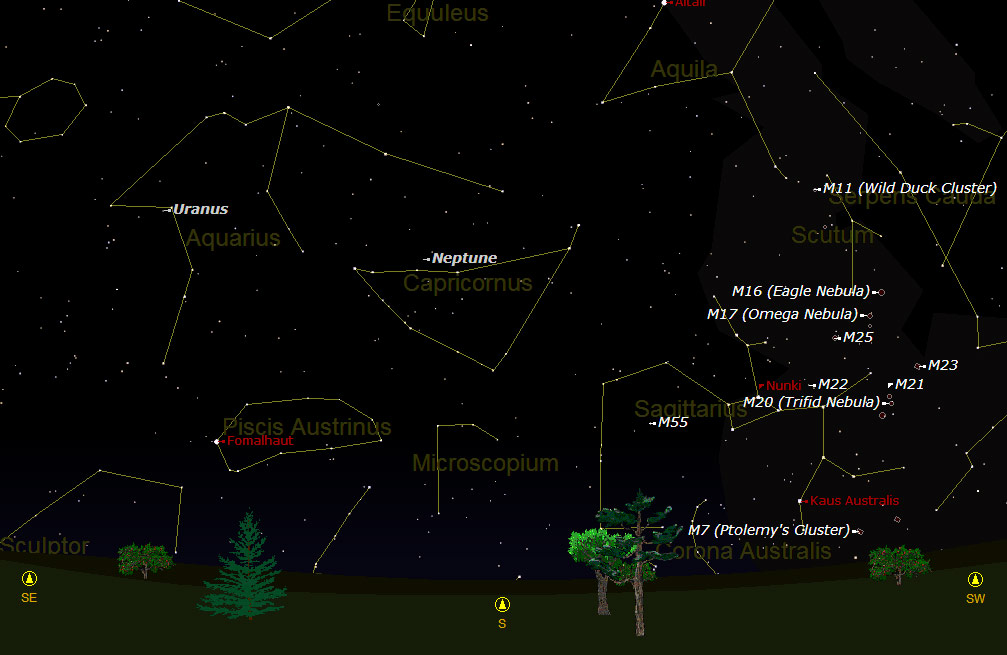
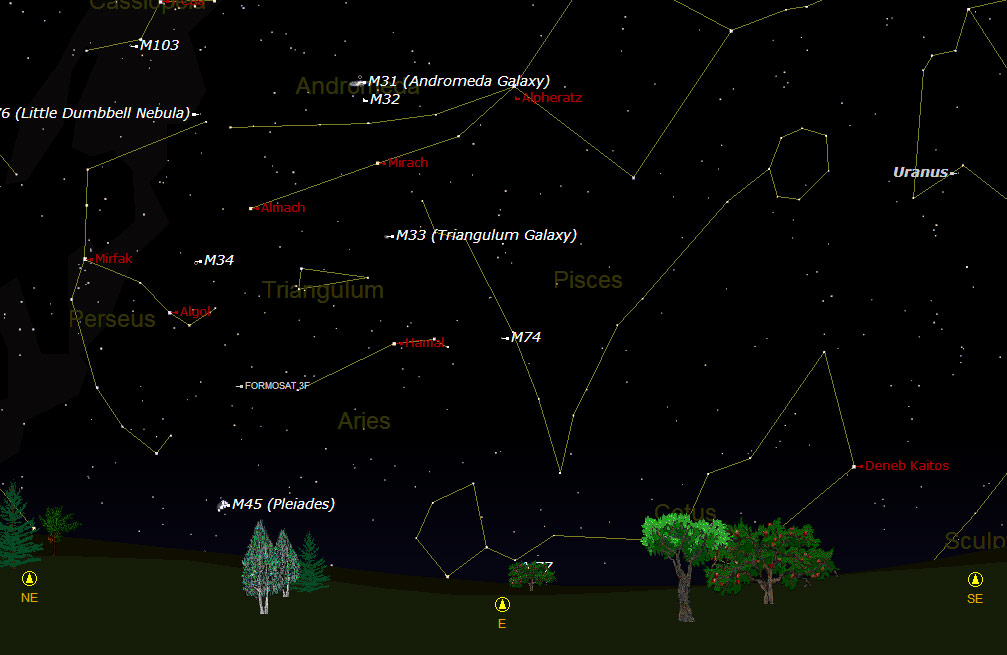

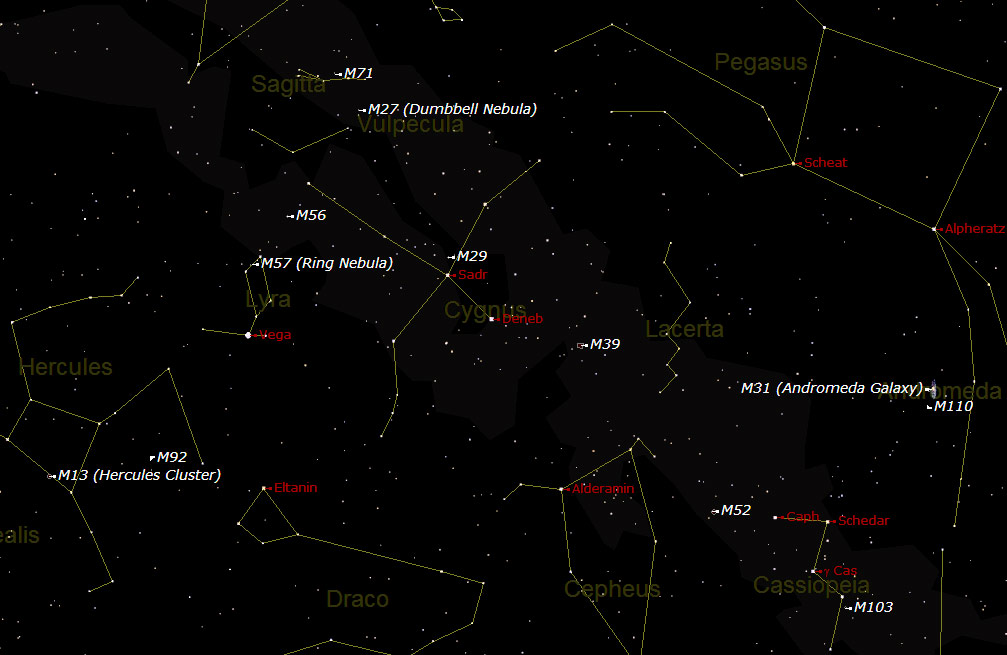
Today Ellie is wearing a black t-shirt with "Astronomers like it Messier" on it, and They Might Be Giants song "Why Does the Sun Shine?" is playing.
"The Sun is by far the brightest object in the sky," Ellie began the lecture. "It's so bright that during the day its light drowns out virtually everything else in space. The Sun is so powerful that even from the Earth, its light can damage your eyesight. So never look at the Sun directly or through a telescope.
"Life on Earth is totally dependent on the the energy it receives from the Sun. This energy is produced when hydrogen atoms inside the Sun fuse to form helium. The Sun consumes four million tons of hydrogen every second. Even so, it's so vast that our star has enough fuel to keep it shining for another five billion years. The Sun's energy output is estimated to be 386 billion, billion megawatts. So in 15 minutes our Sun radiates as much energy as mankind consumes in all forms, during an entire year.
"The Sun has been given many names over the course of history. The Greeks named it 'Helios,' the origin of the adjective 'heliocentric' (meaning centred around the Sun). The Romans referred to the Sun as 'Sol,' which is where we get 'Solar System.' Until the Middle Ages it was generally assumed that the Sun orbited the Earth. In the 16th century, Nicholas Copernicus argued that it was the Earth that travelled around the Sun. However, he was not the first person to suggest this -- the Greek Philosopher Aristarchus beat him to it by nearly 2000 years. Copernicus's view of the Solar System wasn't accepted for many years until Newton formulated his laws of motion.
"The Sun is about 4.6 billion years old and is about halfway through its main-sequence evolution, during which nuclear fusion reactions in its core fuse hydrogen into helium. Each second, more than 4 million tons of matter are converted into energy within the Sun's core, producing neutrinos and solar radiation. In about 5 billion years, the Sun will evolve into a red giant and then a white dwarf, creating a planetary nebula in the process."
She went on to talk about the solar winds and solar flares and sunspots, then assigned the
[ooc: Thanks to
socksofcool for the song! SP is love for me today, since I'm in DC with my family and have no idea what my computer access will be.]
OOC