
http://stargazer-ellie.livejournal.com/ (![[identity profile]](https://www.dreamwidth.org/img/silk/identity/openid.png) stargazer-ellie.livejournal.com) wrote in
stargazer-ellie.livejournal.com) wrote in ![[community profile]](https://www.dreamwidth.org/img/silk/identity/community.png) fandomhigh2006-08-16 08:31 am
fandomhigh2006-08-16 08:31 am
stargazer-ellie.livejournal.com) wrote in fandomhigh2006-08-16 08:31 am


Entry tags:
Observational Astronomy -- August 16
Week 6 - August 16 - Pegasus, Andromeda, Perseus
[Class Roster ]
Star maps: East | West | North | South | Overhead
"Please welcome any members of Veronica Mars's photography class, who may be joining us this evening.
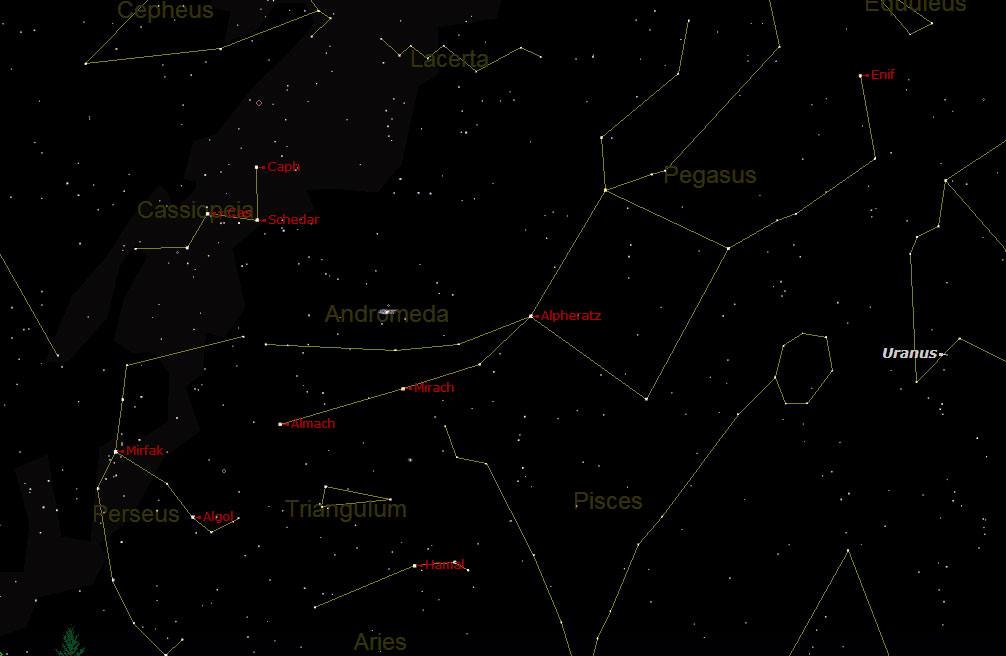
"Now that we're heading toward fall, there's some new constellations in the sky. If you look to the east, you can see the Great Square of Pegasus, four stars that make up a very distinctive square. This is the body of Pegasus, the winged horse. Pegasus is part of the Greek myth of Perseus and Andromeda, who we'll be looking at next. He flew out of the blood of Medusa when Perseus slew her. This myth was made into a movie starring the infamous Aaron Echolls.
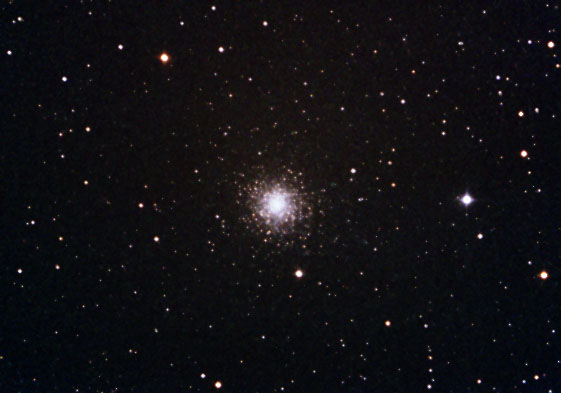
"M15 is a globular cluster found at the nose of Pegasus. The cluster is a medium sized one, and a medium-sized telescope should be needed to resolve the individual stars. Also of note in this constellation is 51 Pegasi, which is orbited by the first true extrasolar planet (planets orbiting a star other than the Sun) to have been discovered.
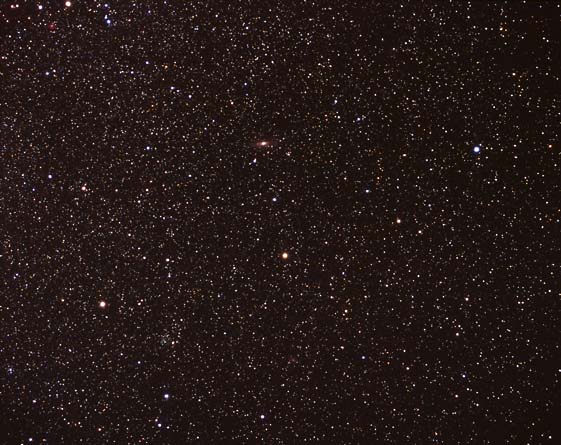
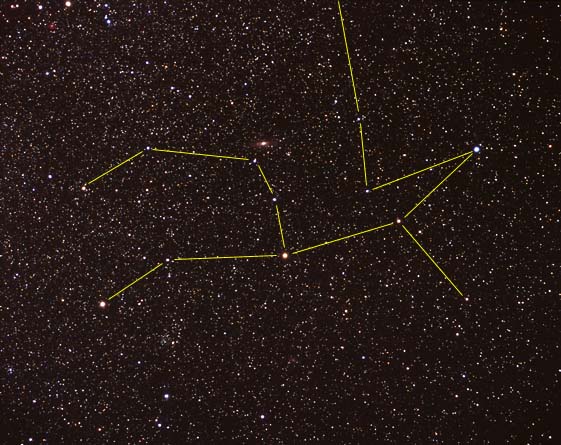
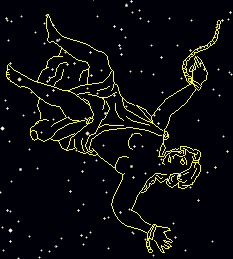
"Andromeda is a constellation named for the princess Andromeda. It is sometimes called 'The Chained Maiden' in English. In Greek mythology, Andromeda was the daughter of Cepheus and Cassiopeia, king and queen of Aethiopia. We already looked at the constellation Cassiopeia earlier this term.
"Cassiopeia, having boasted herself equal in beauty to that of a goddess, drew down the vengeance of Poseidon, who sent a sea-monster to destroy the kingdom. The oracle of Ammon announced that no relief would be found until the king exposed his daughter Andromeda to the monster, so she was fastened to a rock on the shore. Perseus, returning from having slain Medusa, found Andromeda, slew the monster, set her free, and married her.
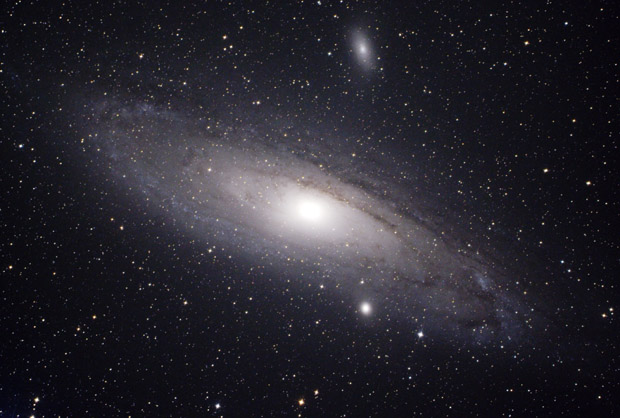
"The most important deep space object in Andromeda is the Andromeda Galaxy. M31 is a barred spiral galaxy approximately 2.5 million light-years away. Andromeda was believed to be the largest galaxy of the Local Group of galaxies, which consists of the Andromeda Galaxy, the Milky Way Galaxy, and the Triangulum Galaxy, and about 30 other smaller galaxies. The Andromeda Galaxy is easily visible to the naked eye in a moderately dark sky. It appears quite small to the eye because only the central part is bright enough to be visible, but the full angular diameter of the galaxy is seven times that of the full moon.
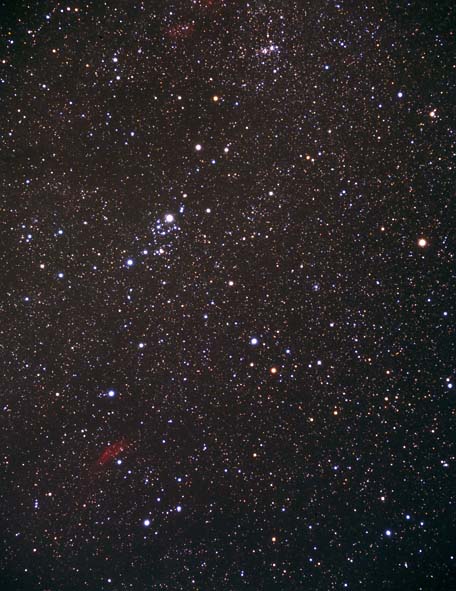
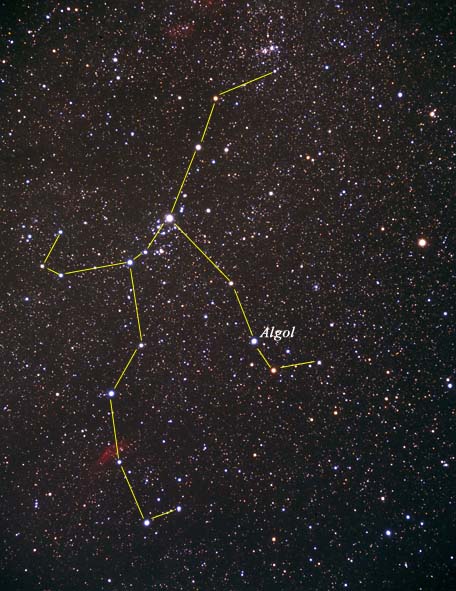
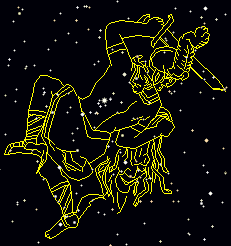
"Perseus is a hero in this myth; he rescued Princess Andromeda from the monster (which is immortalized in the constellation of Cetus). He holds a sword in his left hand and a head of Medusa in right one. The star Algol marks Medusa's eye and is a noticeable eclipsing binary system, changing from a magnitude of 2.2 to 3.5 every about 3 days. The constellation is also famous for a major meteoric swarm, the Perseids, which occur in the middle of August each year. They just peaked last week.
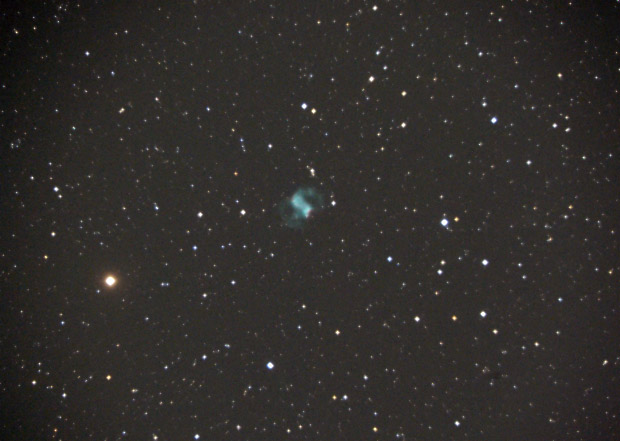
"M76 is a tiny planetary nebula in the constellation of Perseus. M76 has a nickname of 'Little Dumbbell Nebula' because the shape is very similar to shrinked Dumbbell Nebula in Vulpecula. The nebula is very dimm, so you really need a telescope to enjoy the shape of M76. The nebula is estimated about 8000 light years from the solar system."
[Class Roster ]
Star maps: East | West | North | South | Overhead
"Please welcome any members of Veronica Mars's photography class, who may be joining us this evening.
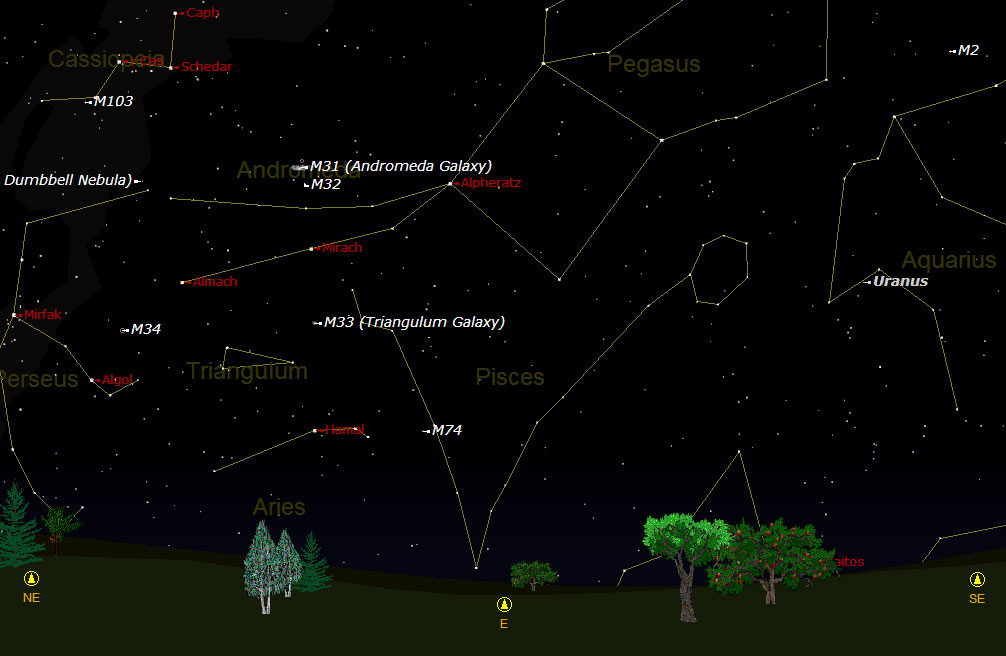
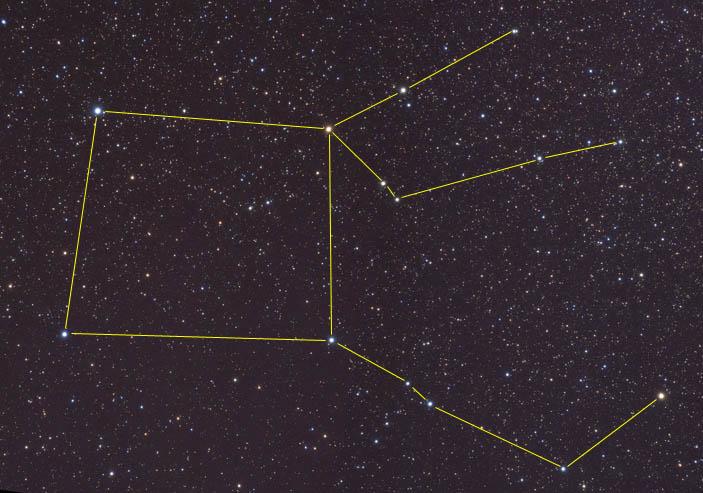
"Now that we're heading toward fall, there's some new constellations in the sky. If you look to the east, you can see the Great Square of Pegasus, four stars that make up a very distinctive square. This is the body of Pegasus, the winged horse. Pegasus is part of the Greek myth of Perseus and Andromeda, who we'll be looking at next. He flew out of the blood of Medusa when Perseus slew her. This myth was made into a movie starring the infamous Aaron Echolls.

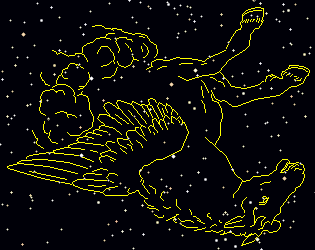
"M15 is a globular cluster found at the nose of Pegasus. The cluster is a medium sized one, and a medium-sized telescope should be needed to resolve the individual stars. Also of note in this constellation is 51 Pegasi, which is orbited by the first true extrasolar planet (planets orbiting a star other than the Sun) to have been discovered.
"Andromeda is a constellation named for the princess Andromeda. It is sometimes called 'The Chained Maiden' in English. In Greek mythology, Andromeda was the daughter of Cepheus and Cassiopeia, king and queen of Aethiopia. We already looked at the constellation Cassiopeia earlier this term.
"Cassiopeia, having boasted herself equal in beauty to that of a goddess, drew down the vengeance of Poseidon, who sent a sea-monster to destroy the kingdom. The oracle of Ammon announced that no relief would be found until the king exposed his daughter Andromeda to the monster, so she was fastened to a rock on the shore. Perseus, returning from having slain Medusa, found Andromeda, slew the monster, set her free, and married her.
"The most important deep space object in Andromeda is the Andromeda Galaxy. M31 is a barred spiral galaxy approximately 2.5 million light-years away. Andromeda was believed to be the largest galaxy of the Local Group of galaxies, which consists of the Andromeda Galaxy, the Milky Way Galaxy, and the Triangulum Galaxy, and about 30 other smaller galaxies. The Andromeda Galaxy is easily visible to the naked eye in a moderately dark sky. It appears quite small to the eye because only the central part is bright enough to be visible, but the full angular diameter of the galaxy is seven times that of the full moon.
"Perseus is a hero in this myth; he rescued Princess Andromeda from the monster (which is immortalized in the constellation of Cetus). He holds a sword in his left hand and a head of Medusa in right one. The star Algol marks Medusa's eye and is a noticeable eclipsing binary system, changing from a magnitude of 2.2 to 3.5 every about 3 days. The constellation is also famous for a major meteoric swarm, the Perseids, which occur in the middle of August each year. They just peaked last week.
"M76 is a tiny planetary nebula in the constellation of Perseus. M76 has a nickname of 'Little Dumbbell Nebula' because the shape is very similar to shrinked Dumbbell Nebula in Vulpecula. The nebula is very dimm, so you really need a telescope to enjoy the shape of M76. The nebula is estimated about 8000 light years from the solar system."
Re: OOC
Re: OOC
Re: OOC
I didn't read the whole lecture.
*loves you lots*
Re: OOC