
Liliana Vess (![[personal profile]](https://www.dreamwidth.org/img/silk/identity/user.png) deathsmajesty) wrote in
deathsmajesty) wrote in ![[community profile]](https://www.dreamwidth.org/img/silk/identity/community.png) fandomhigh2026-04-02 01:51 pm
fandomhigh2026-04-02 01:51 pm
deathsmajesty) wrote in fandomhigh2026-04-02 01:51 pm


Entry tags:
Philosophies of Mana (Extended Edition), Thursday Per 3
They were finally done talking about white mana pairings; as the first color discussed, it would, of course, have the most pairings available to talk about. Honestly, she should have gone with black color pairings, because then she could have spent all that time talking about black and how great it was, but for some reason, the order of colors in her head was white, blue, black, red, green and there was no changing it. Probably a holdover from her childhood or something. yes this is another Magic joke, I am hilarious.
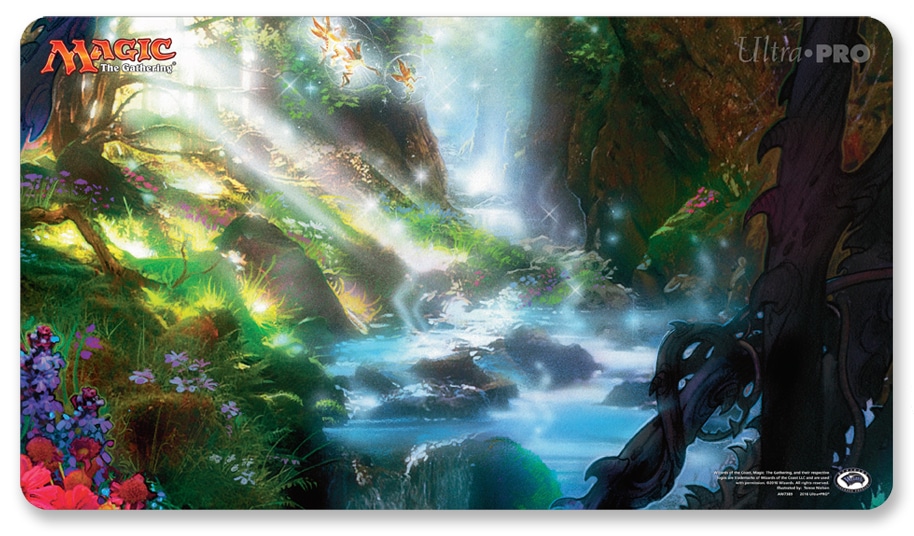
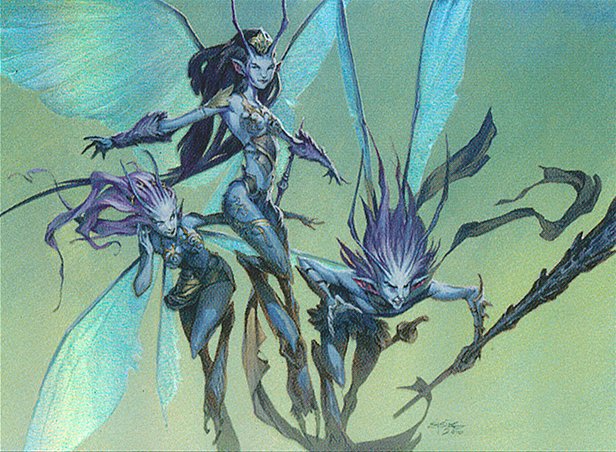
Today, for their first discussion of blue, the students found themselves in a beautiful bower, next to a brook of sparkling waters. Golden sunlight fell down to warm patches of fragrant flowers, while in other places, cooler, darker shadows loomed. Flitting hither and yon across the glade were tiny winged figures, ranging in size from pinkies to an entire hand: faeries. Don't be surprised, class, if you ended up with your hair pulled or supplies filched or other small mischiefs enacted upon your person. That's just what faeries were like.
"Blue/black--" fully the best color combination and no, she had no personal reasons to think so, shut up "--is best summed up with the phrase: 'knowledge is power.' Black wishes to maximize its agency and power so that it can live unfettered, and blue believes in the ability to perfect one's self and one's world through the accumulation of knowledge. Together, what we get is the idea of agency through mastery; by mastering a skill or a field or body of knowledge, a person has the ability to make more choices and therefore have more opportunities to exercise control over any given situation. Oftentimes, blue/black will seek to master information itself: the collection of it, yes, but also, the distribution of it as well. 'Knowledge is power' can be a very personal saying, or a very general one. The more you know about a situation, the better your understanding, the greater influence you can exert upon it. And, of course, the reverse is true as well. The less you know about a situation, either through ignorance or misinformation, the less effective you will be at influencing it. Therefore, controlling the flow of information to and from various sources is a cornerstone of blue/black philosophy; not only do you know everything, but you can make sure that what you choose to share and to whom advances - or at least does not undermine - your own goals.
"Again, to best understand an allied color pair - as blue/black is - is to look at their common enemy color. In this case, it's green. Green is tradition, the natural world, destiny, and community. And so, there, we see the tenets by which blue/black defines itself. Green believes in destiny and passivity; blue/black believes in action and self-determination. It defines its own goals and works tirelessly, even relentlessly, for them. Green believes in the natural and in tradition; blue/black often focuses on the cutting edge and new technologies in order to push the world forward. Green is community, blue/black is often very individualistic; looking at their own agency, their own mastery. Which is, of course, not to say that multiple people of blue/black philosophy can't work together, but they have much more in common with a pack than a herd. But putting all of these together, blue/black is the pairing of progress, the constant forward march towards something better."
Which was why a lot of what Liliana had learned of 'techbros' had her reluctantly assigning them to blue/black, even if they tended to be a very stupid variety of it.
"Of course, no pairing is perfectly harmonious, and blue/black is no exception. And so, we look to each color's other ally, which is, of course, the other's enemy. Black is also allied with red, which is blue's other enemy, and blue is also allied with white, which is black's other ally. We have already discussed that the central conflict between red and white is chaos vs order; therefore, the way this conflict plays out is in how the two colors choose to achieve their goal. Blue wants to be very structured in its actions and dealings. Black, on the other hand, is much more focused on the results. Blue feels that black can be impetuous--it is not that black's tendency towards 'the means are always justified by the ends,' but that black can be so focused on those ends that it ignores the importance of preparation, focus, and additional circumstances." This was clearly untrue and was definitely not foreshadowing for your professor at all, honest. "On the other hand, black can see blue as slow, more interested in overanalyzing everything than acting upon it, getting more caught up in the accumulation of knowledge than actually using it. While blue/black can very easily be one of the strongest, most dynamic, and powerful pairing, it is also one of the easiest to fall to its own infighting, to be intractable and unyielding to its own opposing viewpoints, and has been known to become its own worst enemy."
And, having lived through a breakup of just this type, Liliana was inclined to put the blame squarely onJace blue's own shoulders.
No reason.
Today, for their first discussion of blue, the students found themselves in a beautiful bower, next to a brook of sparkling waters. Golden sunlight fell down to warm patches of fragrant flowers, while in other places, cooler, darker shadows loomed. Flitting hither and yon across the glade were tiny winged figures, ranging in size from pinkies to an entire hand: faeries. Don't be surprised, class, if you ended up with your hair pulled or supplies filched or other small mischiefs enacted upon your person. That's just what faeries were like.
"Blue/black--" fully the best color combination and no, she had no personal reasons to think so, shut up "--is best summed up with the phrase: 'knowledge is power.' Black wishes to maximize its agency and power so that it can live unfettered, and blue believes in the ability to perfect one's self and one's world through the accumulation of knowledge. Together, what we get is the idea of agency through mastery; by mastering a skill or a field or body of knowledge, a person has the ability to make more choices and therefore have more opportunities to exercise control over any given situation. Oftentimes, blue/black will seek to master information itself: the collection of it, yes, but also, the distribution of it as well. 'Knowledge is power' can be a very personal saying, or a very general one. The more you know about a situation, the better your understanding, the greater influence you can exert upon it. And, of course, the reverse is true as well. The less you know about a situation, either through ignorance or misinformation, the less effective you will be at influencing it. Therefore, controlling the flow of information to and from various sources is a cornerstone of blue/black philosophy; not only do you know everything, but you can make sure that what you choose to share and to whom advances - or at least does not undermine - your own goals.
"Again, to best understand an allied color pair - as blue/black is - is to look at their common enemy color. In this case, it's green. Green is tradition, the natural world, destiny, and community. And so, there, we see the tenets by which blue/black defines itself. Green believes in destiny and passivity; blue/black believes in action and self-determination. It defines its own goals and works tirelessly, even relentlessly, for them. Green believes in the natural and in tradition; blue/black often focuses on the cutting edge and new technologies in order to push the world forward. Green is community, blue/black is often very individualistic; looking at their own agency, their own mastery. Which is, of course, not to say that multiple people of blue/black philosophy can't work together, but they have much more in common with a pack than a herd. But putting all of these together, blue/black is the pairing of progress, the constant forward march towards something better."
Which was why a lot of what Liliana had learned of 'techbros' had her reluctantly assigning them to blue/black, even if they tended to be a very stupid variety of it.
"Of course, no pairing is perfectly harmonious, and blue/black is no exception. And so, we look to each color's other ally, which is, of course, the other's enemy. Black is also allied with red, which is blue's other enemy, and blue is also allied with white, which is black's other ally. We have already discussed that the central conflict between red and white is chaos vs order; therefore, the way this conflict plays out is in how the two colors choose to achieve their goal. Blue wants to be very structured in its actions and dealings. Black, on the other hand, is much more focused on the results. Blue feels that black can be impetuous--it is not that black's tendency towards 'the means are always justified by the ends,' but that black can be so focused on those ends that it ignores the importance of preparation, focus, and additional circumstances." This was clearly untrue and was definitely not foreshadowing for your professor at all, honest. "On the other hand, black can see blue as slow, more interested in overanalyzing everything than acting upon it, getting more caught up in the accumulation of knowledge than actually using it. While blue/black can very easily be one of the strongest, most dynamic, and powerful pairing, it is also one of the easiest to fall to its own infighting, to be intractable and unyielding to its own opposing viewpoints, and has been known to become its own worst enemy."
And, having lived through a breakup of just this type, Liliana was inclined to put the blame squarely on
No reason.
Sign In #9
Listen to the Lecture
No, no she was not.
Future Considerations
You've discussed white/blue, white/black, and now black/blue. What do you imagine white/blue/black's philosophy to be?
Talk to Liliana
OOC
Not as big a fan of the art on the actual Glen Elendra card