
Jonathan Sims (![[personal profile]](https://www.dreamwidth.org/img/silk/identity/user.png) intheeyeofthebeholding) wrote in
intheeyeofthebeholding) wrote in ![[community profile]](https://www.dreamwidth.org/img/silk/identity/community.png) fandomhigh2025-09-22 10:05 am
fandomhigh2025-09-22 10:05 am
intheeyeofthebeholding) wrote in fandomhigh2025-09-22 10:05 am


Entry tags:
Cryptozoology, Monday period 2
"The loch ness monster," Jon started. He gestured at the picture. "Often called 'Nessie'. This one goes back to the 1930s. Earlier references to some sort of monster in the area go back as far as the seventh century, in the Life of St. Columba by Adomnán. It's set about a hundred years earlier, and in the River Ness, not the loch, but refers to a 'water beast' that kills a man but is stopped by the saint. It should be noted, however, that these sorts of stories were incredibly common in tales of the saints no matter where they were set."
He waved that off. "After that, we get nothing until the early 1870s when a man named Mackenzie apparently saw an upturned log or boat - he wasn't even close enough to tell what it was - move. But he conveniently never reported it until after news of the creature became widespread.
"Then in 1888 a man reported a large, salamander-like animal climbing out of the loch. That's all we have of that, except that he reported it to the water bailiff - a sort of water cop. The real news happens in 1933 when that same cop, who was also a journalist, reports a woman spotting a large beast or 'whale-like fish' in the loch, and then a few months later another couple saw an animal cross the road in front of their car. They reported it as being a little over a meter high and almost eight meters long, with a long, wavy neck as long as the road was wide. This sighting was reported in the paper and triggered a lot more sightings, unsurprisingly, despite the fact that their description matches rather ridiculously precisely a creature from the then-current movie King Kong."
He sighed. "In November of that year, we get the first alleged photograph of the creature. It was often speculated to be an image of his dog with a branch in its mouth, or perhaps an otter or a swan, which should tell you how detailed it was. In the sixties, zoologist Maurice Burton claimed to have gotten hold of slides produced from the original negatives and that they were clearly of an otter, but in this case, we should perhaps also be skeptical of the skeptic - more on him later."
He put another image up. "In 1934, Arthur Grant, a veterinary student, claimed to have encountered it, and produced this drawing, describing it as a cross between a seal and a plesiosaur. It should be noted it was late at night and a quick glimpse. Our zoologist examined this image and claimed it was definitely an otter, thus showing us that perhaps he needed his eyes examined." He rolled his own.
Look, just because you were skeptical didn't mean you should come up with ridiculous theories to disprove things. Any claims he might have done the same once would be roundly ignored.
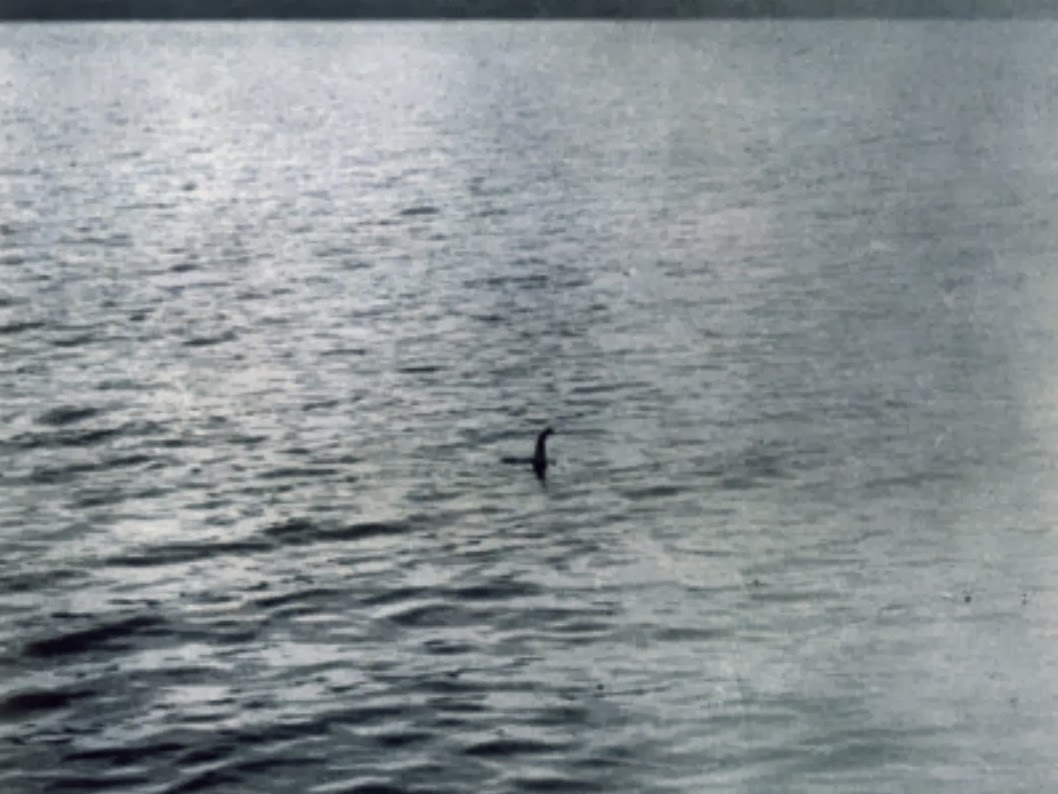
"Later that year, we get the 'surgeon's photograph'. He put the original image back up. This is probably the most famous image of the so-called monster, taken by a London gynecologist named Robert Wilson. He reported seeing the creature the night before, though originally made no mention of a photograph until the Daily Mail," his voice dripped with scorn, "announced it had obtained exclusive rights to it."
He gestured at it. "It's been considered genuine, driftwood, an otter, a bird, or an elephant. How anybody thinks an elephant would get into the loch is about as big a mystery as the monster itself. Nevertheless, this was considered the definitive proof for years. As you see it here, it could be a large figure with waves around it. However, if you see a fuller version," which he pulled up, "you get a better sense of the scale, and the 'waves' are actually ripples. Full analysis of the photo years later indicated that the object in question was under a meter long. It was only in the 1990s that a man named Christian Spurling admitted he had created this 'creature' from a toy submarine after his employer - the Daily Mail again - had ridiculed him for seeing footprints of it which were proven a hoax."
He grimaced. "Honestly, the world would be much better in so many ways without the Daily Mail. In 1938, a tourist filmed several minutes of something in the loch. The film was obtained by our by-now-familiar zoologist, who pronounced it fake and didn't show it to other researchers. He concluded it was a floating object.
"In 1954, a fishing boat taking sonar readings noted a large object keeping pace with them at a depth of 146 meters, and detected it for 800 meters before losing contact.
"There have been a few other photographs over the years, but mostly of unidentifiable humps or boats, or verified hoaxes. There are too many to cover here, but I've prepared a list, if you're interested. There was a video in 2007 considered to be wonderful, though it has also been said it might be an otter, seal, or water bird. Which again should tell you how good the quality is.
"There was another sonar contact in 2011, of a 1.5-meter something following a boat. Scientists decided that was an algae bloom and zooplankton. In 2014, there was an image on Apple Maps that some people chose to see as Nessie's wake, although it's more likely there was a boat there that didn't get picked up by the satellite imaging."
He shrugged. "If you're wondering why nobody ever tried to catch it, they did. There have been numerous expeditions using everything from cameras to specialized harpoons. There was even an investigative bureau for a number of years. They never found anything. An extended sonar net identified a few anomalous objects, but never determined what they were.
"A more thorough study involving sonar and underwater video identified a number of moving targets that might be tails, or might be several animals moving together. Pictures were similarly identified as either fins or fish. Or bubbles. The images were altered to make them 'clearer', but exactly what was done wasn't documented. Later studies by the same scientists did possibly show animals, but the images were extremely murky and difficult to interpret. In 2008, when the study that year found nothing, they theorized that the animal or animals had gone extinct.
"This goes along with a 2003 study by the BBC, which was conducted by high-resolution sonar beams and satellite tracking and found nothing. Interestingly, in 2018 a DNA study of the lake was done, and while they found no large animals such as sharks, and no unknown DNA, they also found no otter or seal DNA, just an enormous amount of eel. Which could be due to many small eels, or to a few really large eels if you want to go that route.
"In 2023, a ninetieth anniversary search was held with sonar, sound equipment, and video equipment, and they found nothing."
He was tempted to keep going, but he suspected eyes were glazing over. "So." He cleared his throat. "Let's discuss. Otter, swan, seal, eel, boat, tree, plesiosaur, or something else. And there really is a lot more, if you have questions."

He waved that off. "After that, we get nothing until the early 1870s when a man named Mackenzie apparently saw an upturned log or boat - he wasn't even close enough to tell what it was - move. But he conveniently never reported it until after news of the creature became widespread.
"Then in 1888 a man reported a large, salamander-like animal climbing out of the loch. That's all we have of that, except that he reported it to the water bailiff - a sort of water cop. The real news happens in 1933 when that same cop, who was also a journalist, reports a woman spotting a large beast or 'whale-like fish' in the loch, and then a few months later another couple saw an animal cross the road in front of their car. They reported it as being a little over a meter high and almost eight meters long, with a long, wavy neck as long as the road was wide. This sighting was reported in the paper and triggered a lot more sightings, unsurprisingly, despite the fact that their description matches rather ridiculously precisely a creature from the then-current movie King Kong."
He sighed. "In November of that year, we get the first alleged photograph of the creature. It was often speculated to be an image of his dog with a branch in its mouth, or perhaps an otter or a swan, which should tell you how detailed it was. In the sixties, zoologist Maurice Burton claimed to have gotten hold of slides produced from the original negatives and that they were clearly of an otter, but in this case, we should perhaps also be skeptical of the skeptic - more on him later."
He put another image up. "In 1934, Arthur Grant, a veterinary student, claimed to have encountered it, and produced this drawing, describing it as a cross between a seal and a plesiosaur. It should be noted it was late at night and a quick glimpse. Our zoologist examined this image and claimed it was definitely an otter, thus showing us that perhaps he needed his eyes examined." He rolled his own.

Look, just because you were skeptical didn't mean you should come up with ridiculous theories to disprove things. Any claims he might have done the same once would be roundly ignored.
"Later that year, we get the 'surgeon's photograph'. He put the original image back up. This is probably the most famous image of the so-called monster, taken by a London gynecologist named Robert Wilson. He reported seeing the creature the night before, though originally made no mention of a photograph until the Daily Mail," his voice dripped with scorn, "announced it had obtained exclusive rights to it."
He gestured at it. "It's been considered genuine, driftwood, an otter, a bird, or an elephant. How anybody thinks an elephant would get into the loch is about as big a mystery as the monster itself. Nevertheless, this was considered the definitive proof for years. As you see it here, it could be a large figure with waves around it. However, if you see a fuller version," which he pulled up, "you get a better sense of the scale, and the 'waves' are actually ripples. Full analysis of the photo years later indicated that the object in question was under a meter long. It was only in the 1990s that a man named Christian Spurling admitted he had created this 'creature' from a toy submarine after his employer - the Daily Mail again - had ridiculed him for seeing footprints of it which were proven a hoax."
He grimaced. "Honestly, the world would be much better in so many ways without the Daily Mail. In 1938, a tourist filmed several minutes of something in the loch. The film was obtained by our by-now-familiar zoologist, who pronounced it fake and didn't show it to other researchers. He concluded it was a floating object.
"In 1954, a fishing boat taking sonar readings noted a large object keeping pace with them at a depth of 146 meters, and detected it for 800 meters before losing contact.
"There have been a few other photographs over the years, but mostly of unidentifiable humps or boats, or verified hoaxes. There are too many to cover here, but I've prepared a list, if you're interested. There was a video in 2007 considered to be wonderful, though it has also been said it might be an otter, seal, or water bird. Which again should tell you how good the quality is.
"There was another sonar contact in 2011, of a 1.5-meter something following a boat. Scientists decided that was an algae bloom and zooplankton. In 2014, there was an image on Apple Maps that some people chose to see as Nessie's wake, although it's more likely there was a boat there that didn't get picked up by the satellite imaging."

He shrugged. "If you're wondering why nobody ever tried to catch it, they did. There have been numerous expeditions using everything from cameras to specialized harpoons. There was even an investigative bureau for a number of years. They never found anything. An extended sonar net identified a few anomalous objects, but never determined what they were.
"A more thorough study involving sonar and underwater video identified a number of moving targets that might be tails, or might be several animals moving together. Pictures were similarly identified as either fins or fish. Or bubbles. The images were altered to make them 'clearer', but exactly what was done wasn't documented. Later studies by the same scientists did possibly show animals, but the images were extremely murky and difficult to interpret. In 2008, when the study that year found nothing, they theorized that the animal or animals had gone extinct.
"This goes along with a 2003 study by the BBC, which was conducted by high-resolution sonar beams and satellite tracking and found nothing. Interestingly, in 2018 a DNA study of the lake was done, and while they found no large animals such as sharks, and no unknown DNA, they also found no otter or seal DNA, just an enormous amount of eel. Which could be due to many small eels, or to a few really large eels if you want to go that route.
"In 2023, a ninetieth anniversary search was held with sonar, sound equipment, and video equipment, and they found nothing."
He was tempted to keep going, but he suspected eyes were glazing over. "So." He cleared his throat. "Let's discuss. Otter, swan, seal, eel, boat, tree, plesiosaur, or something else. And there really is a lot more, if you have questions."
Re: Class activity
Illyana just shrugged. "I'm not the one that made them," she said dryly. "Go find whatever ancient wizard that was out of their mind on drugs, if you want answers."
That would be the Beyonders, Illyana. No one should try to talk to them.Re: Class activity
And that was coming from an avatar of a god of fearsome knowledge!
"I do suspect drugs to be involved, though."