
Amaya Blackstone (![[personal profile]](https://www.dreamwidth.org/img/silk/identity/user.png) special_rabbit) wrote in
special_rabbit) wrote in ![[community profile]](https://www.dreamwidth.org/img/silk/identity/community.png) fandomhigh2023-11-17 06:51 am
fandomhigh2023-11-17 06:51 am
special_rabbit) wrote in fandomhigh2023-11-17 06:51 am


Entry tags:
Basic Weaponry; Friday, Third Period [11/17].
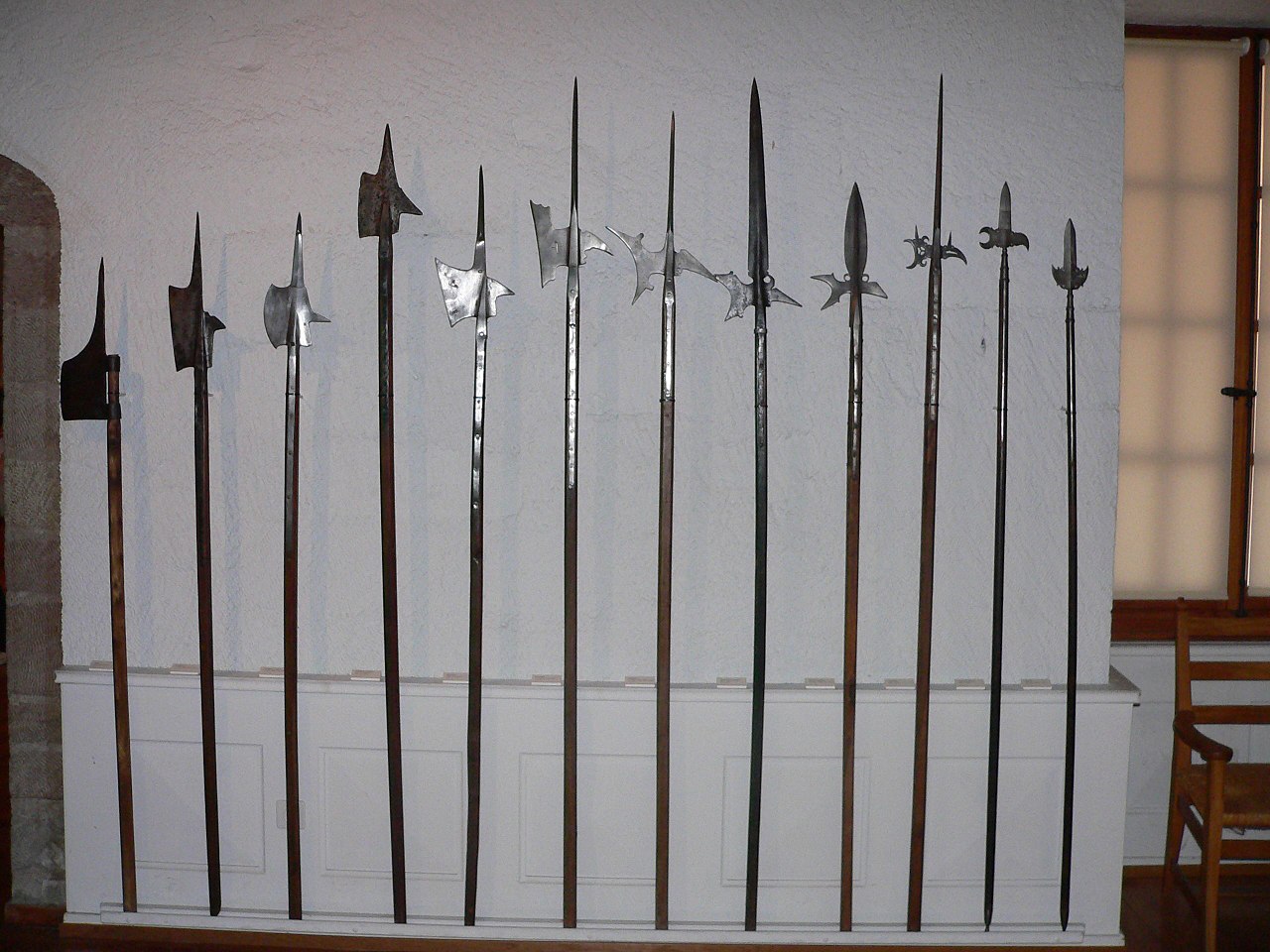
The racks that usually stood bristling with weapons behind Amaya in their training field were definitely being put to good use that morning, lined up with a broad assortment that should leave no guesses as to what the subject of today's class would be.
And, even if there were guesses, Amaya was obviously about to answer that question straight away. "Polearms!" she declared happily. "Close range combat weapons that usually involve something sharp and pointy at the the end of a stick! And, well, consider it the spear's fancier, more elaborate cousin who maybe went to some kind of posh military school, or the like. Though not quite as varied as the sword, there are a multitude of different styles of pole arms, from your halberds to your glaives. Tridents count, so do harpoons, bardiches, war scythes, and lances! Even the humble spear itself! So since there's plenty to talk about today, and plenty of techniques to go over, let's not waste another moment and get right into it!"
And get right into it she did, in the hopefully-by-now expected exhaustive fashion, covering everything from how the concept came about to a more detailed breakdown on how the various different heads of polearms evolved over time, complete with a flowchart and several actual examples of this evolution, with an emphasis on how their versatility and effectiveness, as well as the low cost and ease of production, which lead to a lot of experimentation with styles, which is why so many pole arms'll look so different, even among the same kinds, and why they became so popular as a weapon on the battlefield, especially when you start getting into how effective they were against enemies on horseback.
"Now, generally speaking," ha!, "as you may have noticed by the development of the weapons, pole arms can be divided into three broad categories: those designed for extended reach and thrusting tactics used in pike square or phalanx combat, those designed to increase leverage, thanks to hands being able to move freely towards several different leverage points all along the pole, which could maximize centrifugal force against cavalry, and those designed for throwing tactics used in skirmish line combat. Since we've talked a little bit about throwing spears in our last class, we'll be mostly focusing on thrusting and leverage today. Your focus should really be on what makes the pole arm different from other weapons we've studied in this class so far: the range, the length, and, really, how you use it changes based on the positioning of your hands on the shaft."
"Heh," Rosa contributed helpfully, because it never, ever got old, "shaft."
Aaaaand Amaya was just going to ignore that, thank you, and instead, she was just going to take a few more moments to get into even more specific details about some of the more well known pole arms and what classified them, although... "As I mentioned, there's been a lot of playing around with different forms of pole arms over the centuries, so this is not even remotely exhaustive, but it' a good look at some of the differences. Hopefully, you'll be able to see if those differences make much...well, difference...once you get out there and get a feel for them yourselves.
"And, with that, we'll turn it over to the Detective, unless there's any other lingering questions about pole arms before we start getting into the more hands-on stuff."
And, even if there were guesses, Amaya was obviously about to answer that question straight away. "Polearms!" she declared happily. "Close range combat weapons that usually involve something sharp and pointy at the the end of a stick! And, well, consider it the spear's fancier, more elaborate cousin who maybe went to some kind of posh military school, or the like. Though not quite as varied as the sword, there are a multitude of different styles of pole arms, from your halberds to your glaives. Tridents count, so do harpoons, bardiches, war scythes, and lances! Even the humble spear itself! So since there's plenty to talk about today, and plenty of techniques to go over, let's not waste another moment and get right into it!"
And get right into it she did, in the hopefully-by-now expected exhaustive fashion, covering everything from how the concept came about to a more detailed breakdown on how the various different heads of polearms evolved over time, complete with a flowchart and several actual examples of this evolution, with an emphasis on how their versatility and effectiveness, as well as the low cost and ease of production, which lead to a lot of experimentation with styles, which is why so many pole arms'll look so different, even among the same kinds, and why they became so popular as a weapon on the battlefield, especially when you start getting into how effective they were against enemies on horseback.

"Now, generally speaking," ha!, "as you may have noticed by the development of the weapons, pole arms can be divided into three broad categories: those designed for extended reach and thrusting tactics used in pike square or phalanx combat, those designed to increase leverage, thanks to hands being able to move freely towards several different leverage points all along the pole, which could maximize centrifugal force against cavalry, and those designed for throwing tactics used in skirmish line combat. Since we've talked a little bit about throwing spears in our last class, we'll be mostly focusing on thrusting and leverage today. Your focus should really be on what makes the pole arm different from other weapons we've studied in this class so far: the range, the length, and, really, how you use it changes based on the positioning of your hands on the shaft."
"Heh," Rosa contributed helpfully, because it never, ever got old, "shaft."
Aaaaand Amaya was just going to ignore that, thank you, and instead, she was just going to take a few more moments to get into even more specific details about some of the more well known pole arms and what classified them, although... "As I mentioned, there's been a lot of playing around with different forms of pole arms over the centuries, so this is not even remotely exhaustive, but it' a good look at some of the differences. Hopefully, you'll be able to see if those differences make much...well, difference...once you get out there and get a feel for them yourselves.
"And, with that, we'll turn it over to the Detective, unless there's any other lingering questions about pole arms before we start getting into the more hands-on stuff."
Re: Talk to the Teacher - Weaponry, 11/17.