
vdistinctive (![[personal profile]](https://www.dreamwidth.org/img/silk/identity/user.png) vdistinctive) wrote in
vdistinctive) wrote in ![[community profile]](https://www.dreamwidth.org/img/silk/identity/community.png) fandomhigh2017-01-10 12:39 am
fandomhigh2017-01-10 12:39 am
vdistinctive) wrote in fandomhigh2017-01-10 12:39 am


Entry tags:
Home Ec, Tuesday, Period 1
Someone had decorated the classroom. Possibly several someones.
Who were color blind.
"Yeah, I don't know," Eliot told the students when they arrived. "Just . . . try to make the best of it." He was sort of desperately wishing he had a belt sander handy to strip the orange off things, at least, but they had other things to do right now. And he wasn't teaching Shop this semester.
"Right. So today we're going to touch on the 'economics' side of class. I got the syllabus for this sucker straight from the school board and they, uh. Well. Let's just say I'm pretty sure this thing hasn't been updated since the '80s." He pulled a very distinctively shaped box out of the teacher's desk, popped it open, and started passing around checkbooks. "I'm guessin' most -- if not all -- of you guys have never actually seen one of these before. These are called checks. They were used as sort of formalized financial markers throughout the US and a lot of the rest of the Earth in the 20th century. They've been made almost completely obsolete thanks to smartphones, credit cards, and the internet, but -- sure. Let's all learn how to write checks."
He was rolling his eyes so hard, you guys. This was absurd.
Once everyone had their checkbooks, he went to the whiteboard and drew a rough diagram of the check on the board, numbering each blank and explaining what went in each one. "These suckers are really easy to counterfeit or use in fraud, by the way," he warned them. "If you put 'cash' in the 'who is this for' spot, anyone can use it to get paper money or coins out of your bank account. If you write a check and your account doesn't have enough funds in it to cover the expense, it'll 'bounce', meanin' the person you're payin' doesn't get their money and gets pissed, and the bank gets pissed, and when people get pissed about money it usually means at the very least they're gonna charge you a lot more for it."
At the most? Well. Eliot had maybe been sent out to 'retrieve' in retaliation for a bounced check or two in his time. It wasn't pretty.
"So the basic idea for this class is: You each get the same amount of imaginary money in your imaginary bank account, about 10 thousand -- they ain't dollars, but whatever -- which you'll spend using your super unofficial checks. Then when we're doin' lessons throughout the rest of the semester, you're gonna 'pay' for your supplies using that imaginary money. I dunno, if you want to use, like, organic flour when we're makin' bread, that'll cost more -- whatever the hell you wanna call 'em, points, simoleons, Fandom-bucks, whatever -- than just the regular old all-purpose flour. Maybe you really wanna use the fancy flour, but then next week we're gonna do sewing and you want to get the fancy fabric, too. You're gonna have to keep an eye on your own 'account' and decide what you'd rather spend more money on. Ya follow?"
This was far too complicated for a Fandom class. Seriously.
"If you run out of money b'fore the end of the semester I'm probably supposed to start teachin' you about credit or something and you can learn an important lesson about how to apply for a loan and slowly ruin your life, but -- fuck it. Just -- I ain't gonna track whether or not your checks are bouncin' or not." He was not going to track whether or not they actually used their checks or not, let's be real. "Bullshit a breakdown of what you spent where at the end of the semester and if it even kinda makes sense I'll give you a pass on the economics side of things."
This is what happened when budgeting was being taught by a professional thief.
"For today, practice writin' and endorsin' checks. Go nuts and pay your friends a billion fan-bucks each. Write somethin' dirty on the 'For' line. Practice signing your roommate's name. Y'all're probably either gonna pay for things with PayPal or gold bullion around here, anyway. If your world uses somethin' real interesting for currency, like -- actual shells or something, or -- hey -- if you use an actual barter system, come on over and tell me about it. Money in my world's basically a giant con, so it'll be nice to hear about something that might actually work."
Who were color blind.
"Yeah, I don't know," Eliot told the students when they arrived. "Just . . . try to make the best of it." He was sort of desperately wishing he had a belt sander handy to strip the orange off things, at least, but they had other things to do right now. And he wasn't teaching Shop this semester.
"Right. So today we're going to touch on the 'economics' side of class. I got the syllabus for this sucker straight from the school board and they, uh. Well. Let's just say I'm pretty sure this thing hasn't been updated since the '80s." He pulled a very distinctively shaped box out of the teacher's desk, popped it open, and started passing around checkbooks. "I'm guessin' most -- if not all -- of you guys have never actually seen one of these before. These are called checks. They were used as sort of formalized financial markers throughout the US and a lot of the rest of the Earth in the 20th century. They've been made almost completely obsolete thanks to smartphones, credit cards, and the internet, but -- sure. Let's all learn how to write checks."
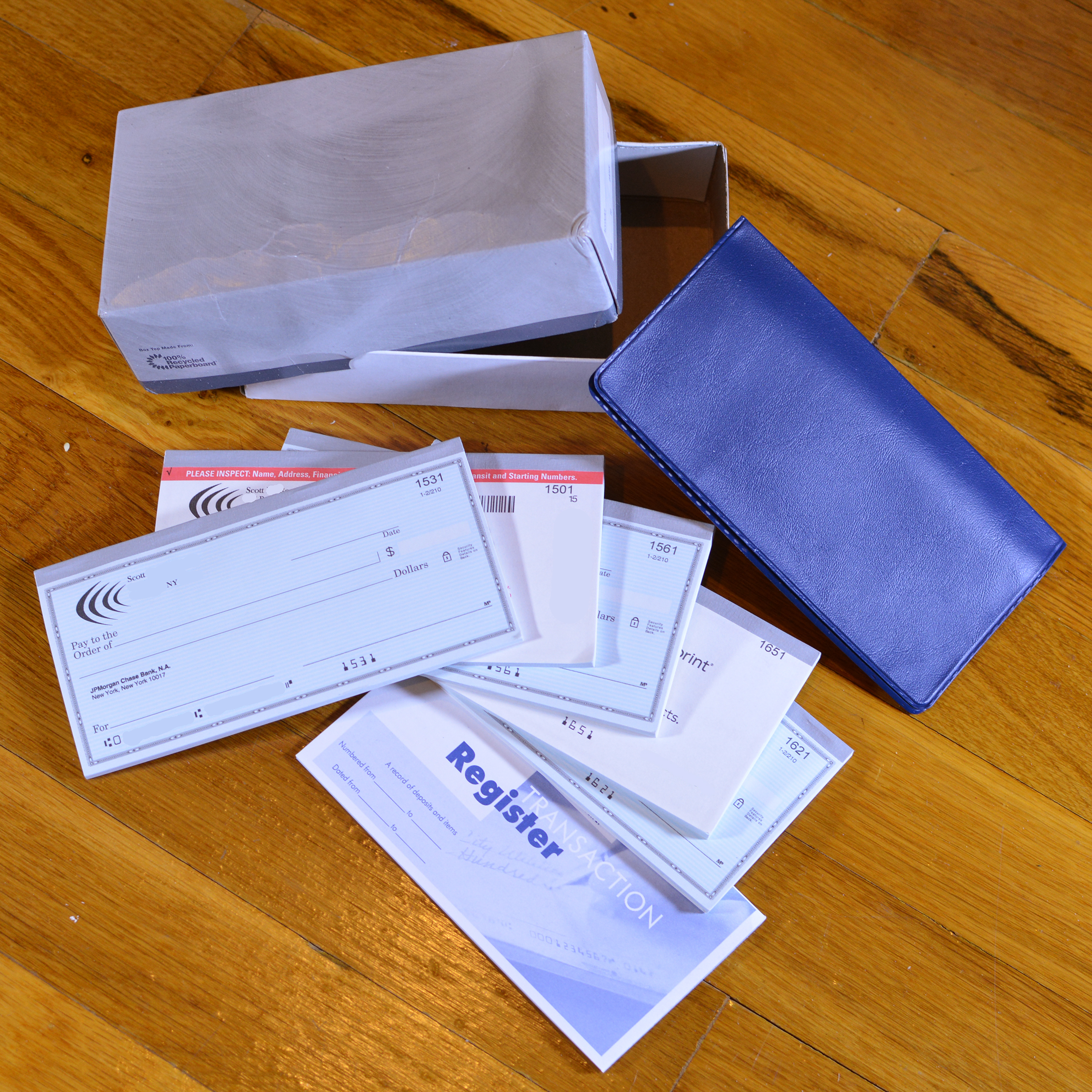
He was rolling his eyes so hard, you guys. This was absurd.
Once everyone had their checkbooks, he went to the whiteboard and drew a rough diagram of the check on the board, numbering each blank and explaining what went in each one. "These suckers are really easy to counterfeit or use in fraud, by the way," he warned them. "If you put 'cash' in the 'who is this for' spot, anyone can use it to get paper money or coins out of your bank account. If you write a check and your account doesn't have enough funds in it to cover the expense, it'll 'bounce', meanin' the person you're payin' doesn't get their money and gets pissed, and the bank gets pissed, and when people get pissed about money it usually means at the very least they're gonna charge you a lot more for it."
At the most? Well. Eliot had maybe been sent out to 'retrieve' in retaliation for a bounced check or two in his time. It wasn't pretty.
"So the basic idea for this class is: You each get the same amount of imaginary money in your imaginary bank account, about 10 thousand -- they ain't dollars, but whatever -- which you'll spend using your super unofficial checks. Then when we're doin' lessons throughout the rest of the semester, you're gonna 'pay' for your supplies using that imaginary money. I dunno, if you want to use, like, organic flour when we're makin' bread, that'll cost more -- whatever the hell you wanna call 'em, points, simoleons, Fandom-bucks, whatever -- than just the regular old all-purpose flour. Maybe you really wanna use the fancy flour, but then next week we're gonna do sewing and you want to get the fancy fabric, too. You're gonna have to keep an eye on your own 'account' and decide what you'd rather spend more money on. Ya follow?"
This was far too complicated for a Fandom class. Seriously.
"If you run out of money b'fore the end of the semester I'm probably supposed to start teachin' you about credit or something and you can learn an important lesson about how to apply for a loan and slowly ruin your life, but -- fuck it. Just -- I ain't gonna track whether or not your checks are bouncin' or not." He was not going to track whether or not they actually used their checks or not, let's be real. "Bullshit a breakdown of what you spent where at the end of the semester and if it even kinda makes sense I'll give you a pass on the economics side of things."
This is what happened when budgeting was being taught by a professional thief.
"For today, practice writin' and endorsin' checks. Go nuts and pay your friends a billion fan-bucks each. Write somethin' dirty on the 'For' line. Practice signing your roommate's name. Y'all're probably either gonna pay for things with PayPal or gold bullion around here, anyway. If your world uses somethin' real interesting for currency, like -- actual shells or something, or -- hey -- if you use an actual barter system, come on over and tell me about it. Money in my world's basically a giant con, so it'll be nice to hear about something that might actually work."
Re: Listen to the lecture
Don't worry, Hanna, that wasn't the end of the story. "Now, over many years, Elua and his Companions lived in peace and prosperity, adhering to his law. They lay with women and with men--save Cassiel, again--and their children abounded. To these children, they taught the knowledge of Heaven: of machinery and navigation, of health and husbandry, of agriculture and aqueducts and so many others. They grew wise and wealthy and the sound of their songs were loud enough to reach Heaven and the ear of the One God."
"Finally, the One God left off grieving long enough to look down at the world and saw the land of the angels and that they continued to grow and prosper. And he grew wroth--how dare they rejoice when Yeshua was no more? How dare his angels leave his side for another's and teach what they knew? How dare the children of these unions be so bright and so fair and dare to overrun the world? And so he sent the leader of his host to bring Elua to face him before his throne."
Re: Listen to the lecture
She straightened, though, still paying attention closely. You could learn a great deal about someone by the stories they told.
Re: Listen to the lecture
She was no great beauty, just to look at. But then she spoke and became the loveliest woman in the world. "But to continue--we're almost to the end, jolie, the leader of the One God's armies came to earth with righteous fire, to bring Elua to Heaven. But Elua came to him, smiling and empty-handed, and laid upon him the kiss of peace. And the One God's commander returned to heaven, ashamed, but wearing wreathes of flowers."
Because, again, flowers. "And mighty was the One God's wrath at this failure, but his arch-herald came to him and they discussed much. And the One God realized that he had no dominion over Elua, for though he was mortal, he'd been begotten in the womb of the Earth. And rather than commanding, he sent his arch-herald down to beseech Elua instead, offering forgiveness and a place at the One God's right hand, did he summon his Companions and leave the rich soil of his Mother Earth. Hearing that plea, Elua asked Cassiel for a dagger and...do you know what he did with it?"
Re: Listen to the lecture
Re: Listen to the lecture
Hyacinthe had never been to church proper, but he doubted even a priest of Elua could tell the story better. "And then, just as those gathered thought that it would come to a battle between the hosts of Heaven and Elua and his Companions, Mother Earth spoke to her once-husband for the first time in thousands upon thousands of years. 'We can create one, You and I,' she said, and her voice was the shaking of the rocks and the sound of plants bursting up through rich soil, and even the water lapping upon the shores."
"Thus was the creation of the true Terre d’Ange that lies beyond mortal perception, and blessed Elua and his Companions went willingly into it, passing not through the dark gate of death, but straightway through the bright gate. And alone among them, only Cassiel gazed backward in sorrow. Generation upon generation, the blood of Elua and his Companions runs still in the veins of their descendants, each of whom will one day follow to the land that lies beyond. And though centuries pass, they do not forget, but call their land still after that further one, and keep always sacred the precept of blessed Elua, that is, Love as thou wilt."
Hyacinthe drew his story to a close, offering Hanna a smile. "Such is Terre d’Ange."
Re: Listen to the lecture
Re: Listen to the lecture
Re: Listen to the lecture
Re: Listen to the lecture
Re: Listen to the lecture
Re: Listen to the lecture