
vdistinctive (![[personal profile]](https://www.dreamwidth.org/img/silk/identity/user.png) vdistinctive) wrote in
vdistinctive) wrote in ![[community profile]](https://www.dreamwidth.org/img/silk/identity/community.png) fandomhigh2017-01-10 12:39 am
fandomhigh2017-01-10 12:39 am
vdistinctive) wrote in fandomhigh2017-01-10 12:39 am


Entry tags:
Home Ec, Tuesday, Period 1
Someone had decorated the classroom. Possibly several someones.
Who were color blind.
"Yeah, I don't know," Eliot told the students when they arrived. "Just . . . try to make the best of it." He was sort of desperately wishing he had a belt sander handy to strip the orange off things, at least, but they had other things to do right now. And he wasn't teaching Shop this semester.
"Right. So today we're going to touch on the 'economics' side of class. I got the syllabus for this sucker straight from the school board and they, uh. Well. Let's just say I'm pretty sure this thing hasn't been updated since the '80s." He pulled a very distinctively shaped box out of the teacher's desk, popped it open, and started passing around checkbooks. "I'm guessin' most -- if not all -- of you guys have never actually seen one of these before. These are called checks. They were used as sort of formalized financial markers throughout the US and a lot of the rest of the Earth in the 20th century. They've been made almost completely obsolete thanks to smartphones, credit cards, and the internet, but -- sure. Let's all learn how to write checks."
He was rolling his eyes so hard, you guys. This was absurd.
Once everyone had their checkbooks, he went to the whiteboard and drew a rough diagram of the check on the board, numbering each blank and explaining what went in each one. "These suckers are really easy to counterfeit or use in fraud, by the way," he warned them. "If you put 'cash' in the 'who is this for' spot, anyone can use it to get paper money or coins out of your bank account. If you write a check and your account doesn't have enough funds in it to cover the expense, it'll 'bounce', meanin' the person you're payin' doesn't get their money and gets pissed, and the bank gets pissed, and when people get pissed about money it usually means at the very least they're gonna charge you a lot more for it."
At the most? Well. Eliot had maybe been sent out to 'retrieve' in retaliation for a bounced check or two in his time. It wasn't pretty.
"So the basic idea for this class is: You each get the same amount of imaginary money in your imaginary bank account, about 10 thousand -- they ain't dollars, but whatever -- which you'll spend using your super unofficial checks. Then when we're doin' lessons throughout the rest of the semester, you're gonna 'pay' for your supplies using that imaginary money. I dunno, if you want to use, like, organic flour when we're makin' bread, that'll cost more -- whatever the hell you wanna call 'em, points, simoleons, Fandom-bucks, whatever -- than just the regular old all-purpose flour. Maybe you really wanna use the fancy flour, but then next week we're gonna do sewing and you want to get the fancy fabric, too. You're gonna have to keep an eye on your own 'account' and decide what you'd rather spend more money on. Ya follow?"
This was far too complicated for a Fandom class. Seriously.
"If you run out of money b'fore the end of the semester I'm probably supposed to start teachin' you about credit or something and you can learn an important lesson about how to apply for a loan and slowly ruin your life, but -- fuck it. Just -- I ain't gonna track whether or not your checks are bouncin' or not." He was not going to track whether or not they actually used their checks or not, let's be real. "Bullshit a breakdown of what you spent where at the end of the semester and if it even kinda makes sense I'll give you a pass on the economics side of things."
This is what happened when budgeting was being taught by a professional thief.
"For today, practice writin' and endorsin' checks. Go nuts and pay your friends a billion fan-bucks each. Write somethin' dirty on the 'For' line. Practice signing your roommate's name. Y'all're probably either gonna pay for things with PayPal or gold bullion around here, anyway. If your world uses somethin' real interesting for currency, like -- actual shells or something, or -- hey -- if you use an actual barter system, come on over and tell me about it. Money in my world's basically a giant con, so it'll be nice to hear about something that might actually work."
Who were color blind.
"Yeah, I don't know," Eliot told the students when they arrived. "Just . . . try to make the best of it." He was sort of desperately wishing he had a belt sander handy to strip the orange off things, at least, but they had other things to do right now. And he wasn't teaching Shop this semester.
"Right. So today we're going to touch on the 'economics' side of class. I got the syllabus for this sucker straight from the school board and they, uh. Well. Let's just say I'm pretty sure this thing hasn't been updated since the '80s." He pulled a very distinctively shaped box out of the teacher's desk, popped it open, and started passing around checkbooks. "I'm guessin' most -- if not all -- of you guys have never actually seen one of these before. These are called checks. They were used as sort of formalized financial markers throughout the US and a lot of the rest of the Earth in the 20th century. They've been made almost completely obsolete thanks to smartphones, credit cards, and the internet, but -- sure. Let's all learn how to write checks."
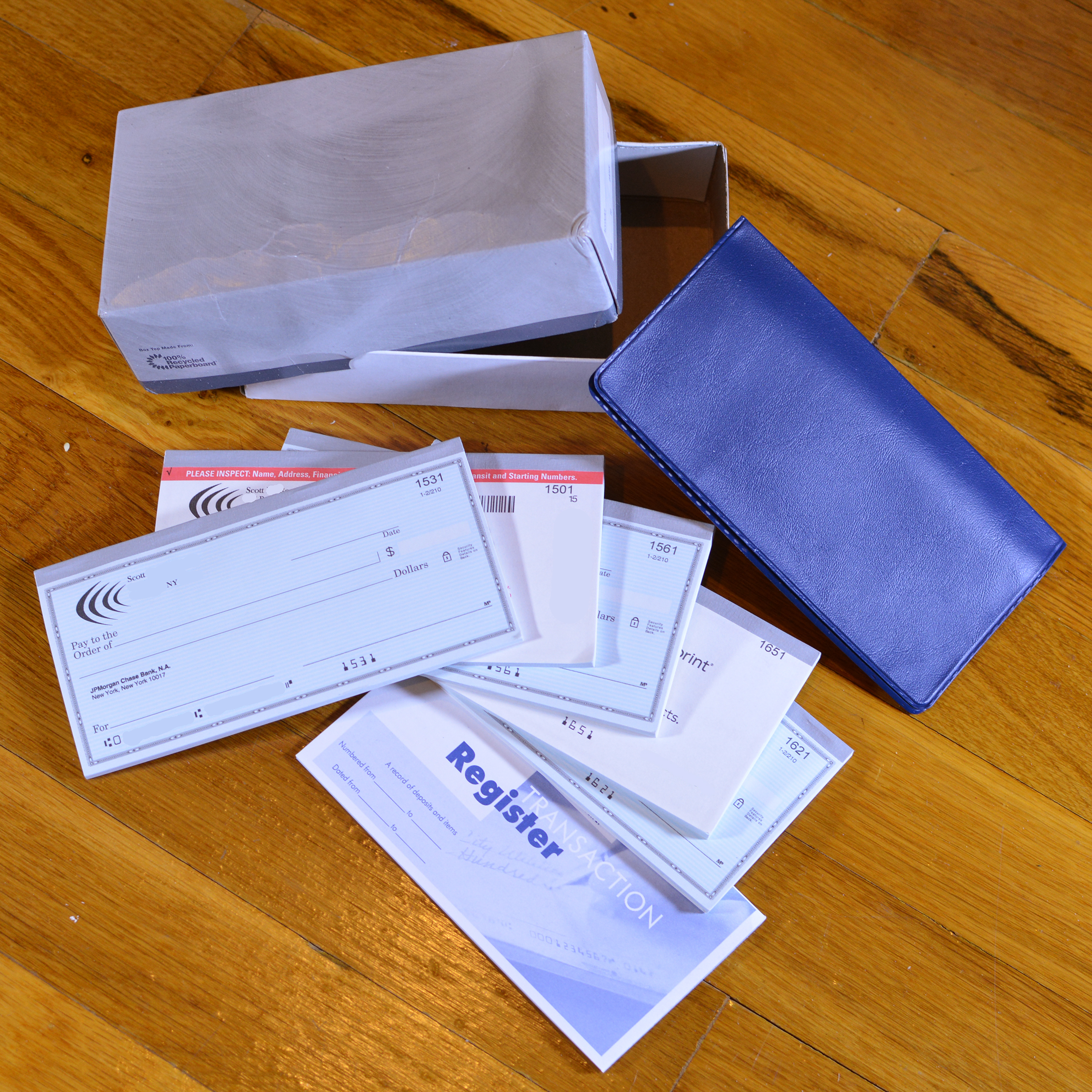
He was rolling his eyes so hard, you guys. This was absurd.
Once everyone had their checkbooks, he went to the whiteboard and drew a rough diagram of the check on the board, numbering each blank and explaining what went in each one. "These suckers are really easy to counterfeit or use in fraud, by the way," he warned them. "If you put 'cash' in the 'who is this for' spot, anyone can use it to get paper money or coins out of your bank account. If you write a check and your account doesn't have enough funds in it to cover the expense, it'll 'bounce', meanin' the person you're payin' doesn't get their money and gets pissed, and the bank gets pissed, and when people get pissed about money it usually means at the very least they're gonna charge you a lot more for it."
At the most? Well. Eliot had maybe been sent out to 'retrieve' in retaliation for a bounced check or two in his time. It wasn't pretty.
"So the basic idea for this class is: You each get the same amount of imaginary money in your imaginary bank account, about 10 thousand -- they ain't dollars, but whatever -- which you'll spend using your super unofficial checks. Then when we're doin' lessons throughout the rest of the semester, you're gonna 'pay' for your supplies using that imaginary money. I dunno, if you want to use, like, organic flour when we're makin' bread, that'll cost more -- whatever the hell you wanna call 'em, points, simoleons, Fandom-bucks, whatever -- than just the regular old all-purpose flour. Maybe you really wanna use the fancy flour, but then next week we're gonna do sewing and you want to get the fancy fabric, too. You're gonna have to keep an eye on your own 'account' and decide what you'd rather spend more money on. Ya follow?"
This was far too complicated for a Fandom class. Seriously.
"If you run out of money b'fore the end of the semester I'm probably supposed to start teachin' you about credit or something and you can learn an important lesson about how to apply for a loan and slowly ruin your life, but -- fuck it. Just -- I ain't gonna track whether or not your checks are bouncin' or not." He was not going to track whether or not they actually used their checks or not, let's be real. "Bullshit a breakdown of what you spent where at the end of the semester and if it even kinda makes sense I'll give you a pass on the economics side of things."
This is what happened when budgeting was being taught by a professional thief.
"For today, practice writin' and endorsin' checks. Go nuts and pay your friends a billion fan-bucks each. Write somethin' dirty on the 'For' line. Practice signing your roommate's name. Y'all're probably either gonna pay for things with PayPal or gold bullion around here, anyway. If your world uses somethin' real interesting for currency, like -- actual shells or something, or -- hey -- if you use an actual barter system, come on over and tell me about it. Money in my world's basically a giant con, so it'll be nice to hear about something that might actually work."
Re: Listen to the lecture