
glacial_queen (![[personal profile]](https://www.dreamwidth.org/img/silk/identity/user.png) glacial_queen) wrote in
glacial_queen) wrote in ![[community profile]](https://www.dreamwidth.org/img/silk/identity/community.png) fandomhigh2015-04-16 08:52 am
fandomhigh2015-04-16 08:52 am
glacial_queen) wrote in fandomhigh2015-04-16 08:52 am


Entry tags:
History of Poisons, Thursday Per 2
Once more into the Danger Shop, dear friends.
This time, the class would enter into a dim forest, filled with tall trees, minimal groundcover, and many fallen trees. The air was damp and cool and the ground slightly soggy. In short, perfect conditions for the various kinds of mushrooms poking up from the soil and clinging to decaying plants.
"Hello, and welcome to our last real class," Karla said, waving to them. She was wearing a t-shirt appropriate to the lesson. "There will be an exam next week, so I suggest you all study your notes--or, at least, make sure you have notes because those will be available for you to use. But that's for next week, today, we're studying mushrooms! Or, more specifically, toadstools!" Your teacher got excited over weird things, it was true. "Technically, there's no specific, scientific definition for what counts as a toadstool, but it's generally taken to mean any of the various toxic fungi that you can happen upon."
"First off, a word of warning. Unless you are an experienced mushroom hunter, or with one, or have an excellent field guide complete with full, glossy pictures, you should probably avoid picking most mushrooms that you see. The most important thing about mushrooms? There is no fool-proof litmus test to see if it's poisonous or not. Sure, there are plenty of folk stories about how to tell if the mushroom you're planning on eating for lunch is going to kill you or not, but most of them have exceptions and some of them are just plain bullshit. The only way we know what mushrooms are safe to eat and which are not is because at some point, someone ate one and lived and noted that, while someone else ate another variety, died, and had friends who noted that. Every time you eat a baby bella or a truffle, it's because someone took a gamble on what they were putting in their mouth that day. And, to make matters worse, many of the poisonous varieties of mushrooms can resemble non-poisonous varieties, so I'm serious when I tell you not to pick and eat any mushroom if you're not 100% certain of what you're doing."
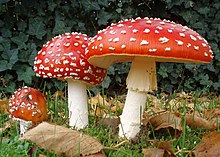
"The most deadly of all toadstools are in the Amanita family," she continued, bending over to pick up three different types of mushroom to show. "This one," she said, holding up the well-known red mushroom with white flecks, "is more commonly known as fly agaric. People from Earth may recognize these from the dancing mushrooms in Fantasia and the good luck mushrooms found on holiday cards. These are toxic, but not fatal, and their poison is soluble in water, so if you boil them in a lot of water first and then discard the water, you will be left with mushrooms you can eat. As fly agaric mushrooms contain muscimol, they will give you hallucinations--and likely stomach cramps--even after parboiling. However, unlike the psilocybin mushrooms, they aren't generally considered desirable for recreational use. The hallucinations and resultant bad feelings from eating mushrooms inmeta-for-Alice in Wonderland are generally considered to be a nod to fly agaric."
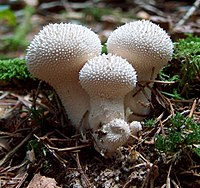
Next, Karla held up a white mushroom with a flat, greenish cap. "This is the Amanita phalloides, or the death cap mushroom. It's responsible for the majority of mushroom-related fatality throughout the world, in no small part due to its virulent toxin and also its resemblance to the non-toxic puffbals when it is young. Eating these mushrooms can result in liver damage so bad that transplants are needed in order to survive. While symptoms can begin appearing as early as six hours after ingestion, people can be symptom-free for up to forty-eight hours. This is far more dangerous, as death cap begins attack the liver immediately, so the longer it takes for symptoms to develop, the longer it takes to get treatment."
The last mushroom Karla help up was pure white. "And this is the close sister to the death cap, the destroying angel or Amanita bisporigera, among other varieties. If you're ever strolling through the woods, do not stop to pick up an all-white mushroom. While there are several species of non-toxic white mushrooms, it's not worth the risk. Odds are good that it will kill you; half a cap of a destroying angel can kill you if you're not treated quickly enough. The damage caused to liver and kidney tissues is irreversible. Symptoms, including vomiting, cramps, delirium, convulsions, and diarrhea, can begin as early as five hours after eating, but may take up to twenty-four. By the time its run its course, you're either dead or you're wishing you were."
Bon appétit!
This time, the class would enter into a dim forest, filled with tall trees, minimal groundcover, and many fallen trees. The air was damp and cool and the ground slightly soggy. In short, perfect conditions for the various kinds of mushrooms poking up from the soil and clinging to decaying plants.
"Hello, and welcome to our last real class," Karla said, waving to them. She was wearing a t-shirt appropriate to the lesson. "There will be an exam next week, so I suggest you all study your notes--or, at least, make sure you have notes because those will be available for you to use. But that's for next week, today, we're studying mushrooms! Or, more specifically, toadstools!" Your teacher got excited over weird things, it was true. "Technically, there's no specific, scientific definition for what counts as a toadstool, but it's generally taken to mean any of the various toxic fungi that you can happen upon."

"First off, a word of warning. Unless you are an experienced mushroom hunter, or with one, or have an excellent field guide complete with full, glossy pictures, you should probably avoid picking most mushrooms that you see. The most important thing about mushrooms? There is no fool-proof litmus test to see if it's poisonous or not. Sure, there are plenty of folk stories about how to tell if the mushroom you're planning on eating for lunch is going to kill you or not, but most of them have exceptions and some of them are just plain bullshit. The only way we know what mushrooms are safe to eat and which are not is because at some point, someone ate one and lived and noted that, while someone else ate another variety, died, and had friends who noted that. Every time you eat a baby bella or a truffle, it's because someone took a gamble on what they were putting in their mouth that day. And, to make matters worse, many of the poisonous varieties of mushrooms can resemble non-poisonous varieties, so I'm serious when I tell you not to pick and eat any mushroom if you're not 100% certain of what you're doing."
"The most deadly of all toadstools are in the Amanita family," she continued, bending over to pick up three different types of mushroom to show. "This one," she said, holding up the well-known red mushroom with white flecks, "is more commonly known as fly agaric. People from Earth may recognize these from the dancing mushrooms in Fantasia and the good luck mushrooms found on holiday cards. These are toxic, but not fatal, and their poison is soluble in water, so if you boil them in a lot of water first and then discard the water, you will be left with mushrooms you can eat. As fly agaric mushrooms contain muscimol, they will give you hallucinations--and likely stomach cramps--even after parboiling. However, unlike the psilocybin mushrooms, they aren't generally considered desirable for recreational use. The hallucinations and resultant bad feelings from eating mushrooms in

Next, Karla held up a white mushroom with a flat, greenish cap. "This is the Amanita phalloides, or the death cap mushroom. It's responsible for the majority of mushroom-related fatality throughout the world, in no small part due to its virulent toxin and also its resemblance to the non-toxic puffbals when it is young. Eating these mushrooms can result in liver damage so bad that transplants are needed in order to survive. While symptoms can begin appearing as early as six hours after ingestion, people can be symptom-free for up to forty-eight hours. This is far more dangerous, as death cap begins attack the liver immediately, so the longer it takes for symptoms to develop, the longer it takes to get treatment."

The last mushroom Karla help up was pure white. "And this is the close sister to the death cap, the destroying angel or Amanita bisporigera, among other varieties. If you're ever strolling through the woods, do not stop to pick up an all-white mushroom. While there are several species of non-toxic white mushrooms, it's not worth the risk. Odds are good that it will kill you; half a cap of a destroying angel can kill you if you're not treated quickly enough. The damage caused to liver and kidney tissues is irreversible. Symptoms, including vomiting, cramps, delirium, convulsions, and diarrhea, can begin as early as five hours after eating, but may take up to twenty-four. By the time its run its course, you're either dead or you're wishing you were."

Bon appétit!
Sign In (04/16)
Re: Sign In (04/16)
Re: Sign In (04/16)
Re: Sign In (04/16)
Re: Sign In (04/16)
Re: Sign In (04/16)
Listen to the Lecture
Go Mushrooming
Talk to the TA
Re: Talk to the TA
Talk to the Teacher
OOC