
ext_250630 (![[identity profile]](https://www.dreamwidth.org/img/silk/identity/openid.png) mouthy-merc.livejournal.com) wrote in
mouthy-merc.livejournal.com) wrote in ![[community profile]](https://www.dreamwidth.org/img/silk/identity/community.png) fandomhigh2008-01-28 07:21 am
fandomhigh2008-01-28 07:21 am
mouthy-merc.livejournal.com) wrote in fandomhigh2008-01-28 07:21 am


Entry tags:
Criminal Justice (As Taught By A Criminal) - Period 3 - Monday 01/28
At the front of the class today was a table. The table was pretty ordinary and probably folded down and really wasn't the focus.
What was on table was the important thing.
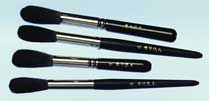
Like squirrel hair brushes-- (Shh, don't let the squirrels know what they're made of!) --talcum powder, cocoa power and cellophane tape.
"Today we're going to fine out just how not easy it is to dust for prints. Seriously? They're so very easy to screw up and not everything leaves a print. There needs to be enough oil on your hands for them to be left, they can be smudged, on the wrong surface, botched up while dusting... The list goes on and on. So don't let them darn TV shows fool you with the ease of which they recover those fingerprints at the last minute to put the bad guy in jail."
He nodded seriously.
"They lie."
He passed out the all important handouts.
1
Step One
Identify the surface area that you want to dust for fingerprints. Fingers are coated with perspiration and oil. When fingers touch any relatively smooth surface, the friction releases the oil from between the ridges and a print is left.
2
Step Two
Pour a small amount of powder on a piece of paper. Use a powder whose color contrasts with the surface color. You can try awhite powder talcum powder on a dark surface and a black powder cocoa powder on a light surface.
3
Step Three
Shake the brush so the bristles spread apart.
4
Step Four
Dip the tip of the brush in the powder, and then gently tap the brush's handle to remove excess powder.
5
Step Five
Run the brush's bristles lightly over the powdered surface in short and quick strokes.
6
Step Six
Unroll the cellophane tape and gently press it on top of the print.
7
Step Seven
Pull the tape away from the print in one quick and fluid motion, and apply the tape with the print attached to a piece of paper.
"Now you all have fun with these and please don't try to frame any classmates for crimes they didn't commit so they have to blame a one armed student."
What was on table was the important thing.
Like squirrel hair brushes-- (Shh, don't let the squirrels know what they're made of!) --talcum powder, cocoa power and cellophane tape.
"Today we're going to fine out just how not easy it is to dust for prints. Seriously? They're so very easy to screw up and not everything leaves a print. There needs to be enough oil on your hands for them to be left, they can be smudged, on the wrong surface, botched up while dusting... The list goes on and on. So don't let them darn TV shows fool you with the ease of which they recover those fingerprints at the last minute to put the bad guy in jail."
He nodded seriously.
"They lie."
He passed out the all important handouts.
1
Step One
Identify the surface area that you want to dust for fingerprints. Fingers are coated with perspiration and oil. When fingers touch any relatively smooth surface, the friction releases the oil from between the ridges and a print is left.
2
Step Two
Pour a small amount of powder on a piece of paper. Use a powder whose color contrasts with the surface color. You can try a
3
Step Three
Shake the brush so the bristles spread apart.
4
Step Four
Dip the tip of the brush in the powder, and then gently tap the brush's handle to remove excess powder.
5
Step Five
Run the brush's bristles lightly over the powdered surface in short and quick strokes.
6
Step Six
Unroll the cellophane tape and gently press it on top of the print.
7
Step Seven
Pull the tape away from the print in one quick and fluid motion, and apply the tape with the print attached to a piece of paper.
"Now you all have fun with these and please don't try to frame any classmates for crimes they didn't commit so they have to blame a one armed student."
Re: Sign In!
Re: Sign In!
Re: Sign In!
Re: Sign In!
Re: Sign In!
Re: Sign In!
Re: Sign In!
Re: Sign In!
Re: Sign In!
Re: Sign In!
Re: Sign In!
Re: Sign In!
Re: Sign In!
Re: Sign In!
Re: Sign In!
Re: Sign In!
Re: Sign In!