
http://stargazer-ellie.livejournal.com/ (![[identity profile]](https://www.dreamwidth.org/img/silk/identity/openid.png) stargazer-ellie.livejournal.com) wrote in
stargazer-ellie.livejournal.com) wrote in ![[community profile]](https://www.dreamwidth.org/img/silk/identity/community.png) fandomhigh2006-12-06 08:57 am
fandomhigh2006-12-06 08:57 am
stargazer-ellie.livejournal.com) wrote in fandomhigh2006-12-06 08:57 am


Entry tags:
Astronomy 101: Moons and Planets - Class 13
Week 13 -- December 6: Asteroids, comets, meteors
Syllabus | Class Roster
Handouts:
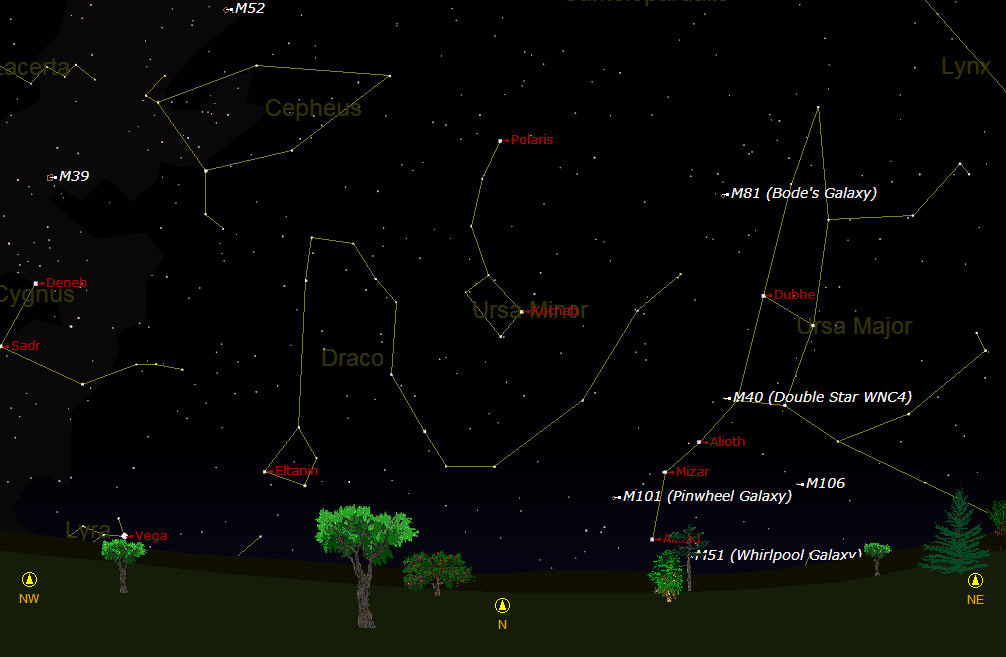
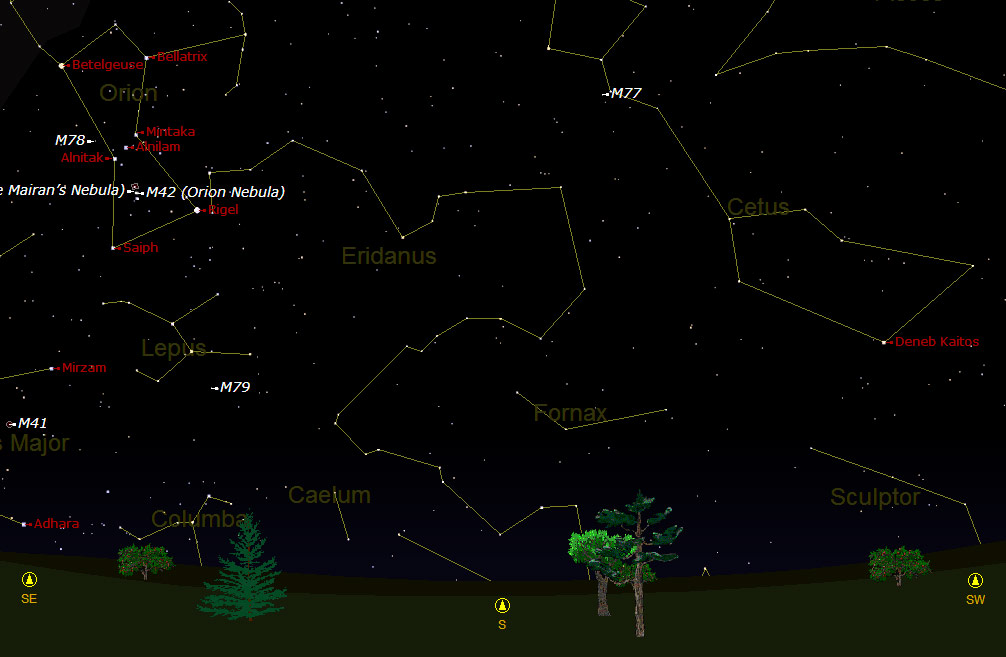
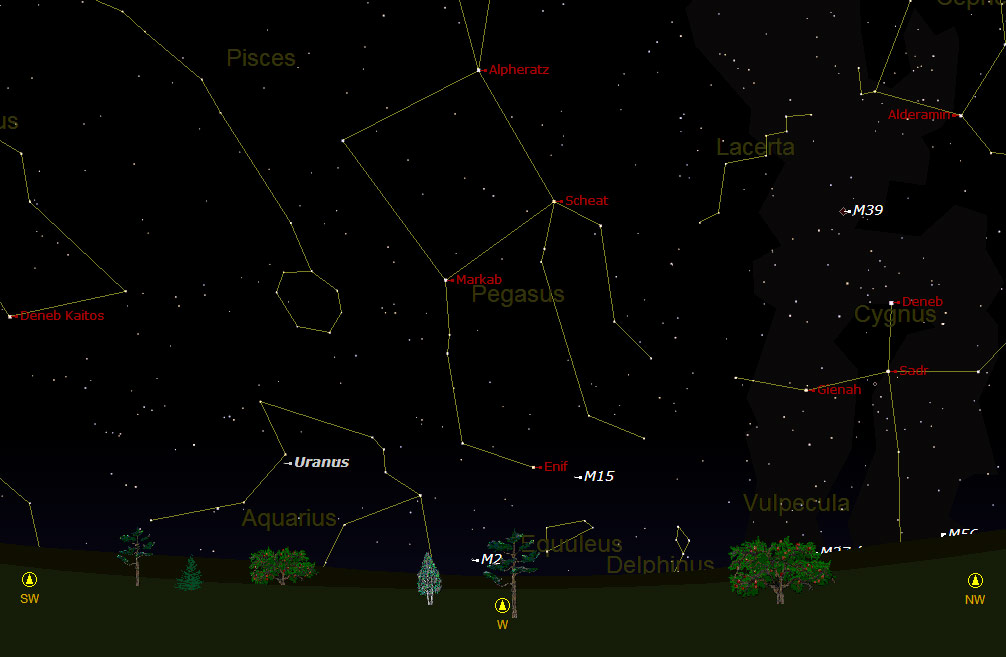
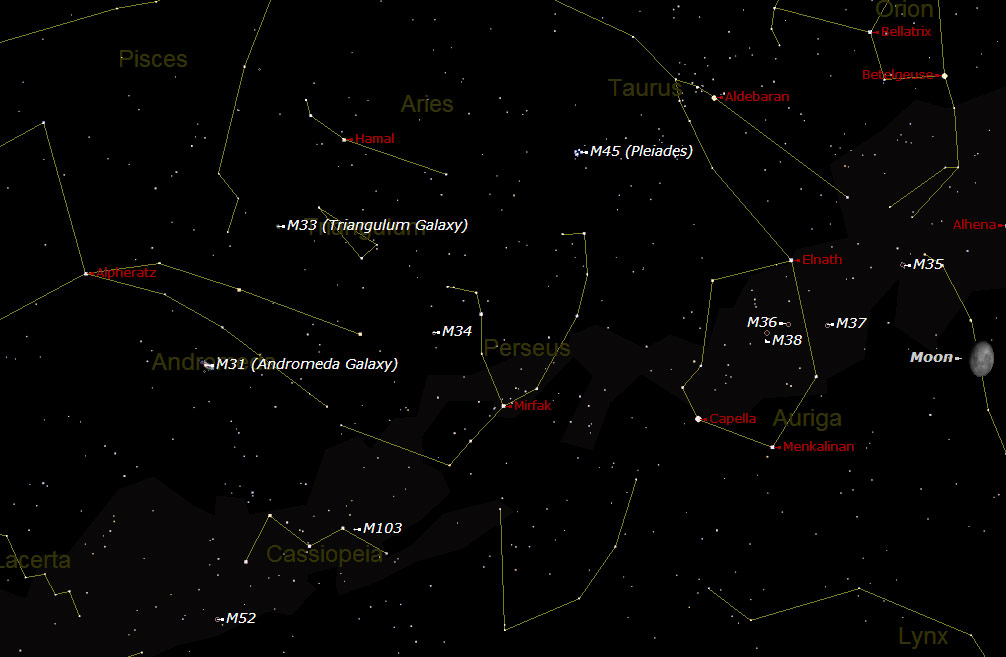
Starmaps: North | South | East | West | Overhead
"Good afternoon," Ellie said cheerfully as the class arrived. "Last week we reached the edges of the Solar System, and today we're going to focus on some of the smaller objects it possesses.
"First, asteroids. The asteroid belt is a region of the solar system falling roughly between the planets Mars and Jupiter where the greatest concentration of asteroid orbits can be found. It is termed the main belt when contrasted with other concentrations of minor planets, since these may also be termed asteroid belts. 98.5% of all numbered minor planets lie in this region.
"A common hypothesis agreed upon by most astronomers, called the nebular hypothesis, is that during the first few million years of the solar system's history, planets formed by accretion of planetesimals. Repeated collisions led to the familiar rocky planets and to the gas giants. However, if the average velocity of the collisions is too high, the shattering of planetesimals dominates over accretion, and planet-sized bodies cannot form. The region lying between the orbits of Mars and Jupiter contains many strong orbital resonances with Jupiter, and planetesimals in this region were (and continue to be) kicked around too strongly to form a planet. The planetesimals instead continue to orbit the Sun as before.
"A comet is a small body in the solar system that orbits the Sun and (at least occasionally) exhibits a coma (or atmosphere) and/or a tail — both primarily from the effects of solar radiation upon the comet's nucleus, which itself is a minor body composed of rock, dust, and ices. Comets' orbits are constantly changing: their origins are in the outer solar system, and they have a propensity to be highly affected (or perturbed) by relatively close approaches to the major planets. Some are moved into sungrazing orbits that destroy the comets when they near the Sun, while others are thrown out of the solar system forever.
"A meteoroid is a relatively small (sand- to boulder-sized) fragment of debris in the Solar System. When entering a planet's atmosphere, the meteoroid is heated up by ram pressure and partially or completely vaporizes. The gas along the path of the meteoroid becomes ionized and glows. The trail of glowing vapor is called a meteor, or a shooting star. If any portion of the meteoroid survives to reach the ground, it is then referred to as a meteorite."
Ellie lectured some more, then finished up with, "Next week will be a review week, so bring any questions you might have about what we've gone over or anything you're curious about. The final exam is in two weeks."
Syllabus | Class Roster
Handouts:
Starmaps: North | South | East | West | Overhead

"Good afternoon," Ellie said cheerfully as the class arrived. "Last week we reached the edges of the Solar System, and today we're going to focus on some of the smaller objects it possesses.
"First, asteroids. The asteroid belt is a region of the solar system falling roughly between the planets Mars and Jupiter where the greatest concentration of asteroid orbits can be found. It is termed the main belt when contrasted with other concentrations of minor planets, since these may also be termed asteroid belts. 98.5% of all numbered minor planets lie in this region.
"A common hypothesis agreed upon by most astronomers, called the nebular hypothesis, is that during the first few million years of the solar system's history, planets formed by accretion of planetesimals. Repeated collisions led to the familiar rocky planets and to the gas giants. However, if the average velocity of the collisions is too high, the shattering of planetesimals dominates over accretion, and planet-sized bodies cannot form. The region lying between the orbits of Mars and Jupiter contains many strong orbital resonances with Jupiter, and planetesimals in this region were (and continue to be) kicked around too strongly to form a planet. The planetesimals instead continue to orbit the Sun as before.
"A comet is a small body in the solar system that orbits the Sun and (at least occasionally) exhibits a coma (or atmosphere) and/or a tail — both primarily from the effects of solar radiation upon the comet's nucleus, which itself is a minor body composed of rock, dust, and ices. Comets' orbits are constantly changing: their origins are in the outer solar system, and they have a propensity to be highly affected (or perturbed) by relatively close approaches to the major planets. Some are moved into sungrazing orbits that destroy the comets when they near the Sun, while others are thrown out of the solar system forever.
"A meteoroid is a relatively small (sand- to boulder-sized) fragment of debris in the Solar System. When entering a planet's atmosphere, the meteoroid is heated up by ram pressure and partially or completely vaporizes. The gas along the path of the meteoroid becomes ionized and glows. The trail of glowing vapor is called a meteor, or a shooting star. If any portion of the meteoroid survives to reach the ground, it is then referred to as a meteorite."
Ellie lectured some more, then finished up with, "Next week will be a review week, so bring any questions you might have about what we've gone over or anything you're curious about. The final exam is in two weeks."
OOC