
http://stargazer-ellie.livejournal.com/ (![[identity profile]](https://www.dreamwidth.org/img/silk/identity/openid.png) stargazer-ellie.livejournal.com) wrote in
stargazer-ellie.livejournal.com) wrote in ![[community profile]](https://www.dreamwidth.org/img/silk/identity/community.png) fandomhigh2006-09-27 07:45 am
fandomhigh2006-09-27 07:45 am
stargazer-ellie.livejournal.com) wrote in fandomhigh2006-09-27 07:45 am


Entry tags:
Astronomy 101: Moons and Planets - Class 4
Week 4 -- September 27: Venus, the Earth's "twin"
Syllabus | Class Roster
Handouts:
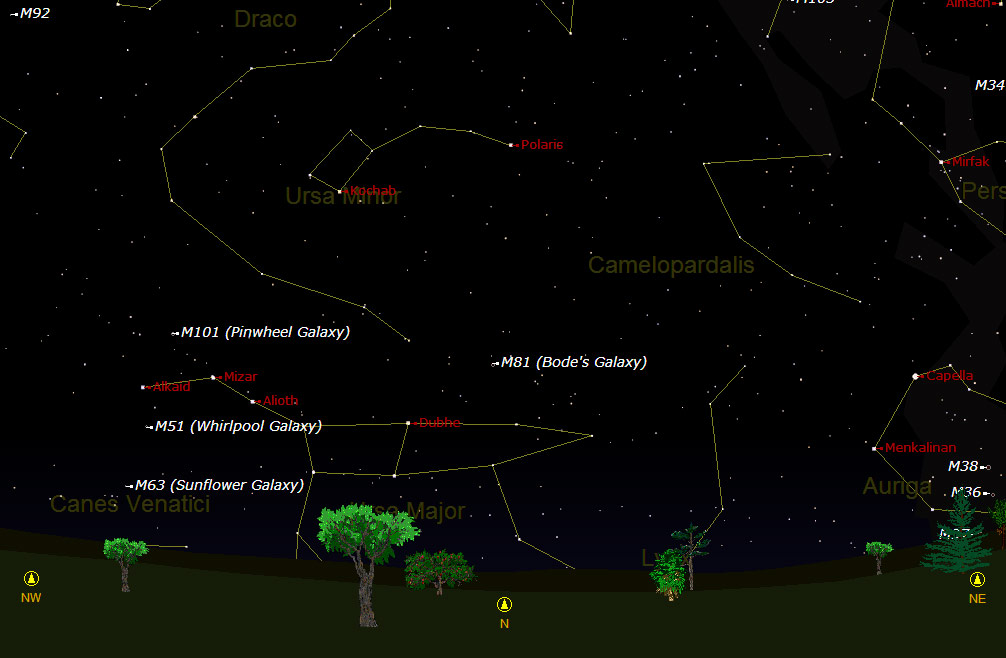
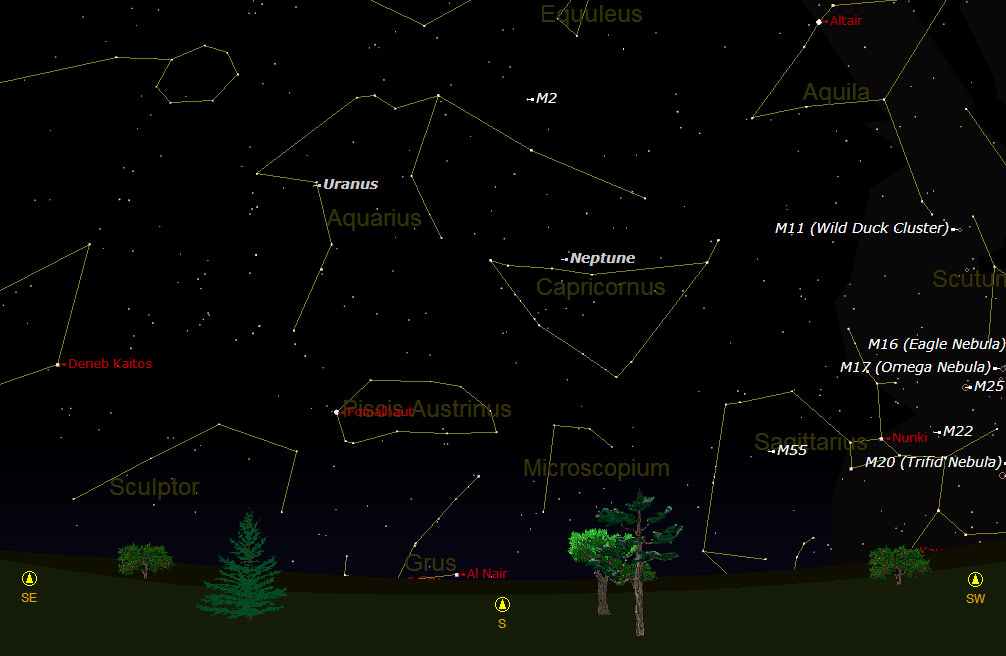
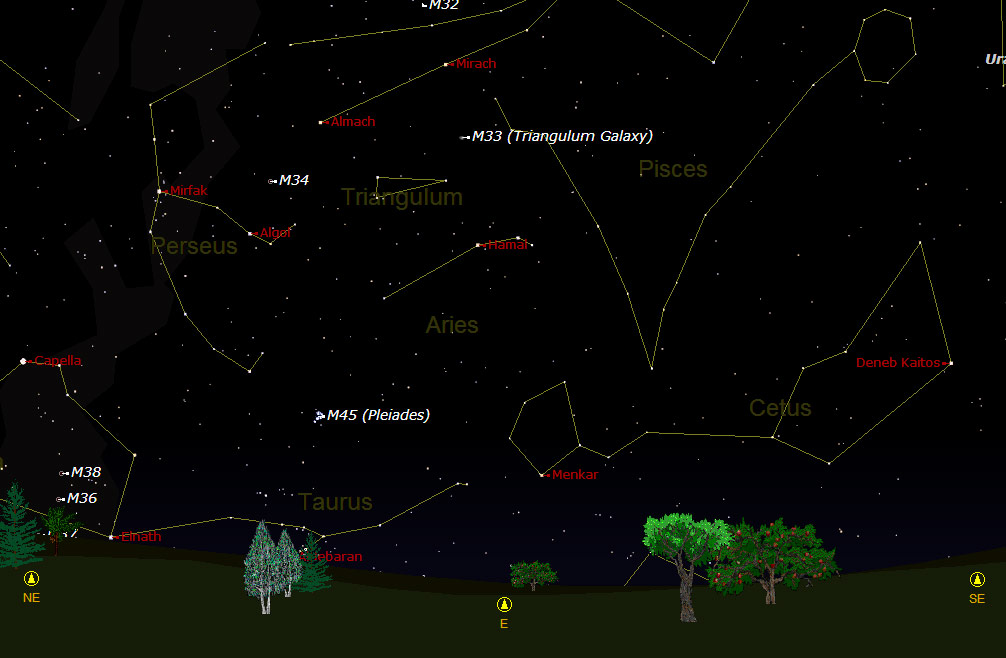
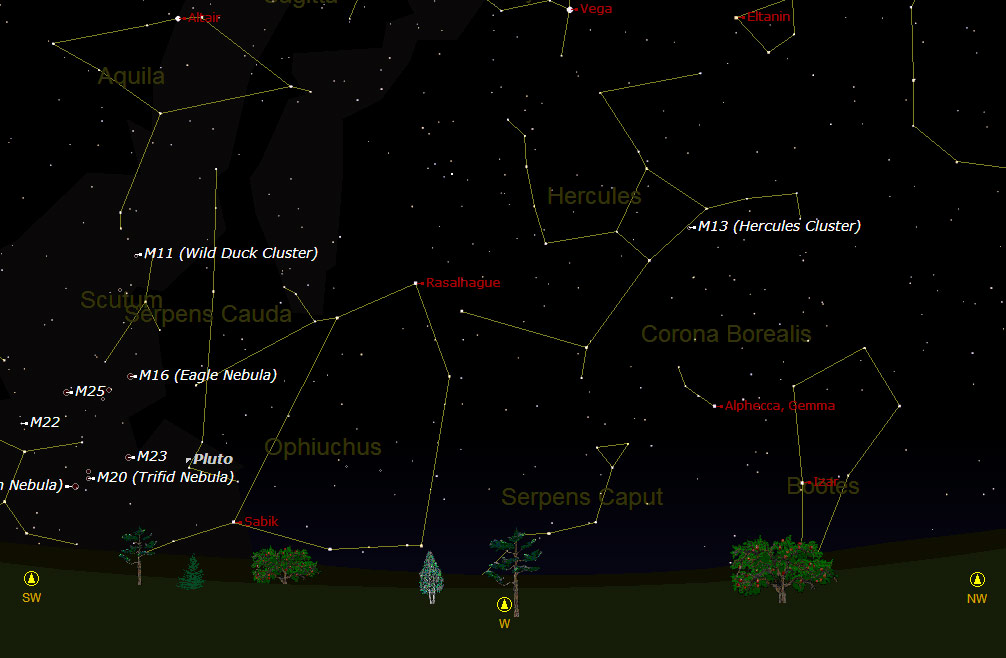
Starmaps: North | South | East | West | Overhead
The strains of Holst's "Venus, the Bringer of Peace" greet the class for this session. Ellie hums along before she beings the lecture.
"Venus is the second-closest planet to the Sun, orbiting it every 224.7 Earth days. After Earth's Moon, it is the brightest object in the night sky, reaching an apparent magnitude of -4.6. As an inferior planet from Earth it never appears to venture far from the Sun, and its elongation reaches a maximum of 47.8°. Venus reaches its maximum brightness shortly before sunrise or shortly after sunset, and is often referred to as the Morning Star or as the Evening Star.
"A terrestrial planet, it is sometimes called Earth's 'sister planet,' as the two are similar in size and bulk composition. The planet is covered with an opaque layer of highly reflective clouds and its surface cannot be seen from space in visible light, making it a subject of great speculation until some of its secrets were revealed by planetary science in the 20th century. Venus has the densest atmosphere of the terrestrial planets, consisting mostly of carbon dioxide, and the atmospheric pressure at the planet's surface is 90 times that of the Earth.
"Venus' surface has been mapped in detail only in the last 20 years. It shows evidence of extensive volcanism, and some of its volcanoes may still be active today. In contrast to the constant crustal movement seen on Earth, Venus is thought to undergo periodic episodes of plate tectonics, in which the crust is subducted rapidly within a few million years separated by stable periods of a few hundred million years.
"The planet is named after Venus, the Roman goddess of love, and most of its surface features are named after famous and mythological women.
"Before we go, I'd like to explain your midterm project. It will be due November 8th, and should be an interview with a student from a planet other that Earth. If you're not from Earth, make it a planet other than your own. Ask questions about what type of world it is and what kind of society has developed. There's no set form for this; it's meant to be a learning experience. Have fun with it!"
Syllabus | Class Roster
Handouts:
Starmaps: North | South | East | West | Overhead

The strains of Holst's "Venus, the Bringer of Peace" greet the class for this session. Ellie hums along before she beings the lecture.
"Venus is the second-closest planet to the Sun, orbiting it every 224.7 Earth days. After Earth's Moon, it is the brightest object in the night sky, reaching an apparent magnitude of -4.6. As an inferior planet from Earth it never appears to venture far from the Sun, and its elongation reaches a maximum of 47.8°. Venus reaches its maximum brightness shortly before sunrise or shortly after sunset, and is often referred to as the Morning Star or as the Evening Star.
"A terrestrial planet, it is sometimes called Earth's 'sister planet,' as the two are similar in size and bulk composition. The planet is covered with an opaque layer of highly reflective clouds and its surface cannot be seen from space in visible light, making it a subject of great speculation until some of its secrets were revealed by planetary science in the 20th century. Venus has the densest atmosphere of the terrestrial planets, consisting mostly of carbon dioxide, and the atmospheric pressure at the planet's surface is 90 times that of the Earth.
"Venus' surface has been mapped in detail only in the last 20 years. It shows evidence of extensive volcanism, and some of its volcanoes may still be active today. In contrast to the constant crustal movement seen on Earth, Venus is thought to undergo periodic episodes of plate tectonics, in which the crust is subducted rapidly within a few million years separated by stable periods of a few hundred million years.
"The planet is named after Venus, the Roman goddess of love, and most of its surface features are named after famous and mythological women.
"Before we go, I'd like to explain your midterm project. It will be due November 8th, and should be an interview with a student from a planet other that Earth. If you're not from Earth, make it a planet other than your own. Ask questions about what type of world it is and what kind of society has developed. There's no set form for this; it's meant to be a learning experience. Have fun with it!"
Re: During the lecture
Hey, never say she can't use someone's own weapons against them.
Re: During the lecture
Re: During the lecture
Re: During the lecture
Re: During the lecture
Re: During the lecture
Re: During the lecture
Re: During the lecture
Re: During the lecture
Re: During the lecture
His mind wasn't nearly focused enough.
"Not right now," he said, sighing. "I should probably use it to take notes anyway."
Re: During the lecture
Re: During the lecture
Re: During the lecture