
http://stargazer-ellie.livejournal.com/ (![[identity profile]](https://www.dreamwidth.org/img/silk/identity/openid.png) stargazer-ellie.livejournal.com) wrote in
stargazer-ellie.livejournal.com) wrote in ![[community profile]](https://www.dreamwidth.org/img/silk/identity/community.png) fandomhigh2006-09-20 05:48 pm
fandomhigh2006-09-20 05:48 pm
stargazer-ellie.livejournal.com) wrote in fandomhigh2006-09-20 05:48 pm


Entry tags:
Astronomy 101: Moons and Planets - Class 3
Week 3 -- September 20: Mercury, the swiftest planet
Syllabus | Class Roster
Handouts:
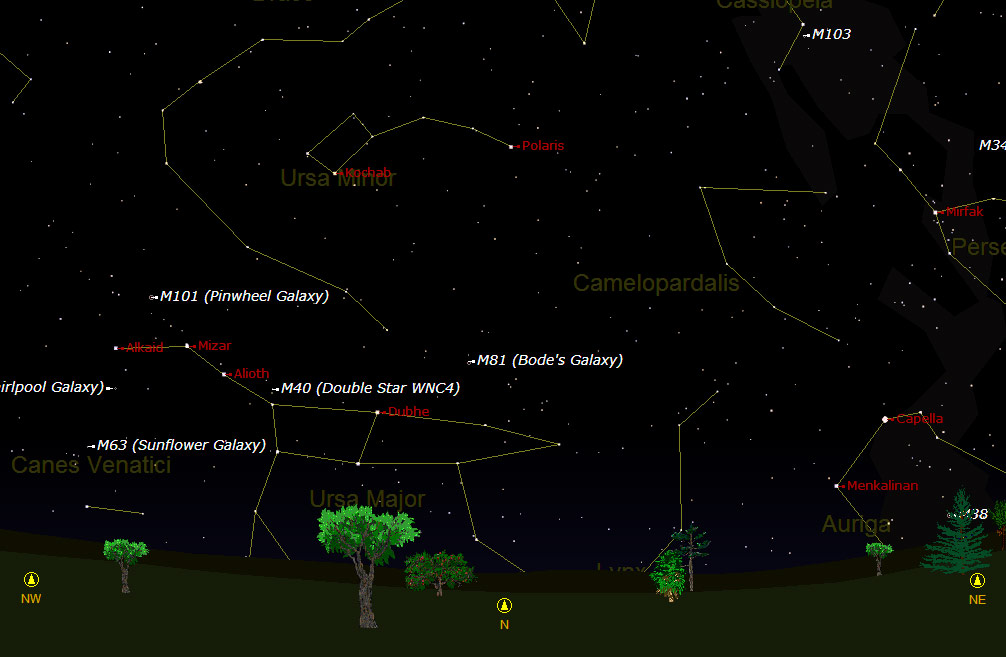
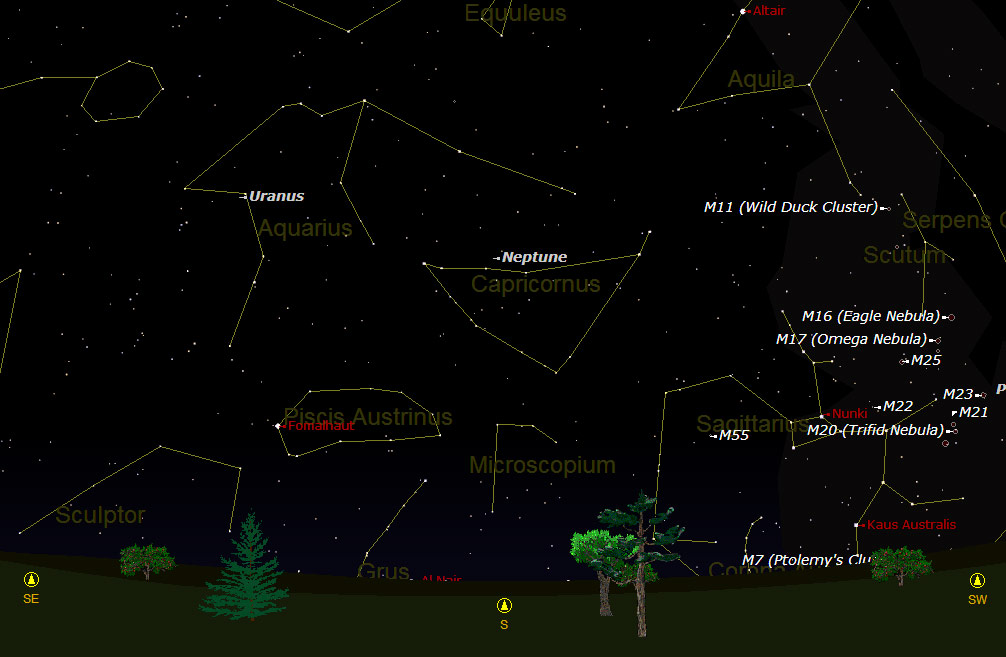
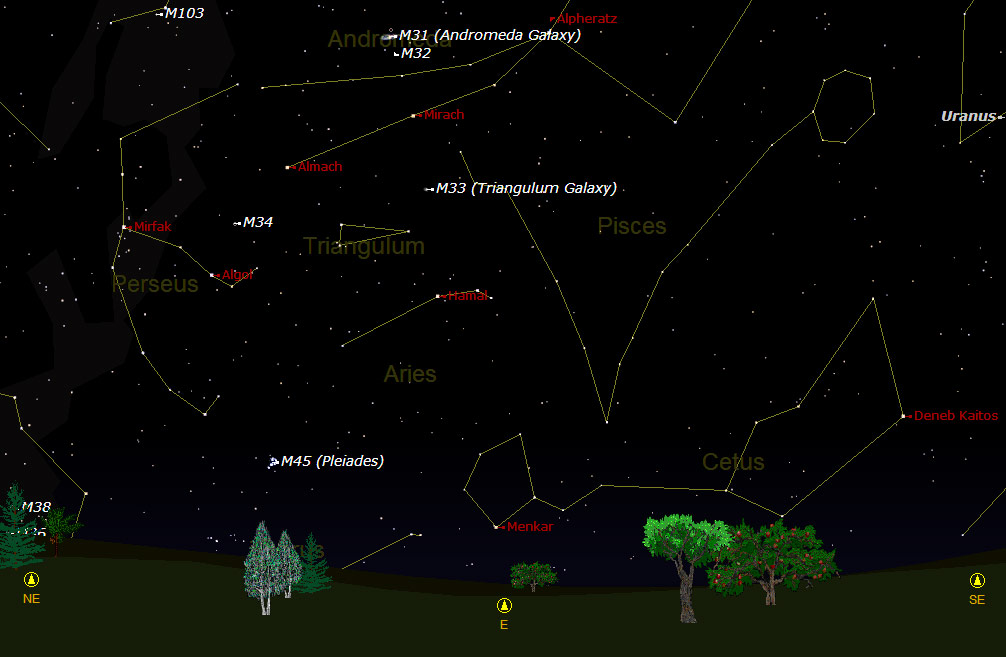
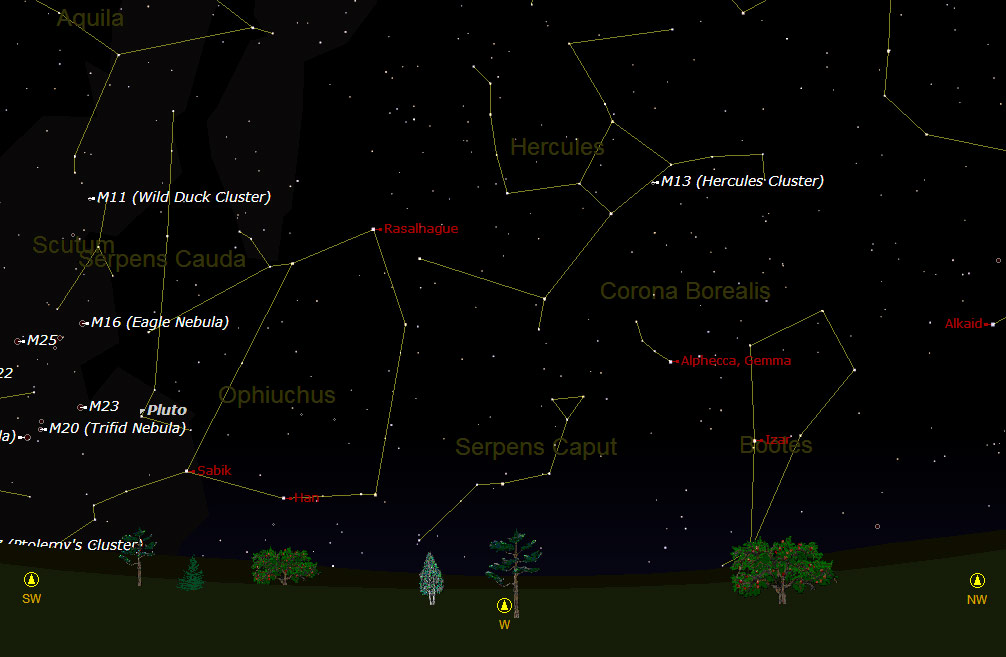
Starmaps: North | South | East | West | Overhead
Today's musical selection is Gustav Holst's "Mercury, The Winged Messenger."
"Today we're going to talk about Merurcy," Ellie began. "Tiny Mercury is now the smallest planet in our solar system -- only Pluto is smaller, when Pluto was still a planet. As a matter of fact, there are two moons in the solar system that are larger than this planet! Jupiter's moon Ganymede and Saturn's moon Titan are both larger than the closest planet to the Sun.
"Mercury has a very unusual orbit. The path that Mercury follows around the Sun is called an ellipse, which looks like a circle that has been stretched out. This means that the distance from Mercury to the Sun can vary a great deal. At its closest point to the Sun, Mercury is only 27 million miles away, while it is 41 million miles from the Sun at its furthest. This varying distance from the Sun also makes the temperature on the surface of the planet change as its year progresses. The temperature varies widely, with the side of the planet facing the Sun having an average temperature of over 650 degrees Fahrenheit, while the 'dark' side of the planet has an average temperature less than 270 degrees below zero Fahrenheit.
"Another interesting fact about Mercury is that one of its 'days' is almost two-thirds as long as one of its years! There are eighty-eight Earth days in a Mercurian year, which is the amount of time it takes for the planet to complete a trip around the Sun. It takes just a little less time, fifty-nine Earth days, for Mercury to complete one of its days, which is the amount of time it takes to rotate all the way around once.
"If you could stand on the surface of Mercury, you would notice another unusual thing about a day on the planet. Here on Earth, a day passes with the Sun moving from East to West in the sky and it takes about twenty-four hours for the Sun to return to the same place in sky from one day to the next. On Mercury, though the Sun moves in the opposite direction, and takes about one hundred and seventy-six days for the Sun to return to the same place in the sky as it was the "day" before.
"Mercury is one of the four 'rocky' planets in our solar system, along with Earth, Venus and Mars. When you look at any of the pictures we have of Mercury, you will notice that the surface of the planet has thousands of craters, which helps tell the story of the early history of this tiny world.
"When our solar system was being formed, it was a very dangerous place. Many thousands, or perhaps even millions of objects were speeding through our future home at very high speeds. The planets which were being formed were subjected to the impacts of many of these objects, and the results of these collisions are still visible on many of the bodies in our solar system. Mercury did not escape unscathed from the solar system's violent early history. Images sent back by the Mariner 10 mission showed us that the small planet was bombarded by thousands of objects, and the results of those impacts are still visible on the planet's surface. After the impacts occurred on the planet's surface, lava from its molten interior would spill onto the surface and make the smooth areas that we can still see today.
"Even though Mercury is one of our closest planetary neighbors, we don't know a whole lot about it. It has only been visited by one spacecraft, Mariner 10. Since the planet is so close to the Sun, it's not safe to have the Hubble Space Telescope take pictures of it.
"That's it for this afternoon, and I'll see you later tonight for the observation lab."
Syllabus | Class Roster
Handouts:
Starmaps: North | South | East | West | Overhead
Today's musical selection is Gustav Holst's "Mercury, The Winged Messenger."
"Today we're going to talk about Merurcy," Ellie began. "Tiny Mercury is now the smallest planet in our solar system -- only Pluto is smaller, when Pluto was still a planet. As a matter of fact, there are two moons in the solar system that are larger than this planet! Jupiter's moon Ganymede and Saturn's moon Titan are both larger than the closest planet to the Sun.
"Mercury has a very unusual orbit. The path that Mercury follows around the Sun is called an ellipse, which looks like a circle that has been stretched out. This means that the distance from Mercury to the Sun can vary a great deal. At its closest point to the Sun, Mercury is only 27 million miles away, while it is 41 million miles from the Sun at its furthest. This varying distance from the Sun also makes the temperature on the surface of the planet change as its year progresses. The temperature varies widely, with the side of the planet facing the Sun having an average temperature of over 650 degrees Fahrenheit, while the 'dark' side of the planet has an average temperature less than 270 degrees below zero Fahrenheit.
"Another interesting fact about Mercury is that one of its 'days' is almost two-thirds as long as one of its years! There are eighty-eight Earth days in a Mercurian year, which is the amount of time it takes for the planet to complete a trip around the Sun. It takes just a little less time, fifty-nine Earth days, for Mercury to complete one of its days, which is the amount of time it takes to rotate all the way around once.
"If you could stand on the surface of Mercury, you would notice another unusual thing about a day on the planet. Here on Earth, a day passes with the Sun moving from East to West in the sky and it takes about twenty-four hours for the Sun to return to the same place in sky from one day to the next. On Mercury, though the Sun moves in the opposite direction, and takes about one hundred and seventy-six days for the Sun to return to the same place in the sky as it was the "day" before.
"Mercury is one of the four 'rocky' planets in our solar system, along with Earth, Venus and Mars. When you look at any of the pictures we have of Mercury, you will notice that the surface of the planet has thousands of craters, which helps tell the story of the early history of this tiny world.
"When our solar system was being formed, it was a very dangerous place. Many thousands, or perhaps even millions of objects were speeding through our future home at very high speeds. The planets which were being formed were subjected to the impacts of many of these objects, and the results of these collisions are still visible on many of the bodies in our solar system. Mercury did not escape unscathed from the solar system's violent early history. Images sent back by the Mariner 10 mission showed us that the small planet was bombarded by thousands of objects, and the results of those impacts are still visible on the planet's surface. After the impacts occurred on the planet's surface, lava from its molten interior would spill onto the surface and make the smooth areas that we can still see today.
"Even though Mercury is one of our closest planetary neighbors, we don't know a whole lot about it. It has only been visited by one spacecraft, Mariner 10. Since the planet is so close to the Sun, it's not safe to have the Hubble Space Telescope take pictures of it.
"That's it for this afternoon, and I'll see you later tonight for the observation lab."
Re: During the lecture