
http://stargazer-ellie.livejournal.com/ (![[identity profile]](https://www.dreamwidth.org/img/silk/identity/openid.png) stargazer-ellie.livejournal.com) wrote in
stargazer-ellie.livejournal.com) wrote in ![[community profile]](https://www.dreamwidth.org/img/silk/identity/community.png) fandomhigh2006-06-21 09:04 am
fandomhigh2006-06-21 09:04 am
stargazer-ellie.livejournal.com) wrote in fandomhigh2006-06-21 09:04 am


Entry tags:
Observational Astronomy -- June 21
Week 5 - June 21 - Hydra, Ophiuchus, Cepheus
[Class Roster ]
Star maps: East | West | North | South | Overhead
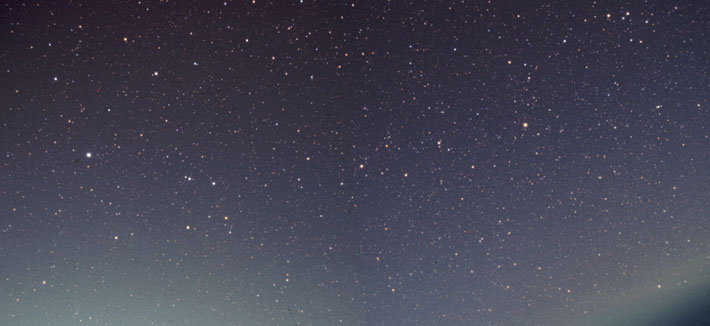
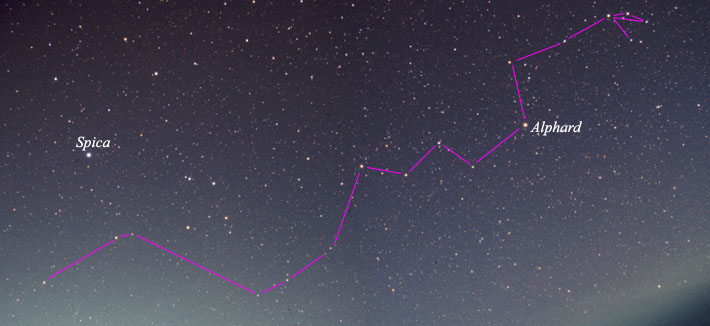
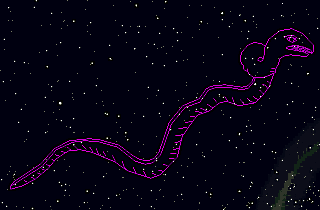
"The Hydra is the largest constellation in the heavens. Look directly west and you can find the head of the Hydra, below and slightly west of Cancer, Saturn, and Mars. Its body occupies the southern sky in spring and stretches out to around one hundred degrees in the process. Alpha Hydrae, Alphard, is very noticeable at the heart of Hydra. The star is a bright red-giant, meaning of 'Solitary.'
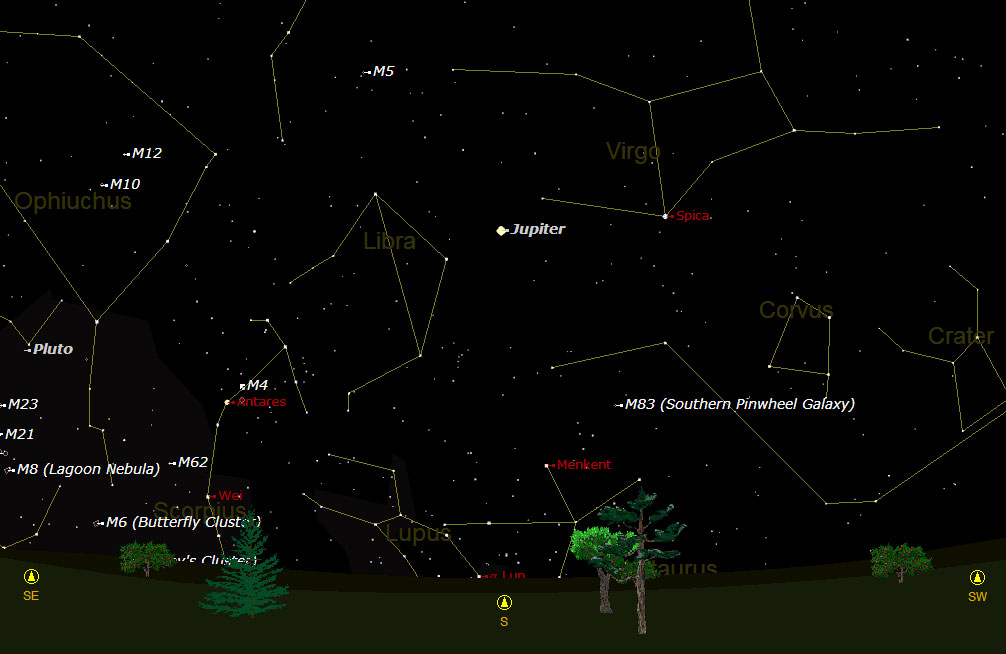
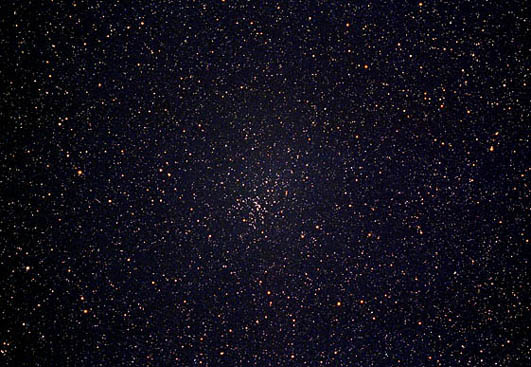
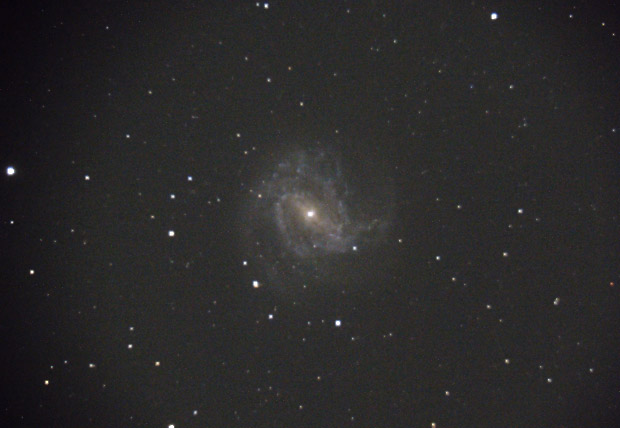
"There are several interesting objects in Hydra. M48 is a medium-sized open cluster at the western edge of Hydra. The cluster contains about 80 stars and has a diameter of about 30 arc minutes, almost same as that of full moon. You can perfectly resolve individual stars with only binoculars. M83 is a bright galaxy around the tail of Hydra. M83 is a 'barred galaxy.' A clear bar of stars stretches across the galaxy, and the two spiral arms are coiled up from each tip of the bar. M83 is approximately 15 million light years away from Earth.
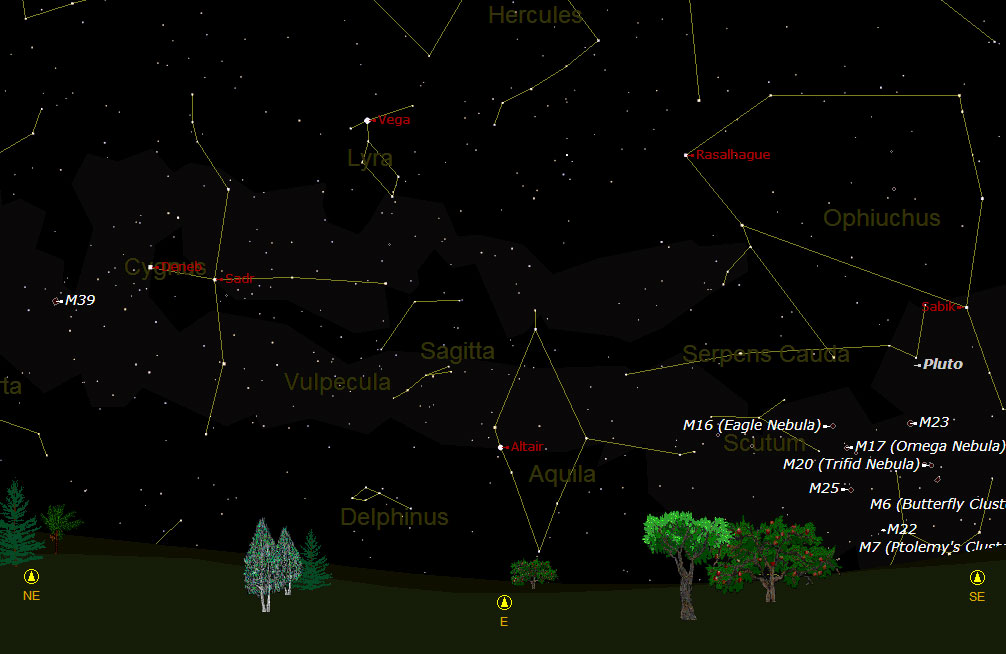
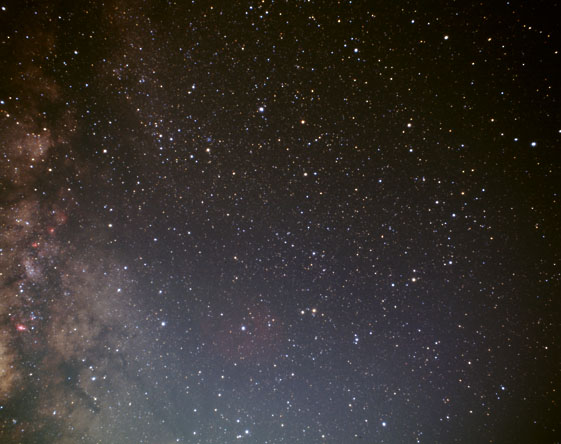
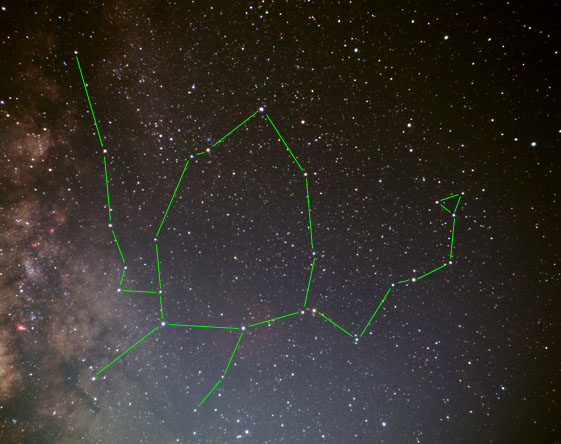
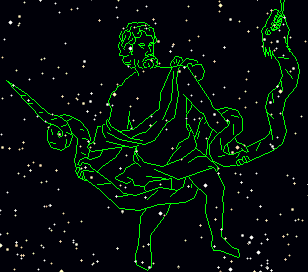
"Now look to the southeast, below Hercules and Bootes. Ophiuchus occupies a very large chunk of the sky. The constellation of Ophiuchus represents Asclepius, who was a skilled surgeon. He carries a serpent because it had been regarded as a symbol of health in the ancient Greece. Ophiuchus is the only constellation that the sun enters but which is not a part of the zodiac, because the southern area of Ophiuchus used to be part of Scorpius. Ophiuchus includes many nebulae and star clusters, and some novae have appeared around this field. In 1604, a supernova with a magnitude of about -2.5 appeared just southwest of theta Ophiuchi, marks right leg of Ophiuchus. The supernova is known as 'Kepler's supernova.' This supernova is the last to be seen in our galaxy, and it was brighter than all the stars in the sky. Only Venus and the moon were brighter. The 1604 supernova was used by Galileo as evidence against the Aristotelian dogma of his period, that the heavens never changed.
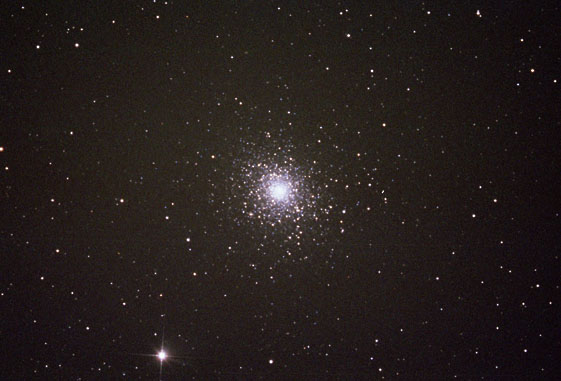
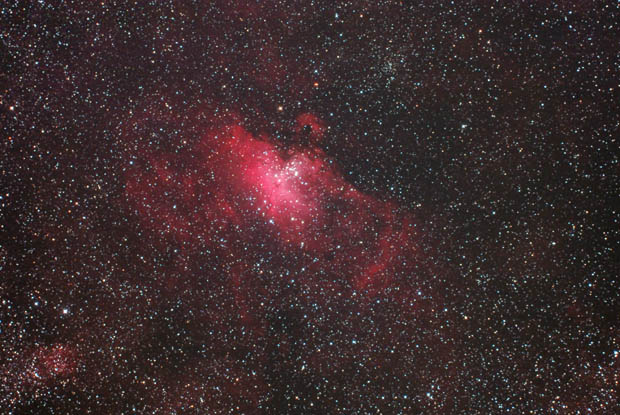
"M5 is a spectacular globular cluster, and M16 is a magnificent diffused nebula in this constellation. The nebula is lying on top of an open cluster and has the nickname of the 'Eagle Nebula.' It's very luminous with dark streaks of dust and has a nursery of baby stars. The dark streaks, which look like elephant's nose, are now very well-known due to a very clear photograph taken by the Hubble Space Telescope.
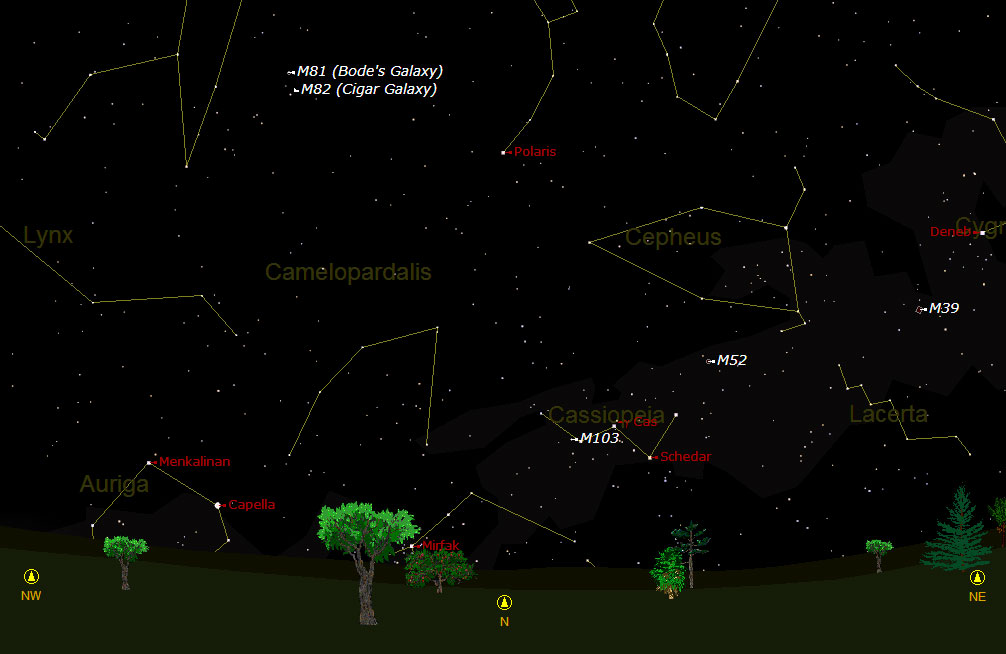
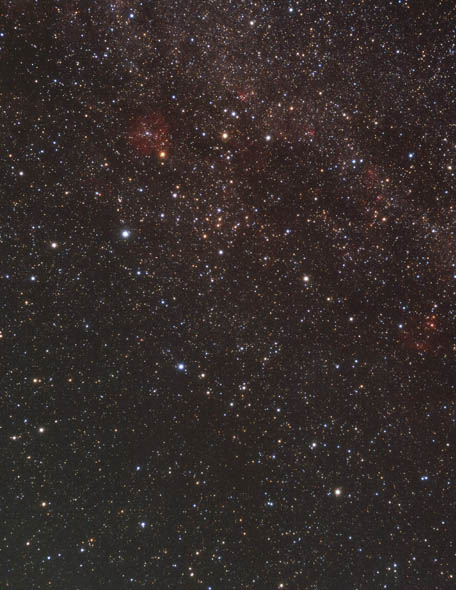
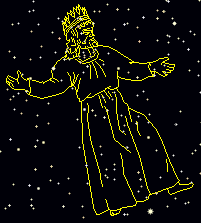
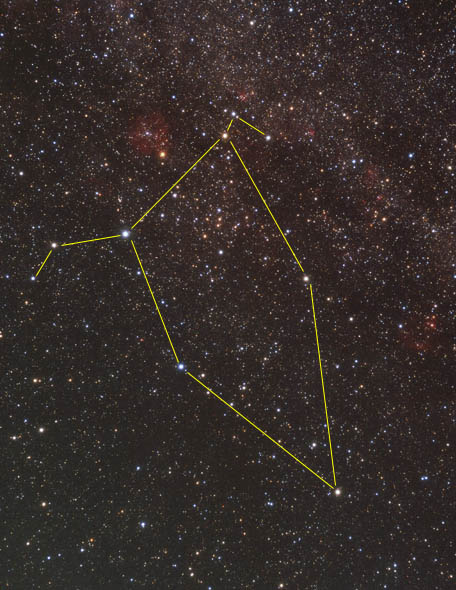
"Face north and find Cassiopeia. Cepheus is name of an ancient Ethiopian king, and his constellation lies just above Cassiopeia. It consists mainly of five stars with mostly third and fourth magnitude which form a strained pentagon. Cepheus contains the reddest star in the sky, Mu Cephei, also called 'The Garnet Star.' It is a red super-giant, 1,500 times the size of the sun. It was considered the largest star known to man until just recently when 3 other stars (which you can't see without a big telescope) were measured about the same size but just barely edge it out. Placed where our sun is, the surface of Mu Cephei would extend out past Jupiter.
"Another star in Cepheus is of crucial importance to astronomy -- Delta Cephei. This star is a 'variable,' meaning the star's brightness varies over time. This star was the first of its type to be discovered, hence these variable stars are called 'Cepheid' stars. Cepheid stars have gotten to just the right mass to be unstable - so the whole star is pulsating, the surface of the star is actually rising and falling, with a rhythm that is so precise you could set your watch to it. It was discovered in 1912 that this rhythm depends directly on the true brightness of the star -- the brighter the star, the longer the time between peaks. This discovery, as it happens, rocked the astronomy world. So why was this such a big deal?
"Well when a star is closer to us, it seems brighter. When it's farther away it seems dimmer, right? Well, we know the true brightness of a Cepheid star, from the cycle time of its brightness. If we know the true brightness of the star, and we measure its apparent brightness, we can figure out the distance to the star. If the star is part of a cluster or a galaxy, this tells us the distance to that entire body of stars. This has been used to find the distances to globular clusters, other galaxies and even our distance from the center of our own galaxy -- 28,000 light years.
"Next week Veronica Mars and her photography class will be joining us for some nighttime photography, so don't be surprised when you see more of your fellow students here."
[Class Roster ]
Star maps: East | West | North | South | Overhead
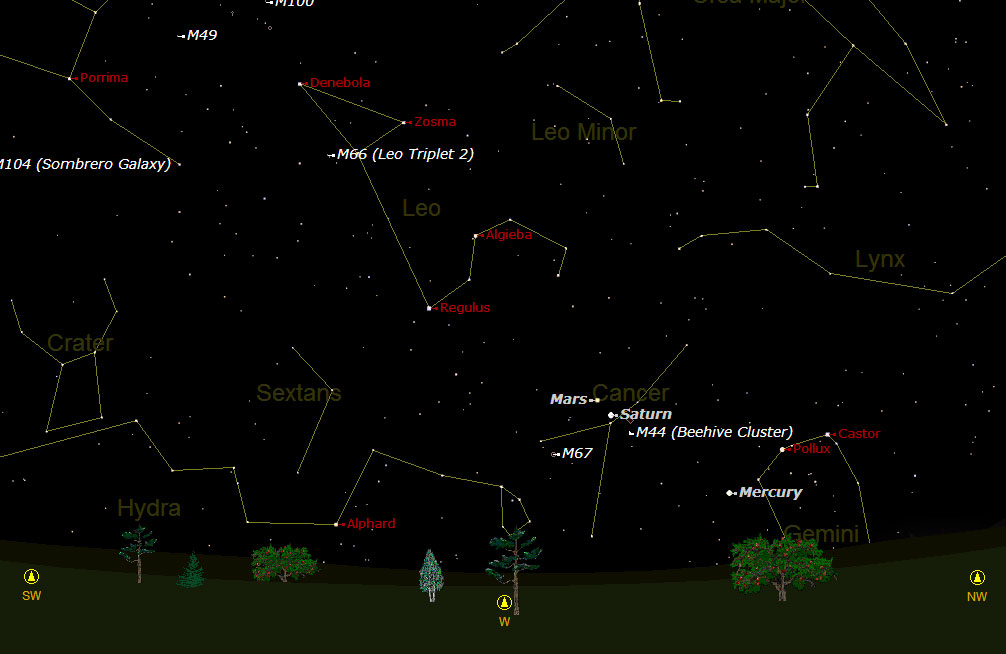
"The Hydra is the largest constellation in the heavens. Look directly west and you can find the head of the Hydra, below and slightly west of Cancer, Saturn, and Mars. Its body occupies the southern sky in spring and stretches out to around one hundred degrees in the process. Alpha Hydrae, Alphard, is very noticeable at the heart of Hydra. The star is a bright red-giant, meaning of 'Solitary.'
"There are several interesting objects in Hydra. M48 is a medium-sized open cluster at the western edge of Hydra. The cluster contains about 80 stars and has a diameter of about 30 arc minutes, almost same as that of full moon. You can perfectly resolve individual stars with only binoculars. M83 is a bright galaxy around the tail of Hydra. M83 is a 'barred galaxy.' A clear bar of stars stretches across the galaxy, and the two spiral arms are coiled up from each tip of the bar. M83 is approximately 15 million light years away from Earth.
"Now look to the southeast, below Hercules and Bootes. Ophiuchus occupies a very large chunk of the sky. The constellation of Ophiuchus represents Asclepius, who was a skilled surgeon. He carries a serpent because it had been regarded as a symbol of health in the ancient Greece. Ophiuchus is the only constellation that the sun enters but which is not a part of the zodiac, because the southern area of Ophiuchus used to be part of Scorpius. Ophiuchus includes many nebulae and star clusters, and some novae have appeared around this field. In 1604, a supernova with a magnitude of about -2.5 appeared just southwest of theta Ophiuchi, marks right leg of Ophiuchus. The supernova is known as 'Kepler's supernova.' This supernova is the last to be seen in our galaxy, and it was brighter than all the stars in the sky. Only Venus and the moon were brighter. The 1604 supernova was used by Galileo as evidence against the Aristotelian dogma of his period, that the heavens never changed.
"M5 is a spectacular globular cluster, and M16 is a magnificent diffused nebula in this constellation. The nebula is lying on top of an open cluster and has the nickname of the 'Eagle Nebula.' It's very luminous with dark streaks of dust and has a nursery of baby stars. The dark streaks, which look like elephant's nose, are now very well-known due to a very clear photograph taken by the Hubble Space Telescope.

"Face north and find Cassiopeia. Cepheus is name of an ancient Ethiopian king, and his constellation lies just above Cassiopeia. It consists mainly of five stars with mostly third and fourth magnitude which form a strained pentagon. Cepheus contains the reddest star in the sky, Mu Cephei, also called 'The Garnet Star.' It is a red super-giant, 1,500 times the size of the sun. It was considered the largest star known to man until just recently when 3 other stars (which you can't see without a big telescope) were measured about the same size but just barely edge it out. Placed where our sun is, the surface of Mu Cephei would extend out past Jupiter.
"Another star in Cepheus is of crucial importance to astronomy -- Delta Cephei. This star is a 'variable,' meaning the star's brightness varies over time. This star was the first of its type to be discovered, hence these variable stars are called 'Cepheid' stars. Cepheid stars have gotten to just the right mass to be unstable - so the whole star is pulsating, the surface of the star is actually rising and falling, with a rhythm that is so precise you could set your watch to it. It was discovered in 1912 that this rhythm depends directly on the true brightness of the star -- the brighter the star, the longer the time between peaks. This discovery, as it happens, rocked the astronomy world. So why was this such a big deal?
"Well when a star is closer to us, it seems brighter. When it's farther away it seems dimmer, right? Well, we know the true brightness of a Cepheid star, from the cycle time of its brightness. If we know the true brightness of the star, and we measure its apparent brightness, we can figure out the distance to the star. If the star is part of a cluster or a galaxy, this tells us the distance to that entire body of stars. This has been used to find the distances to globular clusters, other galaxies and even our distance from the center of our own galaxy -- 28,000 light years.
"Next week Veronica Mars and her photography class will be joining us for some nighttime photography, so don't be surprised when you see more of your fellow students here."