
Liliana Vess (![[personal profile]](https://www.dreamwidth.org/img/silk/identity/user.png) deathsmajesty) wrote in
deathsmajesty) wrote in ![[community profile]](https://www.dreamwidth.org/img/silk/identity/community.png) fandomhigh2024-04-04 04:17 am
fandomhigh2024-04-04 04:17 am
deathsmajesty) wrote in fandomhigh2024-04-04 04:17 am


Entry tags:
Necromancers Guide to the Undead, Thursday, Period 1
Was Liliana aware of the great irony of the topic under discussion today? Entirely yes. However, that wasn't going to stop her. Because doing that smacked of shame or embarrassment and she didn't believe in those emotions. They met again in the Danger Shop, starting off in the standard 'classroom simulation.'
"Vampires," she began, as soon as the bell rang, "are a bloodthirsty species in the mostly literal meaning of the term. They are often a type of undead, though there are certainly rumors of people with the powers of vampires who still yet walk among the living. While humans are the most common victims of vampirism, other races can be afflicted as well. Throughout the Multiverse - which, again, are the only parts of reality my course can speak to definitively - vampires can be created through other vampires turning their victims, or through enchantment - and even those who were originally transformed by enchantment are able to pass along the 'gift of the blood' via bite. Vampires can range from mindless predators to sophisticated and intelligent nobles. The appearances of vampires are similarly varied, although they all have somewhat elongated fangs, with the more feral ones, or those that have degenerated due to starvation, having bat-like qualities."
She thought of the vampires that had accompanied Baron Sengir and tightened her lips.
"The most defining characteristic of vampirism is their hunger for the blood and/or life forces of others. Other traits of vampires can include unnatural physical strength, enhanced healing powers, and the ability to fly, with their methods being through either natural or supernatural means. Many species of vampires are highly sensitive to sunlight and therefore only go out at night or in the shade, but this is not always the case. Regardless, the secretive and predatory nature of this creature type means that they all prefer the cover of darkness. However, those are the broadest and most basic definitions of 'vampire;' the exact details differ from plane to plane."
"Today, we'll be discussing the most prevalent vampires in the Multiverse, Sengir vampires." At her gesture, vampires appeared in the classroom, so that there was at least one within a few feet of each student. "Sengir vampires show the most range in appearance, because they are the most prone to degeneration - not only through hunger and deprivation, but also through lineage. The further they get from the progenitor of the line, Baron Sengir, the more bestial they become."
Again a gesture, but this one to highlight certain aspects of the vampires around them. "Sengir vampires are now misshapen creatures with pointed ears, long claws and toes, and feral eyes. Their skin is so translucent that their blood vessels show through. After feeding, a patch of red blood can be seen where their stomach is. Their fingers are webbed, and a thin patagium connects their arms to their body to facilitate flight. This is actually one of the more human-seeming Sengir vampires; an older specimen, probably only ten or so generations from the Baron."
Some of the images of the original images around the room were replaced, some of them turning into an emaciated creature, wearing tattered clothes, his batlike ears pierced. Yet others turn into a creature that barely looked like it had ever been human, with a batlike face and extensive patagium.
"These are from the thirty-second and fifty-fourth generation respectively," Liliana said. "Baron Sengir was a nobleman from the plane Dominaria, active some two thousand years ago. Though we do not have definitive records of where he was personally from, the general assumption is that he was born somewhere in the continent of Aerona, likely in the Shoeltun Empire, which is now the country of Benalia. Aerona generally and Benalia specifically have always been plagued by Sengir vampires, particularly Sengirs of lower generations, hence the assumption. Other Sengirs have been discovered in Otaria, another Dominarian continent, though consensus is, due to their number and the fact that only younger vampires have been spotted there - usually those turned only within the last thousand years or so, that they either migrated there under their own free will, or brought there by a group called the Cabal, to battle in their fighting pits."
Liliana was doing an excellent job narrating this in a crisply neutral voice, giving no sign that she was discussing not only her home plane but her home country. Another gesture and the vampire images changed again, this time to a flying man in long, red robes.
"Baron Sengir is a historical figure, certainly, and while his bloodline has certainly come to dominate several planes and spread throughout the Multiverse, not much is known about the man himself. It is speculated that he received his vampiric powers through a curse or an immortality enchantment gone horribly wrong, some sources say on a colony of rabid bats, other says a pack of plague-bearing rats. It might be either, it might be neither. While his early years are shrouded in two thousand years of time, he had made quite the name for himself in brutality and viciousness and murder, terrorizing much of the Sheoltun Empire for nearly seven hundred years. In the year 3420, he vanished; summoned to a different plane, Ulgrotha, by another vampire, Sorin Markov to be used as a weapon in a duel, and then left stranded there when Sorin fled after his loss. This information was discovered only recently--" by her, a few weeks ago "--so no formal investigations into what happened on Ulgrotha have been made, but from what the Baron has said, it sounded as if he'd held dominion over much of that plane."
Another picture flickered up. A much more human-looking vampire, though his ears were still pointed and his hands still clawed.
"However, Sengir's disappearance did not mean that the Sengir vampire threat was removed. When we speak of vampiric generations, we mean how many vampires stand between the vampire in question and the line's progenitor. So any person Baron Sengir himself turned would be a first-generation vampire, then any person they turned would be second-generation, on and on, et cetera, et cetera. Thus, when I say a twentieth-generation vampire, that is not a strict indication of time passing the same way it would be if I talked about a twentieth-generation member of your family. While it is most common for a higher generation vampire to have been turned more recently than a low-generation one, it is not always a guarantee. Any person turned by a surviving fifth-generation Sengir vampires right now is still considered a sixth-generation vampire and has the strength and appearance of that generation of their kin, even if most of the vampires turned today are somewhere in the mid-seventieth generations. For example, this vampire's name is Kazarov and he is rumored to be one of the few remaining second-generation vampires on Dominaria, though he was only turned a century or so before the Baron was summoned to Ulgrotha.
"It is not only the appearance of the vampire that degrades with time and distance, it's also the powers and usually the mental faculties. Most high-generation vampires are possessed of cruelty and a kind of clever predator cunning, but very few are actually intelligent enough to use strategies and set up plans for future times. Alternately, most low-generation vampires are as smart or even smarter than their were upon death, though their intelligence now has taken on a more sadistic bent. Furthermore, the powers have diminished; lower-generation vampires are more powerful and tougher than their thinner-blooded kin. One thing all Sengir vampires have in common, though, is that they find strength in blood and murder. All Sengir vampires get stronger with every creature they kill and feed upon, even if only a few drops. If they're sending a creature to its graveyard, they're benefitting from it."
"Vampires," she began, as soon as the bell rang, "are a bloodthirsty species in the mostly literal meaning of the term. They are often a type of undead, though there are certainly rumors of people with the powers of vampires who still yet walk among the living. While humans are the most common victims of vampirism, other races can be afflicted as well. Throughout the Multiverse - which, again, are the only parts of reality my course can speak to definitively - vampires can be created through other vampires turning their victims, or through enchantment - and even those who were originally transformed by enchantment are able to pass along the 'gift of the blood' via bite. Vampires can range from mindless predators to sophisticated and intelligent nobles. The appearances of vampires are similarly varied, although they all have somewhat elongated fangs, with the more feral ones, or those that have degenerated due to starvation, having bat-like qualities."
She thought of the vampires that had accompanied Baron Sengir and tightened her lips.
"The most defining characteristic of vampirism is their hunger for the blood and/or life forces of others. Other traits of vampires can include unnatural physical strength, enhanced healing powers, and the ability to fly, with their methods being through either natural or supernatural means. Many species of vampires are highly sensitive to sunlight and therefore only go out at night or in the shade, but this is not always the case. Regardless, the secretive and predatory nature of this creature type means that they all prefer the cover of darkness. However, those are the broadest and most basic definitions of 'vampire;' the exact details differ from plane to plane."
"Today, we'll be discussing the most prevalent vampires in the Multiverse, Sengir vampires." At her gesture, vampires appeared in the classroom, so that there was at least one within a few feet of each student. "Sengir vampires show the most range in appearance, because they are the most prone to degeneration - not only through hunger and deprivation, but also through lineage. The further they get from the progenitor of the line, Baron Sengir, the more bestial they become."
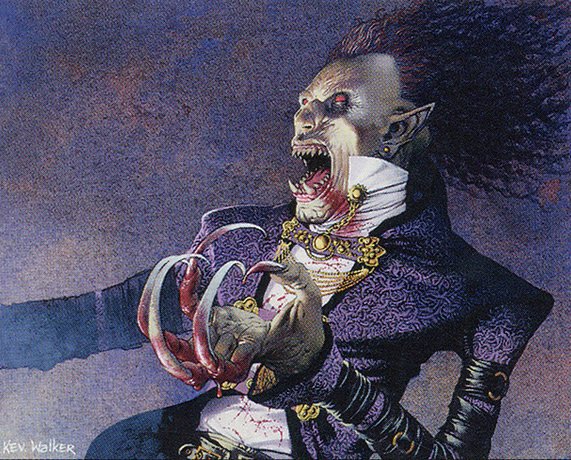
Again a gesture, but this one to highlight certain aspects of the vampires around them. "Sengir vampires are now misshapen creatures with pointed ears, long claws and toes, and feral eyes. Their skin is so translucent that their blood vessels show through. After feeding, a patch of red blood can be seen where their stomach is. Their fingers are webbed, and a thin patagium connects their arms to their body to facilitate flight. This is actually one of the more human-seeming Sengir vampires; an older specimen, probably only ten or so generations from the Baron."
Some of the images of the original images around the room were replaced, some of them turning into an emaciated creature, wearing tattered clothes, his batlike ears pierced. Yet others turn into a creature that barely looked like it had ever been human, with a batlike face and extensive patagium.
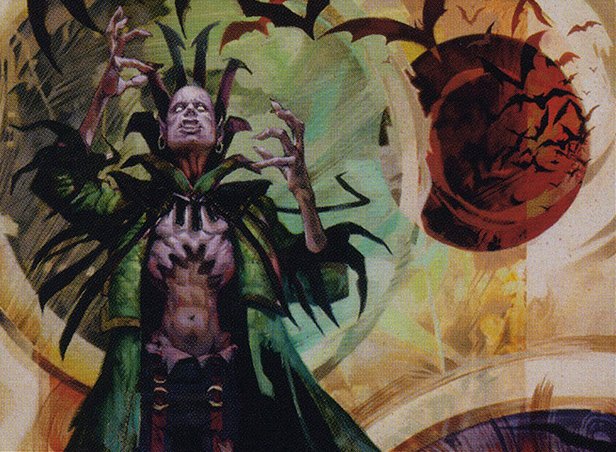
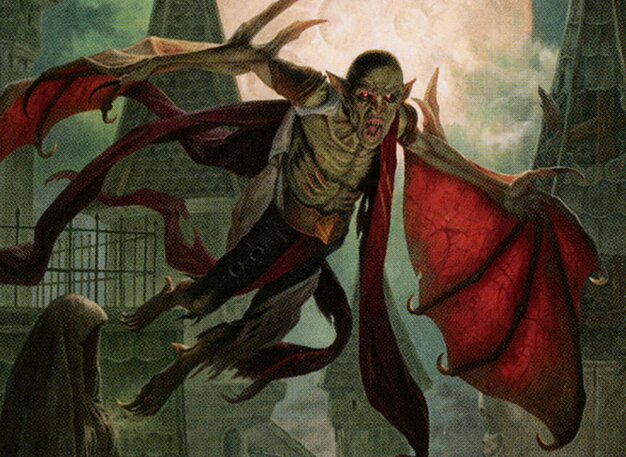
"These are from the thirty-second and fifty-fourth generation respectively," Liliana said. "Baron Sengir was a nobleman from the plane Dominaria, active some two thousand years ago. Though we do not have definitive records of where he was personally from, the general assumption is that he was born somewhere in the continent of Aerona, likely in the Shoeltun Empire, which is now the country of Benalia. Aerona generally and Benalia specifically have always been plagued by Sengir vampires, particularly Sengirs of lower generations, hence the assumption. Other Sengirs have been discovered in Otaria, another Dominarian continent, though consensus is, due to their number and the fact that only younger vampires have been spotted there - usually those turned only within the last thousand years or so, that they either migrated there under their own free will, or brought there by a group called the Cabal, to battle in their fighting pits."
Liliana was doing an excellent job narrating this in a crisply neutral voice, giving no sign that she was discussing not only her home plane but her home country. Another gesture and the vampire images changed again, this time to a flying man in long, red robes.
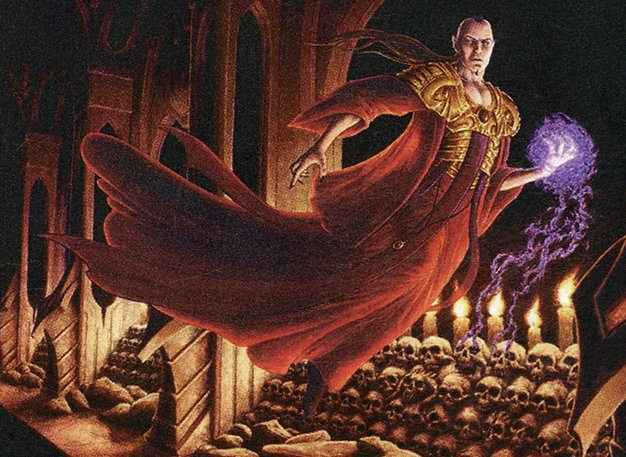
"Baron Sengir is a historical figure, certainly, and while his bloodline has certainly come to dominate several planes and spread throughout the Multiverse, not much is known about the man himself. It is speculated that he received his vampiric powers through a curse or an immortality enchantment gone horribly wrong, some sources say on a colony of rabid bats, other says a pack of plague-bearing rats. It might be either, it might be neither. While his early years are shrouded in two thousand years of time, he had made quite the name for himself in brutality and viciousness and murder, terrorizing much of the Sheoltun Empire for nearly seven hundred years. In the year 3420, he vanished; summoned to a different plane, Ulgrotha, by another vampire, Sorin Markov to be used as a weapon in a duel, and then left stranded there when Sorin fled after his loss. This information was discovered only recently--" by her, a few weeks ago "--so no formal investigations into what happened on Ulgrotha have been made, but from what the Baron has said, it sounded as if he'd held dominion over much of that plane."
Another picture flickered up. A much more human-looking vampire, though his ears were still pointed and his hands still clawed.
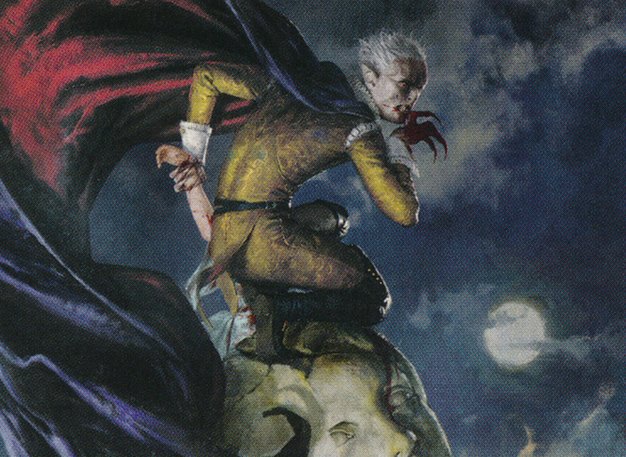
"However, Sengir's disappearance did not mean that the Sengir vampire threat was removed. When we speak of vampiric generations, we mean how many vampires stand between the vampire in question and the line's progenitor. So any person Baron Sengir himself turned would be a first-generation vampire, then any person they turned would be second-generation, on and on, et cetera, et cetera. Thus, when I say a twentieth-generation vampire, that is not a strict indication of time passing the same way it would be if I talked about a twentieth-generation member of your family. While it is most common for a higher generation vampire to have been turned more recently than a low-generation one, it is not always a guarantee. Any person turned by a surviving fifth-generation Sengir vampires right now is still considered a sixth-generation vampire and has the strength and appearance of that generation of their kin, even if most of the vampires turned today are somewhere in the mid-seventieth generations. For example, this vampire's name is Kazarov and he is rumored to be one of the few remaining second-generation vampires on Dominaria, though he was only turned a century or so before the Baron was summoned to Ulgrotha.
"It is not only the appearance of the vampire that degrades with time and distance, it's also the powers and usually the mental faculties. Most high-generation vampires are possessed of cruelty and a kind of clever predator cunning, but very few are actually intelligent enough to use strategies and set up plans for future times. Alternately, most low-generation vampires are as smart or even smarter than their were upon death, though their intelligence now has taken on a more sadistic bent. Furthermore, the powers have diminished; lower-generation vampires are more powerful and tougher than their thinner-blooded kin. One thing all Sengir vampires have in common, though, is that they find strength in blood and murder. All Sengir vampires get stronger with every creature they kill and feed upon, even if only a few drops. If they're sending a creature to its grave