
http://stargazer-ellie.livejournal.com/ (![[identity profile]](https://www.dreamwidth.org/img/silk/identity/openid.png) stargazer-ellie.livejournal.com) wrote in
stargazer-ellie.livejournal.com) wrote in ![[community profile]](https://www.dreamwidth.org/img/silk/identity/community.png) fandomhigh2006-10-18 08:33 am
fandomhigh2006-10-18 08:33 am
stargazer-ellie.livejournal.com) wrote in fandomhigh2006-10-18 08:33 am


Entry tags:
Astronomy 101: Moons and Planets - Class 7
Week 7 -- October 18: Jupiter, king of the planets
Syllabus | Class Roster
Handouts:
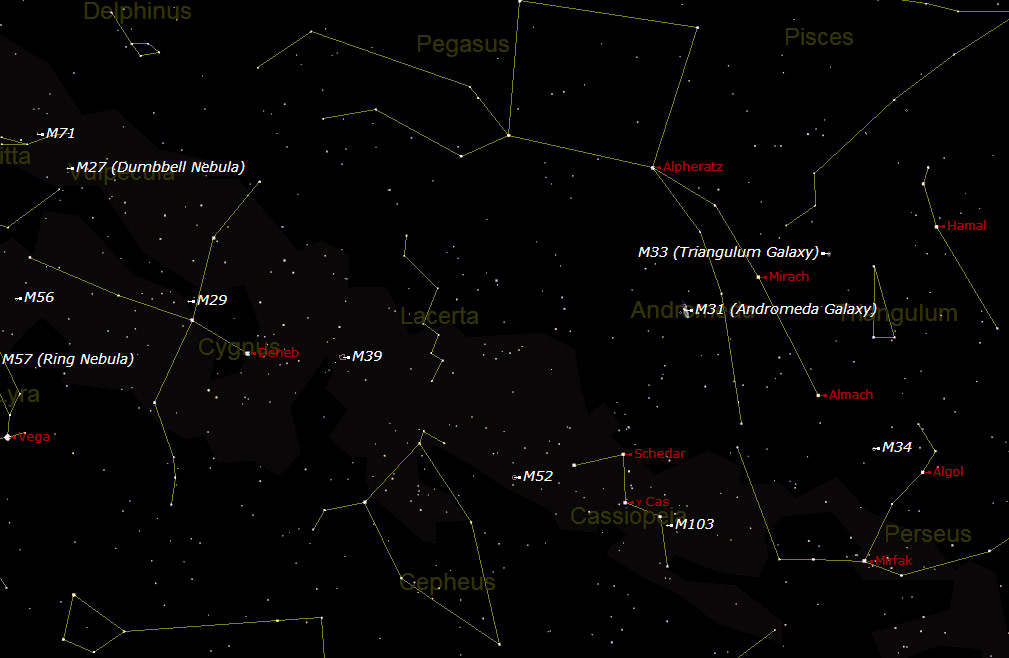
Starmaps: North | South | East | West | Overhead
Today's music? Holst's Jupiter, the Bringer of Jollity.
"Good afternoon," Ellie greeted the class. "I hope those of you who went enjoyed Ms. Frizzle's trip. I certainly did. Today we're going to talk about Jupiter. Jupiter is the fifth planet from the Sun and the largest within the solar system. It is usually the fourth brightest object in the sky (after the Sun, the Moon and Venus); however at times Mars appears brighter than Jupiter.
"Jupiter is 2.5 times more massive than all the other planets combined; it is 318 times more massive than Earth, with a diameter 11 times that of Earth, and a volume 1300 times that of Earth. Quite naturally, Jupiter's gravitational influence has dominated the evolution of the solar system. Some describe Jupiter as the solar system's vacuum cleaner, due to its immense gravity well.
"Jupiter also has the fastest rotation rate of any planet within the solar system, making a complete rotation on its axis in slightly less than ten hours, which results in an equatorial bulge easily seen through an Earth-based amateur telescope. Jupiter is perpetually covered with a layer of clouds, composed of ammonia crystals and possibly ammonium hydrosulphide, and it may not have any solid surface in that the density may simply increase gradually as you move towards the core. Its best known feature is the Great Red Spot, a storm larger than Earth which was likely first observed by Giovanni Domenico Cassini and Robert Hooke four centuries ago. Indeed, mathematical models suggest that the storm is stable and may be a permanent feature of the planet.
"The planet Jupiter has been known since ancient times and is visible to the naked eye in the night sky. The Romans named the planet after the Roman god Jupiter (also called Jove). The astronomical symbol for the planet is a stylized representation of the god's lightning bolt."
Syllabus | Class Roster
Handouts:
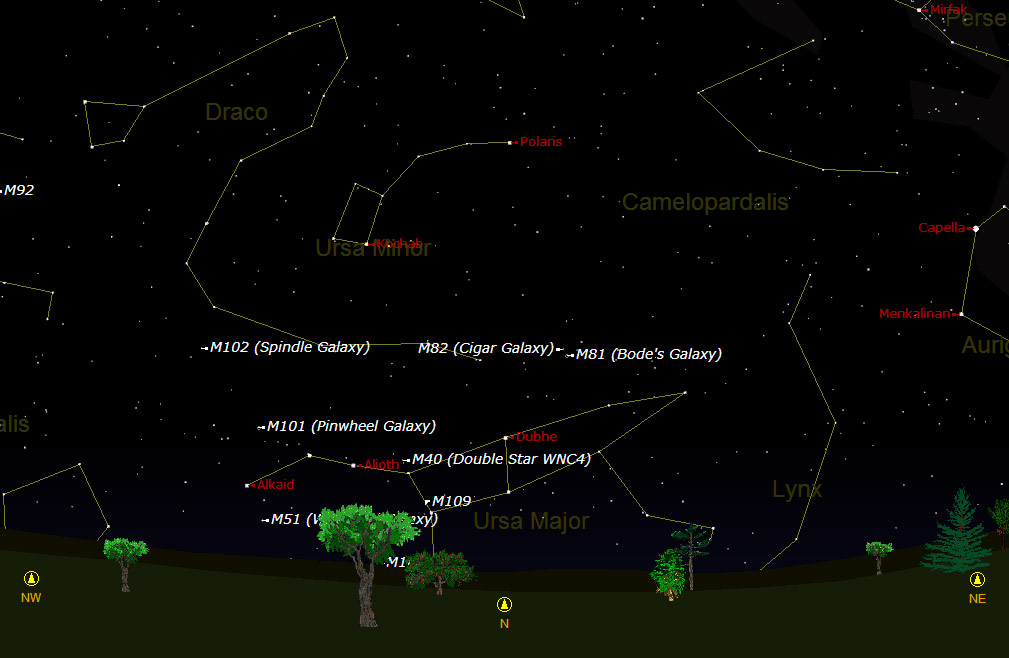
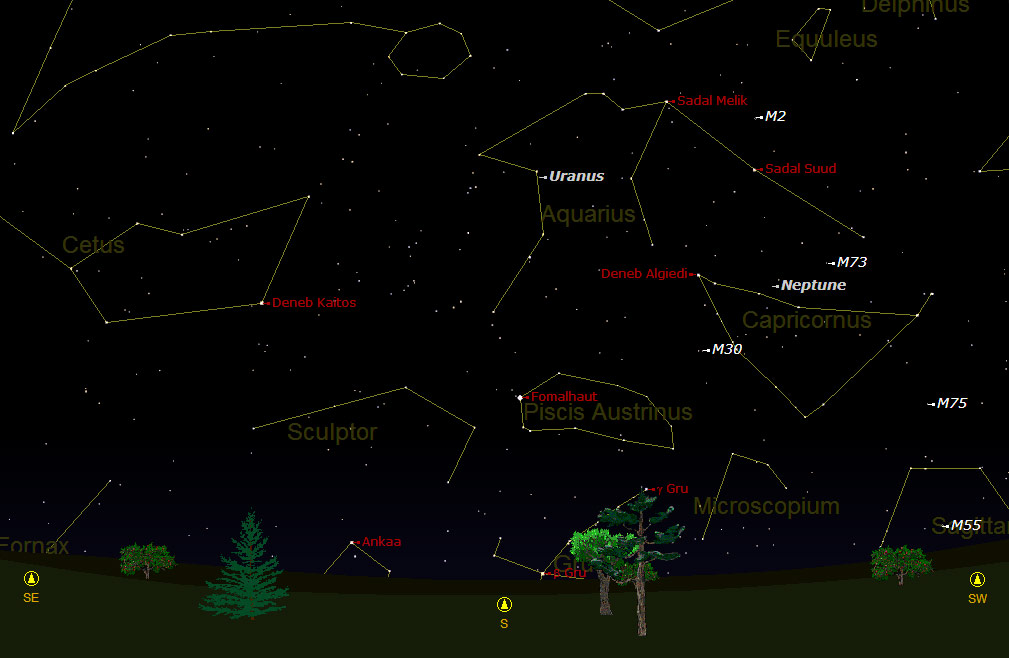
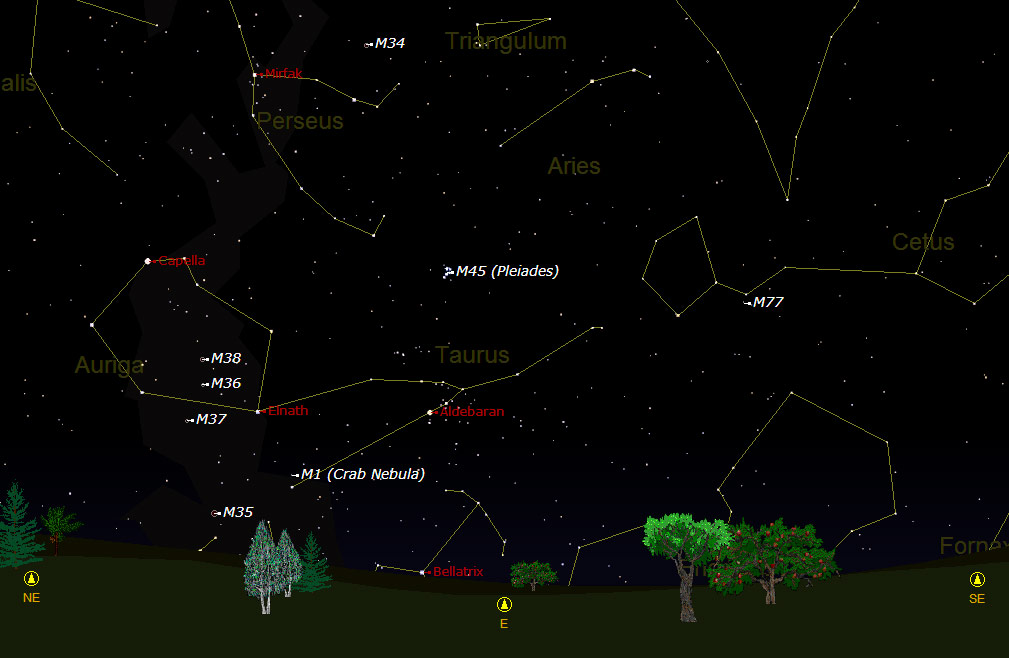
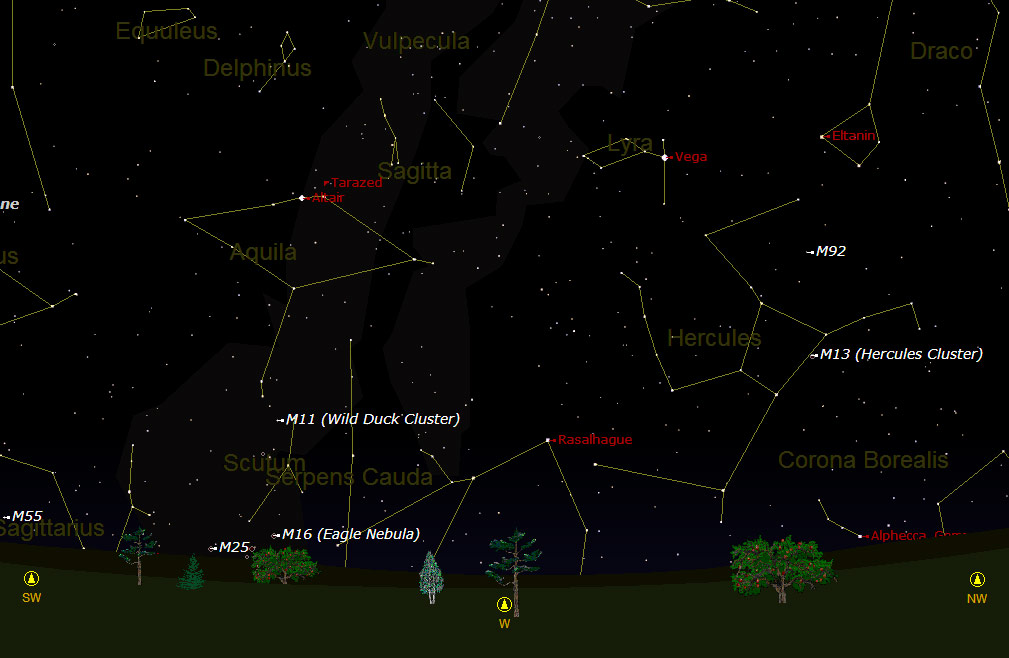
Starmaps: North | South | East | West | Overhead
Today's music? Holst's Jupiter, the Bringer of Jollity.
"Good afternoon," Ellie greeted the class. "I hope those of you who went enjoyed Ms. Frizzle's trip. I certainly did. Today we're going to talk about Jupiter. Jupiter is the fifth planet from the Sun and the largest within the solar system. It is usually the fourth brightest object in the sky (after the Sun, the Moon and Venus); however at times Mars appears brighter than Jupiter.
"Jupiter is 2.5 times more massive than all the other planets combined; it is 318 times more massive than Earth, with a diameter 11 times that of Earth, and a volume 1300 times that of Earth. Quite naturally, Jupiter's gravitational influence has dominated the evolution of the solar system. Some describe Jupiter as the solar system's vacuum cleaner, due to its immense gravity well.
"Jupiter also has the fastest rotation rate of any planet within the solar system, making a complete rotation on its axis in slightly less than ten hours, which results in an equatorial bulge easily seen through an Earth-based amateur telescope. Jupiter is perpetually covered with a layer of clouds, composed of ammonia crystals and possibly ammonium hydrosulphide, and it may not have any solid surface in that the density may simply increase gradually as you move towards the core. Its best known feature is the Great Red Spot, a storm larger than Earth which was likely first observed by Giovanni Domenico Cassini and Robert Hooke four centuries ago. Indeed, mathematical models suggest that the storm is stable and may be a permanent feature of the planet.
"The planet Jupiter has been known since ancient times and is visible to the naked eye in the night sky. The Romans named the planet after the Roman god Jupiter (also called Jove). The astronomical symbol for the planet is a stylized representation of the god's lightning bolt."